As a supplier of PVC gypsum board production lines, I’ve worked with dozens of manufacturers over the past 12 years, and I can count on one hand the number that didn’t struggle with ISO compliance—specifically ISO 9001 (quality management) and ISO 14001 (environmental management), the two standards most critical for our industry. PVC gypsum board production blends wet chemical processing, powdery raw material handling, and polymer coating steps, which creates a unique set of compliance headaches: inconsistent raw material batches, excess PVC emissions, and misaligned quality controls that easily slip through the cracks if not actively managed. What many producers miss is that ISO compliance isn’t just a audit box to check—it’s the difference between repeat customers, reduced waste, and avoiding costly shutdowns. Today I’m breaking down the actionable steps we help our customers implement to stay compliant, based on real projects I’ve managed. PVC Gypsum Board Production Line
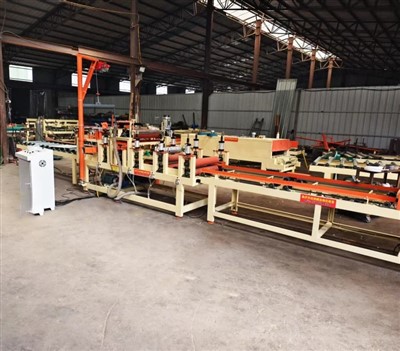
First, let’s start with the foundation: integrating ISO-aligned quality controls directly into your production line’s hardware and software, not just a binder full of procedures. Too often, producers treat ISO as a separate document set, so when an audit comes around, they’re scrambling to pull records that don’t match what’s actually happening on the line. For PVC gypsum board, two stages are non-negotiable for ISO 9001: raw material incoming inspection and in-process quality testing. Let’s take raw gypsum, for example: many suppliers buy mined gypsum from different quarries, but gypsum’s calcium sulfate dihydrate content varies, which directly impacts board strength and PVC adhesion. Our standard production line includes an automated inline X-ray fluorescence (XRF) analyzer at the raw material silo feed, calibrated to log every batch’s calcium sulfate content, moisture level, and trace impurities. The analyzer is programmed to reject any batch that falls outside ISO 9001’s required tolerance (92–95% CaSO₄·2H₂O, max 1.5% moisture) and trigger a work order for lab testing before it enters the mixing stage. This eliminates the old practice of “eyeballing” raw material quality, which leads to 30% more product rework—something ISO auditors flag repeatedly as a lack of control. I remember a customer in Texas who tried to skip the inline analyzer to save $12,000; within six months, they failed two consecutive ISO audits because 22% of their boards had uneven PVC coating adhesion, costing them $180k in returned goods. Adding the analyzer cut their non-conforming product rate by 91% and made their next audit pass on the first try.
Next, environmental compliance, which ties directly to ISO 14001’s requirements for reducing emissions and waste, is where PVC gypsum production often falls short. The two biggest environmental risks here are PVC fumes from the coating oven and gypsum waste slurry from the board-cutting stage. For the oven: when PVC is heated to cure, it releases trace volatile organic compounds (VOCs), and ISO 14001 requires continuous monitoring of these emissions, not just quarterly spot tests. Our production lines are pre-equipped with a closed-loop VOC abatement system that captures fumes, passes them through a catalytic oxidizer to convert harmful compounds into CO₂ and water, and redirects any excess clean air to the facility’s ventilation system. We also install real-time emission sensors linked to your quality management software (QMS) that logs every minute of VOC levels. If levels exceed ISO’s limit (10 ppm for PVC gypsum production), the system automatically slows the oven’s curing temperature instead of shutting down the line, which cuts production downtime while keeping you compliant. For gypsum slurry waste: most producers send this slurry to landfills, but ISO 14001 encourages circular economy practices, so we design our lines with a slurry filtration and reuse unit. This unit filters 98% of the water from cutting slurry, and the recovered gypsum powder is ground and added back into the raw material mix, reducing your waste disposal costs by up to 40% and giving auditors documented proof of your environmental commitment. A customer in Germany switched to this setup two years ago; their ISO 14001 audit last year didn’t require any corrective actions, a first in 10 years.
Then there’s the often-overlooked step of training your line operators to maintain compliance, because even the best hardware is useless if staff cut corners. ISO standards require that every employee involved in production, testing, and quality checks has documented training specific to their role. For PVC gypsum board production, that means training on raw material rejection protocols, emission monitoring, and non-conforming product documentation—something most operators learn on the job. Our team doesn’t just sell a line and walk away; we provide a 3-day ISO-aligned training program for every line manager, shift supervisor, and key operator. The training includes hands-on practice with the XRF analyzer, VOC sensors, and slurry reuse system, plus a mock audit where staff learn how to pull required records without scrambling. We also add a digital training module to your line’s control panel, so operators can refresh their knowledge during breaks, with automated quizzes that log completion for auditors. I’ve seen too many operators disable a sensor to speed up production, which leads to an ISO non-conformity; the training program teaches them that compliance actually reduces their workload, not adds to it, because there’s less rework and fewer audit-related delays. Last year, a customer in Saudi Arabia had 100% of their line staff complete the training, and their ISO audit had zero findings related to human error—up from 8 findings the year before when only management had training.
Another critical piece is maintaining calibration of all your line’s measurement equipment, a core requirement for ISO 9001. Every tool that measures material, temperature, or emissions needs to be calibrated on a set schedule, and records must be kept for three years. For PVC gypsum production, that includes the XRF analyzer, PVC coating thickness gauges, oven temperature sensors, and slurry pH meters. Many producers either calibrate these tools on an ad-hoc basis or skip calibration for smaller devices, which leads to inaccurate test results and failed audits. Our production line is designed with a built-in calibration reminder system integrated into your QMS: when a sensor or gauge is due for calibration, the system sends an alert to the maintenance team, and generates a pre-filled work order that includes the required calibration standard (aligned with ISO’s ISO/IEC 17025 for testing labs). We also include a yearly calibration service as part of our 24/7 technical support package, so you don’t have to research standards or coordinate with third-party labs on your own. A customer in Mexico was audited last quarter and found that their coating thickness gauge was 12% out of calibration, leading to a non-conformity and a 6-month extension of their ISO certification. Switching to our line’s calibration system fixed that, and their next audit passed in two weeks.
Finally, if you’re already operating a line and need to bring it into compliance, we offer retrofitting services tailored to existing production lines—no need to replace your entire setup. Many small to mid-sized producers can’t afford a new line to meet ISO requirements, so we add modular components like inline analyzers, VOC abatement systems, and QMS integration to your existing line. For example, a customer in India had a 5-year-old production line that was consistently failing ISO audits due to high PVC emissions and inconsistent raw material testing. We retrofitted their line with an XRF analyzer, a small-scale VOC abatement unit, and connected the line to their existing QMS. Within three months, their non-conforming product rate dropped from 17% to 4%, and they passed their ISO 9001 and 14001 audits six months later, saving them over $200k in potential certification loss fees.

ISO compliance for PVC gypsum board production isn’t a one-time project—it’s a continuous cycle of monitoring, training, and updating. As a supplier, we don’t just sell equipment; we partner with you to build systems that meet ISO standards, reduce costs, and improve product quality. If you’re currently struggling with ISO compliance, or looking to upgrade your production line to meet global standards, we’d be happy to walk through how our solutions fit your specific needs.
PVC Gypsum Board Production Line References
ISO 9001:2015, Quality management systems — Requirements.
ISO 14001:2015, Environmental management systems — Requirements with guidance for use.
ISO/IEC 17025:2017, General requirements for the competence of testing and calibration laboratories.
Hebei Enjoy Technology Co., Ltd.
Hebei Enjoy Technology Co., Ltd. is one of the most professional manufacturers and suppliers of PVC gypsum board production line in China. With abundant experience, we warmly welcome you to buy high quality building material machinery made in China here from our factory. Contact us for more details.
Address: Jiuling Building, Xinhua District, Shijiazhuang City, Hebei Province, China
E-mail: Betty@seyibm.com
WebSite: https://www.enjoymachinery.com/
