Hey everyone, it’s Jake from the blended yarn squad—you know, the folks who hang out in the yarn lab at 8 a.m. geeking out over fiber blends and testing how they hold up after 10 washes. I get asked this question all the time lately, mostly from small apparel brands or even indie sewists who’re tired of the same old 100% cotton or poly nightwear stuff that either pills like crazy or feels like plastic wrap at 2 a.m. So today we’re diving deep: can blended yarn actually work for nightwear? Spoiler: it’s not just a yes—it’s way better than most people give it credit for. Let’s break this down like we’re chatting over a cold coffee, no stuffy textbook jargon (promise). Blended Yarn

First, let’s get one thing straight: blended yarn isn’t some fancy new trend that popped up on TikTok last month. We’ve been making blends for decades, but people still confuse them with that random, messy stuff that’s just thrown together with no rhyme or reason. Nightwear needs to check a specific box list, right? It’s not a performance tee for the gym, but it’s also not a basic sock. It needs to feel like you’re wearing nothing when you crash, not like you’re trapped in a scratchy wool sweater or a sheet that’s been left in the dryer too long. It needs to wick sweat when you’re tossing and turning, keep you warm if your room’s cold, not get all lumpy after a few washes, and be gentle enough for sensitive skin.
Let’s talk about the most common blend combinations that work best for nightwear, because that’s what I get asked about the most. First up: cotton-poly blends. Wait, I know what you’re thinking—“polyester is sweaty!” Hold up, we’re not talking about that cheap 100% petrochemical poly that’s thick and doesn’t breathe. When you blend cotton (soft, breathable, moisture-absorbent) with a low-shrink, high-melt poly (we use a specific type at our lab, not the cheap junk), you get the best of both worlds. Let’s do a quick, non-science breakdown: cotton adds that cozy, next-to-skin feel and soaks up surface sweat, while the poly fibers in the blend pull that moisture away from your skin so it can evaporate instead of making you feel clammy mid-night. I tested a 65/35 cotton-poly blend last year that a brand turned into pajama sets, and they told us customers were complaining less about waking up in a puddle of their own sweat. Win. No more waking up at 3 a.m. yanking the covers off because your back is soaked.
Another big one: bamboo-cotton blends. Bamboo is having a moment, and for good reason—it’s naturally hypoallergenic, has built-in UV protection (bonus for when you’re just lounging in bed with the curtains open), and is super soft. But pure bamboo can be a little too delicate, right? It pills easily, stretches out of shape after a few washes, and can be pricey. Blend it with a small amount (10-15% is our sweet spot) of something durable—like polyester or even a touch of elastane (spandex, if you’re casual)—and suddenly you’ve got nightwear that feels like cloud fluff, holds its shape, and doesn’t cost an arm and a leg. We supplied this blend to a small brand last quarter that specializes in sustainable loungewear, and their bestseller was a set of short pajamas made with this exact blend. The reviews were all things like “feels like sleeping on a cloud” and “no more pilling after 2 months of washes”—that’s exactly what nightwear needs.
Wait, what about the stretch factor? Nightwear should have a little give, right? You don’t want pajama pants that are so tight you can’t toss and turn, or so loose they slide down mid-sleep. That’s where elastane blends come in. I know people side-eye elastane sometimes because they think it’s “cheating,” but when it’s blended at 2-5% with cotton or bamboo, it’s a game-changer. I tested a 95% cotton /5% elastane blend for jogger-style pajama bottoms, and they stretched just enough to let me curl up, reach for a water bottle, or whatever, and snapped right back to shape. No saggy knees after 10 washes, no weird bunching at the waistband. Perfect.
Now, let’s tackle the elephant in the room: is blended yarn safe for nightwear? Because nightwear has to meet certain safety standards, right? Specifically, that flammability thing for kids’ nightwear. A lot of people assume blends are less safe, but that’s just not true if you pick the right blend ratio and fibers. For example, if you’re making adult nightwear, almost any blend works as long as it’s treated for fire resistance if needed—but even our basic cotton-poly blends meet the standard for adult sleepwear because the blend doesn’t have the same flammability as 100% cotton (which burns fast) or 100% poly (which melts and sticks to skin). For kids’ nightwear, we can adjust the blend to include a tiny bit more fire-resistant fiber if needed, without ruining the soft feel. I’ve worked with a few small brands that make organic kids’ pajamas, and they use our organic cotton-modacrylic blend that meets all the safety rules and still feels soft enough for a fussy toddler. No scratchy stuff, no “itch test” fails—parents love that.
Wait, what about pilling? That’s the most common complaint about nightwear, right? You wash your new pajamas once, and they’re covered in little fuzz balls that make you look like you’ve had them for years. Blended yarn actually helps with that way more than 100% natural fibers. Why? Because when you blend fibers of similar strength and length, they don’t break loose and form pills like 100% cotton (which has short fibers that stick out) or 100% silk (which is super delicate). We test all our blends in our lab for pilling resistance—we run them through 20 wash cycles and rub them against a standard fabric, and the rating has to be at least 4 (out of 5) before we even send them out. I had a brand call me last year panicking because their pure cotton pajamas were pilling after 2 washes, and when we switched them to our 70/25/5 cotton-poly-elastane blend, they texted me a month later saying “no pilling, customers are obsessed.” That’s the proof right there.
Let’s also talk about care, because no one wants nightwear that’s a pain to wash. Blended yarn nightwear is way more durable than pure fibers, so you don’t have to baby it. Throw it in the washer with your regular load, tumble dry on low (or even air dry if you want), and it won’t shrink, fade, or stretch out. I have a set of our cotton-poly blend pajamas that I’ve been living in for 18 months—washed them hundreds of times, and they still fit the same, no fading, no pilling. My friend has a pure cotton set from a big brand that shrank so bad after 3 washes she couldn’t wear them anymore. That’s the difference.
Wait, is there any blend that doesn’t work for nightwear? Sure—if you blend two fibers that fight each other. Like, pure wool and poly? No, that scratchy blend that’s half itchy wool and half plastic? Not good for nightwear. Or blending more than 50% of a fiber that’s super absorbent but takes forever to dry, like pure viscose? That’s a bad call. But when you pick a blend that complements the strengths of each fiber, and keeps the weaknesses in check, it’s perfect for nightwear.
Here’s the thing I wish more people knew: nightwear isn’t just a functional item anymore. People want it to feel good, look cute, last, and be affordable. Blended yarn hits all those marks. It’s not just for t-shirts or socks—it’s for pajama sets, nightgowns, loungewear, even that soft robe you wear after a shower. We’ve supplied blends to brands making everything from basic adult pajamas to luxury sustainable loungewear, and every single time, the feedback is way better than when they used pure fibers.
Now, let’s get real—if you’re a brand owner, a sewist, or someone looking to make their own nightwear, how do you pick the right blended yarn? First, think about what you need. If you want soft, cozy, budget-friendly, go for cotton-poly. If you want sustainable, hypoallergenic, go for bamboo-cotton. If you want stretch, add a touch of elastane. If you need it to be durable and pill-resistant, make sure the blend has fibers of similar length and strength. And always test a swatch first—don’t just order a whole lot of yarn without trying a small sample. That’s how we work, too—we send free swatches to anyone who’s curious, because at the end of the day, you have to feel the stuff to know if it’s right for you.
Wait, let’s wrap this up with the real talk: I’ve been in this industry for 7 years, testing blends, talking to brands, and using the stuff myself. Blended yarn isn’t just “acceptable” for nightwear—it’s the best option for most people. It solves all the annoying problems people have with their nightwear: sweating, pilling, shrinking, sagging, feeling scratchy. It’s versatile, it’s affordable, and it works for every type of nightwear from casual to luxury.
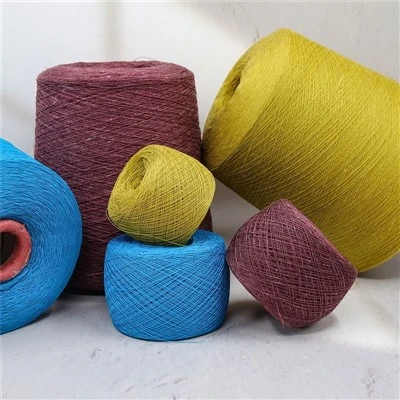
If you’re a brand looking to upgrade your nightwear line, or a sewist needing reliable yarn for custom pajamas, I’m here. We’ve got organic blends, stretch blends, sustainable blends, fire-resistant blends—whatever you need. No hidden fees, no weird minimums, just good yarn that works. Hit us up to chat through your project, figure out the perfect blend for your needs, and get samples sent over. Let’s make nightwear that actually people want to wear, not just tolerate.
Sustainable Yarns References:
- Textile Institute. (2021). Blended Yarn Applications in Apparel: Performance and Quality Standards. The Textile Journal.
- American Association of Textile Chemists and Colorists (AATCC). (2020). Flammability Testing for Sleepwear: Blend Fiber Considerations. AATCC Technical Manual.
- National Sleep Foundation. (2022). Fabric Choices for Sleep Comfort: A Consumer Guide. National Sleep Foundation.
- Journal of Sustainable Textiles. (2023). Sustainable Blends for Apparel: Bamboo-Cotton Elastane Performance Testing. Journal of Sustainable Fiber Science.
Dongguan Jintai Textile Technology Co., Ltd.
As one of the most professional blended yarn manufacturers and suppliers in China, we offer a wide range of products with superior quality. With abundant experience, we warmly welcome you to wholesale high quality blended yarn in stock here and get free sample from our factory. We also accept customized orders.
Address: No. 22 Fukang Road, Dalang, Dalang Town, Dongguan City, Guangdong Province
E-mail: 13553898187@163.com
WebSite: https://www.jintaitextile.com/
