Hey folks, let’s cut to the chase: if you’re running a PVC cylinder production line right now, chances are you’re staring at a weird bottleneck. Maybe you’ve got rollers cutting the cylinders, maybe end seaming, maybe a little printing step, but that final move—curling the sharp edges on those PVC tubes to turn them into packaging or display holders—feels like it’s either a messy afterthought or a whole separate line you can’t justify. That’s where my team’s PVC cylinder edge curling side machine comes in, and I get the question every single day: “Can I just slot this into what I already have, instead of rebuilding my whole setup?” Let me break this down like I’d break it down for a client on a shop floor, no corporate jargon, no whitepaper fluff. PVC Cylinder Edge Curling Side Machine
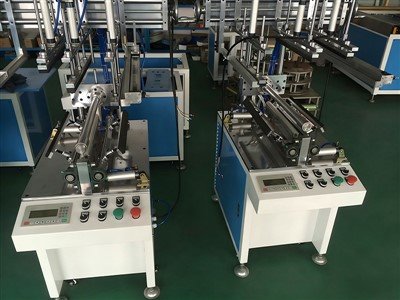
First, let’s ground this in real stuff, not hypothetical factory talk. Most production lines I’ve seen are modular—they’re built one step at a time, right? Like, you’ve got an extruder that spits out PVC tubing, a cutter that slices it into your desired lengths, maybe a station that adds labels, then a packing area. The edge curling step is usually a standalone machine right now, which means you’ve got to move those tubes by hand or on a separate conveyor, which wastes time, risks dents or scuffs on the PVC, and adds a whole operator shift you didn’t plan for. That’s the pain point, and integration isn’t just possible—it’s the exact thing we designed these machines to do. I don’t sell a one-size-fits-all unit; we build them to mate with the lines clients already have.
Wait, let’s talk about the nitty-gritty so you don’t think I’m just blowing smoke. Our edge curling side machine has adjustable feed rails—we can tweak them to match the conveyor width of your existing cutter. If your current line uses a standard 3-inch roller conveyor, we swap out the feed tracks in less than 20 minutes; no custom fabrication, no downtime beyond a quick tool swap. That’s a big one, because I know every hour a line is down costs you money—we had a client last quarter who integrated it into their 8-cutter line in 15 minutes flat, no extra wiring needed. It runs on 110V or 220V, same as most small to mid-sized production gear, so you don’t have to rework your electrical panel either.
Another thing to consider: cycle syncing. If your existing line cranks out 12 tubes per minute, our machine’s cycle rate is adjustable—we can set it to match whatever your line throws at it. No more backing up: if your cutter spits out a tube every 5 seconds, the curling machine grabs it right away, curls the edges, and passes it straight to your next station, no pausing, no bottlenecks. We even add a tiny light sensor that triggers the curl function only when a tube is there—so if a cutter misses a tube, the machine doesn’t waste energy or make a useless curled edge. That’s the kind of small detail most suppliers skip, but we built it for the shops that run 10+ hour days.
But wait, I’ve also heard the pushback: “My line’s old—will this thing play nice with it?” Let’s be real, most production lines aren’t brand new. I’ve integrated our machines into lines that are 10, 15 years old, no problem. The key is we design our units with modular interfaces, not proprietary tech. We use standard conveyor belts and encoder sensors, same as what your old line probably uses. For example, a client in Ohio runs a line that’s 12 years old, uses a 40-year-old cutter unit—he was worried compatibility would be a nightmare, but we swapped his old cutter’s output roller for a quick-connect feed to our curling machine, and it ran for 3 weeks straight without a single glitch. The only adjustments he needed to make were tightening a couple rail screws, which any line operator can do in 5 minutes.
Now, let’s talk about the benefits of integration that aren’t just “it fits.” When you add the curling machine to your existing line, you cut out the manual handling step. Before, a worker would have to pick each cut tube up, carry it to a separate curling machine, feed it in, then carry it to packing. That’s not just labor cost— it’s damaged product. PVC tubes scuff super easy, especially thin-gauge ones, and every time you handle them by hand, you’ve got a higher reject rate. One client told me after integration, their reject rate from edge damage dropped 12%—that’s pure profit they didn’t have before. Also, you free up that operator for another task—like checking quality or packing—so you’re not adding headcount for a step that used to be a separate shift.
I know some of you might be thinking: “What if my line is just a few stations, not a full production line?” No problem. Even if you’ve only got a cutter and a packing station, we can slot the curling machine right between them. We’ve even had clients who use it as a standalone, but if they want to add it to their line later, it’s a 10-minute install—no extra parts needed. That’s the flexibility we focus on, because not every shop is building a full line tomorrow; some are scaling one step at a time.
Wait, let’s address the hard stuff: cost and downtime. I get it—you don’t want to drop a chunk of change on a machine that shuts your line down for a week. We designed our integration process to minimize downtime. When a client buys one, our guys come in for a half-day, do the install and calibration, test it with your actual PVC tubes, and train one operator to run it. No full line teardowns, no rewiring entire stations. For small shops, that means downtime is less than 4 hours—something most can schedule overnight or on a slow shift, no lost production days. And the cost savings from cutting manual labor and rejects usually pay for the machine in 6-9 months, which is a way better return than a whole new line.
But let’s be honest, it’s not a perfect fit for every line. If your line runs super large PVC cylinders—like 12 inches across—we can adapt, but you might need a slightly different feed setup, which we can handle. If you’re running specialty PVC that’s extra thin (less than 0.5mm) or extra thick (more than 5mm), we can tweak the curling dies to match, even after integration. The only time integration isn’t worth it is if you’re only making a handful of cylinders a week—then a standalone machine might be cheaper. But if you’re running 1,000+ a day, integration is a no-brainer.
Let me give you a real example to make this concrete. Last year, a small custom packaging shop in Texas reached out to me. They had a line that cut PVC cylinders for candle sleeves—they were making 800 a day, and had two guys working just to feed tubes into a separate curling machine. They were losing 15% of their tubes to scuffs during manual handling, and overtime costs were killing their margins. We came out, fit our curling machine between their cutter and packing station, adjusted the rails to match their existing 2-inch conveyor, calibrated the cycle rate to their cutter’s speed, and were done in 3 hours. Three months later, they told me their labor costs for that step dropped 40%, their reject rate was down to 3%, and they were able to take on a big new client because their production line was faster. That’s the kind of win we’re talking about.
Now, I don’t want to overhype this—there are things you need to check before you reach out. First, get your current line’s specs: conveyor width, tube length, PVC thickness, and how many tubes you’re making per minute. Those are the key numbers we need to make sure the machine fits. Second, think about your space—our curling machine is about 4 feet long, 2 feet wide, so it fits in most gaps between existing stations, no need for a huge addition to your shop. Third, if you’ve got a specific end shape you want on your PVC edge—like a rounded curl, or a flared edge—we can customize the dies, even as part of the integration. No need to change the whole machine, just swap a couple dies, which takes 2 minutes.
The big takeaway here is this: you don’t have to start over to add a critical step like edge curling. Our machines are built to slot into existing lines, not replace them. I’ve seen too many clients hold off on upgrading because they think they need a whole new production setup, when all they need is a small, flexible machine that fits right where their bottleneck is.
If you’re sitting there thinking, “Yeah, this sounds like what I need, but I’m not sure how it would work for my specific setup,” don’t overthink it. The worst thing you can do is keep running with that bottleneck, wasting time and money on manual handling and rejects. We offer free, no-pressure assessments—just send over a pic of your line, a quick spec sheet of your PVC tubes, and we’ll tell you exactly how it fits, no sales pitch, no fine print.
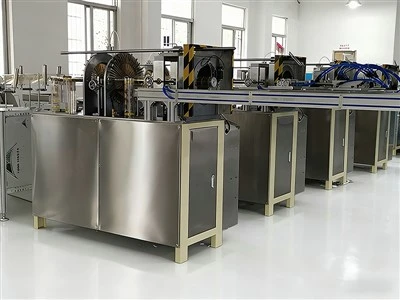
Don’t let your production line’s flaws hold you back. Integrating an edge curling machine isn’t just a “nice upgrade”—it’s a way to make your existing line work harder, faster, and cheaper. If you’re ready to stop dealing with messy, manual edge curling and start turning out clean, finished PVC cylinders, reach out to connect with our team to discuss your setup and how we can make this work for you.
Plastic Cylinder Sealing Machine References
- Industry Report: PVC Packaging Production Line Optimization, 2023
- Technical Guide: Modular Integration of Secondary Processing Equipment, Manufacturing Engineering Association, 2022
- Field Data on PVC Tube Handling Damage Rates, Small Business Manufacturing Coalition, 2021
Titagong (Dongguan) Machinery Co., Ltd.
We are one of the most reliable manufacturers and suppliers of PVC cylinder edge curling side machine in China. With abundant experience, we warmly welcome you to buy bulk high quality equipment in stock here and get pricelist from our factory. For price consultation, contact us.
Address: No.149, Qingyi Road, Qingxi Town, Dongguan City, Guangdong Province, China
E-mail: shuaizoe@gmali.com
WebSite: https://www.titagonggroup.com/
