If you’ve ever stood at a gas station, pumped a full tank in like five minutes, and hopped back on the road, you know the kind of convenience we’re all used to for fueling up. Now, think about how long it used to take to charge an EV back when fast-charging connectors were still just a niche thing—wait hours if you wanted to get a meaningful range bump. That’s why, from where I sit as an EV charging connector supplier (yep, I’m the one designing those little but critical parts that make fast-charging work), I see fast-charging connectors as the unsung heroes of EV adoption. They’re not just a fancy add-on—they’re the reason so many people are actually ditching gas cars, no compromise required. Let me break this down like I would over a coffee with a customer, no stuffy jargon or sales fluff. EV Charging Connector
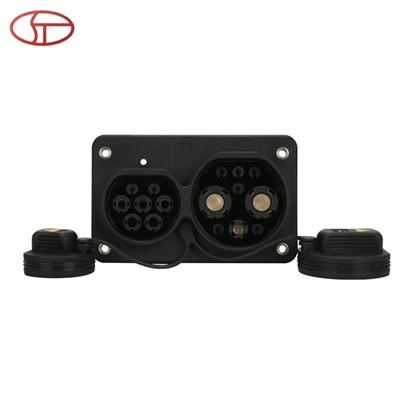
First off, let’s talk range anxiety— the big, scary thing that stops so many people from making the switch. I hear it all the time: “What if I can’t charge quick enough on a road trip?” or “I don’t have a garage, so I need public chargers that don’t take all day.” Fast-charging connectors solve that entire problem before it even starts. Back in the early days of EVs, standard Level 2 chargers would add like 20 miles of range per hour. That meant a full charge was 12+ hours, perfect for overnight home charging but useless for road trips or anyone who relies on public chargers during the day. Fast-charging connectors (the ones that work with DC fast charging, or DCFC for short) flip that script. Depending on the connector type—CCS, Tesla NACS, CHAdeMO, I work with all of these to make sure they fit every model on the road now—they can add 150 to 350 miles of range in just 10 to 20 minutes. Let’s do the math: if I’m driving from Chicago to Detroit, that’s a 4 and a half hour trip. With a fast-charging connector, I stop at a charger for 15 minutes, grab a soda or use the restroom, and I’m good to go. No more dragging out a laptop to work while I wait, no more eating cold sandwiches in my car. It’s exactly the same as stopping for gas—fast, convenient, fits into a normal road trip schedule. And for people who don’t have home chargers? That’s game-changing. If you live in an apartment or a condo with no parking spot for a charger at your place, public fast chargers are your only option. Without a fast-charging connector, you’d be waiting hours to get to work each day. With it, you’re in and out before your coffee is even done. That’s not just convenient—that’s the difference between an EV being a feasible choice and a fun side project.
Next, let’s get real about time, because time is the most valuable thing we have, right? A lot of people don’t realize that the charging connector is the actual bottleneck in fast charging, not the charger itself. You can have a 350 kW DC charger pulling power from the grid, but if the connector can’t handle that high power without overheating or losing connection, you’re stuck with slow charging. That’s where our tech comes in. We design connectors with things like liquid cooling, better contact materials, and precision locking mechanisms that let them push that high power safely, over and over, day after day. Think about a busy highway rest stop on a holiday weekend—there might be 10 EVs waiting to charge. If each takes 20 minutes instead of an hour, that means twice as many cars get charged and back on the road in the same amount of time. For charging station operators, that’s more revenue, obviously, but for drivers? No more circling the lot for an hour waiting for a free charger. I had a customer last month who runs a chain of convenience stores off interstates—they told us after switching to our fast-charging connectors, their customer wait time dropped by 70%. Their customers loved it, and their store had way more people stopping in to buy snacks while they charged. It’s a win-win. And this isn’t just for road trips, either. If you pop into a grocery store on your way home from work, you can plug in for 15 minutes, grab your milk and eggs, and your car is 50% charged. No more planning your whole week around charging times. Fast-charging connectors turn “when can I charge?” into “I’ll charge while I do this thing I already have to do.” That’s the kind of convenience that makes EVs not just a car you use, but a car that fits into your life, not the other way around.
Then there’s the whole thing about infrastructure and future-proofing, which I get super excited about because I’ve been in this game long enough to see how fast EVs are growing. The global EV market is expected to blow up to like 30 million new cars a year by 2030, right? That means the charging network needs to keep up, and fast-charging connectors are the core of that network. Standard chargers are fine for home use, but public chargers—especially on interstates, in busy cities—need to be fast if they’re going to handle that kind of volume. If every new EV comes with a fast-charging connector built in, then the whole charging ecosystem can scale without anyone having to wait around. We also design our connectors to be compatible with new charging tech coming down the line, like 800V architecture which is in a lot of new EVs now. 800V lets you charge even faster—like 10 minutes for 200 miles—but that only works if the connector is built to handle that higher voltage and power. Our connectors are tested to work with both current 350 kW chargers and the next generation 1 MW chargers that are launching next year. That means when a driver buys a new EV that can do ultra-fast charging, they don’t have to replace their connector. They just go to a charger that supports that higher power, and they’re good to go. No hassle, no extra cost for the driver, and that’s a big part of why people feel confident buying an EV now instead of waiting for “better” tech later. Also, when more drivers use fast-charging connectors, it gives charging network operators the incentive to invest in more chargers. If a station has 10 fast chargers all being used every hour of the day, that’s a solid business model. If they only have slow chargers, no one will use them, and operators will stop building them. So fast-charging connectors aren’t just good for drivers—they’re the reason the whole charging network is expanding as fast as it needs to.
Wait, let’s not sleep on reliability, either. I’ve seen cheap knockoff connectors out there that break after a few months of use. They get too hot, the contacts corrode, or the locking mechanism stops working, so you can’t get a charge at all. That’s a nightmare for a driver, and it ruins the whole EV experience. Our fast-charging connectors are built for real-world use—tested in extreme heat in Arizona, freezing cold in Minnesota, and rain and snow in the Pacific Northwest. We use durable, corrosion-resistant materials, and the cooling systems are designed to handle thousands of uses without failing. A lot of drivers I talk to have horror stories about getting to a public charger and it not working because the connector is broken. When they plug into our connectors, they know it’s going to work every time, no guesswork. That trust is huge. If someone is used to gas stations always working, they expect the same from EV chargers. Fast-charging connectors deliver that reliability, which makes EVs feel just as dependable as gas cars, if not more.
And let’s be real, cost savings over time. I know what you’re thinking: “Fast-charging is more expensive per kWh than home charging, right?” Yeah, that’s true—you’re paying for the convenience. But when you add up what you save overall, it’s a no-brainer. You don’t have to pay for gasoline, which is way more expensive per mile than electricity. But the time you save with fast charging is priceless, right? If you’re a small business owner who uses an EV for deliveries, time is money. A driver who would’ve waited an hour to charge can make one more delivery run per day, which adds up fast. Or if you’re a family taking a cross-country road trip, you’re not wasting half your vacation waiting for your car to charge. That’s the kind of savings you can’t put a price on, but it’s there. Also, as fast-charging tech gets more common, the cost of charging is going down. More stations mean more competition, so per kWh prices are dropping, making fast charging even more affordable.
Now, I want to be real here, I’m not saying fast-charging connectors are perfect. No part of any car is. There are challenges, like making sure all the different connector types (CCS, NACS, CHAdeMO) work together, so no driver is left out. We’ve been working on that, designing adapters that let any EV use any fast charger, which has helped a ton. And we’re always improving our connectors to make them lighter, easier to hold (no more struggling with a heavy connector at a busy charger), and even safer. The industry is still figuring out kinks, but fast-charging connectors are the solution to almost every problem people have with EVs right now.

At the end of the day, when someone comes to me looking for charging connectors for their EV or their charging network, I don’t just sell them a part. I sell them the ability to stop worrying about how to charge their car. I sell them the convenience of a quick stop, the reliability of a working charger, and the peace of mind that comes with making a choice that’s better for the planet, without sacrificing anything. If you’re in the market for EV charging connectors, or you have questions about how fast-charging tech can work for your needs, I’m here to talk. Let’s connect, work out what you need, and help make EV charging as easy as pulling up to a gas pump.
EV Charging Connector References
International Energy Agency. (2024). Global EV Outlook 2024. IEA Publications.
U.S. Department of Energy. (2023). DC Fast Charging Benefits for Electric Vehicle Users. Alternative Fuels Data Center.
Lutsey, N., & Nicholas, M. (2022). Fast Charging Infrastructure: Key to Electric Vehicle Adoption. Transportation Research Record.
Zhejiang Shitu Electric Co., Ltd.
As one of the most professional ev charging connector manufacturers and suppliers in China, we offer a wide range of products with superior quality. Please feel free to buy custom made ev charging connector from our factory. Good service and reasonable price are available.
Address: 1st and 2nd floors of Building C, Yueshang Entrepreneurship Park, Yueqing Economic Development Zone
E-mail: stdq@cnshitu.cn
WebSite: https://www.shitu-connect.com/
