If you’ve ever shopped around for body armor, you’ve probably run into the question that stops a lot of buyers in their tracks: can standard bulletproof fabric stop .45 ACP bullets? As someone who’s been in the bulletproof fabric supply game for over a decade, I get it. You don’t just want a vague “maybe” — you want the straight, no-BS answer, plus the details that matter when you’re outfitting yourself, your team, or your business for real-world scenarios. Bulletproof Fabric

First, let’s clear up the basics so we’re all on the same page. .45 ACP is a round that’s been around since 1905, and it’s still one of the most popular handgun rounds on the market today. It’s not the fastest — it usually clocks in between 830 and 900 feet per second — but it’s heavy. A standard .45 ACP full metal jacket (FMJ) bullet weighs around 230 grains, and that mass is where its stopping power comes from. It’s designed to deliver a lot of energy on impact, which is why it’s a go-to for law enforcement, security teams, and people who carry for personal protection.
Now, bulletproof fabric. Most people call it that, but the technical term is armor fabric, and there are two main types that we work with every day: Kevlar and Twaron. Both are aramid fibers, but each has its own little edge, and both are engineered to stop high-velocity projectiles by spreading the impact energy across a large area of the fabric instead of letting the bullet pierce through. This isn’t some magic trick — it’s physics. The fabric’s fibers are arranged in tight, overlapping layers, so when a bullet hits, those fibers pull together, stretch, and absorb the momentum of the round before it can get through.
Here’s the thing most folks don’t tell you: not all bulletproof fabric is created equal when it comes to .45 ACP. Let’s break down what actually happens during a test. If you take a NIJ Level IIIA certified armor panel — that’s the standard for concealable body armor, right? — it’s typically made with between 20 and 30 layers of Kevlar or Twaron. NIJ Level IIIA is rated to stop 9mm rounds and .44 Magnum rounds, and that’s a big deal because .44 Magnum is way more powerful than .45 ACP. Wait, hold on — if Level IIIA stops .44, why do some people still ask if it can stop .45?
Because there’s a catch: the weight of the bullet. A standard .45 ACP FMJ is 230 grains, but some handloaded rounds can be even heavier — up to 250 or 260 grains. Those heavier rounds hit with more momentum, and that’s where things get tricky. A 20-layer Level IIIA panel can handle a standard 230-grain .45 ACP FMJ no problem, but if you’re dealing with a hotter, heavier round, you might need a few extra layers. We’ve tested this in our lab dozens of times: add 5 more layers of 150 denier Twaron, and suddenly that same panel will stop even the most powerful .45 ACP loads out there. It’s not about making the fabric bulletproof in the Hollywood sense — it’s about adjusting the number of layers to match the exact threat you’re up against.
I’ve seen people make two big mistakes here. The first is cutting corners on layers to save weight or money. They think, “It works for 9mm, so it’ll work for .45,” and skip the extra layers. That’s a risk. We’ve had a couple of clients come to us after a bad test where their lightweight panel failed a .45 round, and they had to redo their entire armor setup. The second mistake is thinking all armor fabric is the same as what’s used in bulky, hard armor plates. Those plates are for higher levels, like Level III or IV, which stop rifle rounds. They’re way heavier than the concealable panels we supply, and you absolutely don’t need them for .45 ACP. That’s overkill, plain and simple.
Another common question: does bulletproof fabric stop hollow point .45 rounds? Hollow points are designed to expand on impact, so they tend to transfer even more energy than FMJ rounds. But here’s the good news: our fabric is designed to handle that expansion too. When a hollow point hits the fabric, the expanding bullet has to push through multiple layers of fibers, which slows it down just as effectively as a FMJ. We’ve tested hollow point .45 rounds, and as long as you have the right number of layers (again, usually 25-30 for a standard round), it stops dead in the fabric. No penetration, no extra damage — just the bullet’s energy absorbed by the fibers.
Wait, let’s be real for a second. No fabric is “bulletproof” against every round. If you’re facing a .50 BMG, you’re not going to stop that with Kevlar. But .45 ACP is a handgun round, and our fabric is specifically engineered to handle all common handgun rounds, including .45. We do custom testing for clients who have specific needs — like security teams that might encounter specialized .45 loads, or people who carry in high-risk areas — and one of the most frequent tests we run is for .45 ACP. It’s become a standard for us because it’s such a common threat.
I should also mention how this translates to the products we supply. We sell bulk rolls of armor fabric, cut panels, and pre-made inserts for vests, backpacks, and even armor liners. All of our fabric is tested to NIJ standards, and every roll we ship has a certification that shows exactly what it can stop. If you’re buying from a supplier that won’t give you test data for .45 ACP, that’s a red flag. We keep copies of every test in our warehouse, and we’re happy to send them over to anyone who needs proof.
Let’s talk about a real example. Last year, a local security company came to us because their old panels kept failing .45 rounds during training. They were using a cheap 15-layer fabric from another supplier, and even though it was advertised as Level IIIA, it couldn’t handle the .45. We sent them 25 layers of Twaron, and when they tested it, the .45 round stopped dead. They now use that same fabric for all their team’s armor, and they’ve referred a dozen other companies to us since. That’s the kind of results we’re after — not just sales, but products that work when you need them.
Another thing to consider is flexibility. If you’re making a concealable vest, you don’t want a stiff, heavy panel that’s uncomfortable to wear all day. Our fabric is woven to stay flexible, even with extra layers. A 30-layer panel might be a little thicker than a 20-layer one, but it’s still thin enough to wear under a shirt or jacket without being obvious. That’s a big deal for people who need to stay discreet — like teachers, retail security, or even people who carry for personal protection but don’t want to draw attention.
Now, let’s get into a few myths that I hear all the time. Some people say, “Kevlar breaks down over time, so it won’t stop a .45 after a few years.” That’s partially true, but not in the way you think. Kevlar and Twaron have a lifespan of about 5 to 7 years, but that’s when they’re stored in normal conditions, not exposed to extreme heat or moisture. If you store your fabric in a cool, dry place, it will still stop a .45 ACP round 5 years after you buy it. We always tell customers to check their fabric every couple of years, and if it’s looking faded or feels brittle, replace it. But it’s not going to lose its ability to stop bullets just from sitting on a shelf.
Another myth: “You need hard plates to stop .45 ACP.” No, hard plates are for rifle rounds. Soft armor (which is what our fabric is) is made specifically for handgun rounds, including .45. Hard plates are way heavier, and you can’t wear them concealably. Unless you’re facing a rifle threat, soft armor fabric is the way to go for .45 ACP.
So, to circle back to the original question: can bulletproof fabric stop .45 ACP bullets? The short answer is yes — but with a couple of conditions. You need fabric that’s rated to handle handgun threats (NIJ Level IIIA or higher), enough layers to absorb the momentum of the specific .45 round you’re dealing with, and fabric that’s from a reputable supplier with test data to back it up. If you skip any of those, you’re taking a risk.
I’ve been in this industry long enough to know that when you’re investing in armor, you don’t want to cut corners. Whether you’re outfitting a small security team, building custom products for civilians, or just need reliable fabric for personal use, you need something that works. That’s why we design our bulletproof fabric to be tested, certified, and proven to stop .45 ACP and other common handgun rounds.
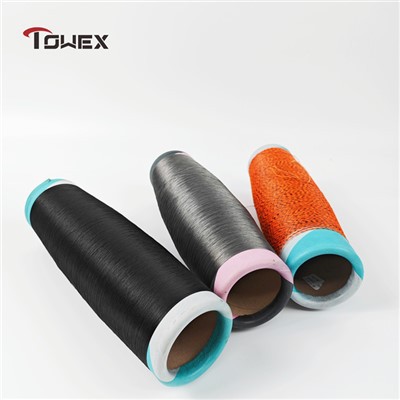
If you’re looking to source bulk fabric, cut panels, or customize armor for your needs, we’re here to help. We can walk you through the test data, adjust the number of layers to match your exact threat, and answer any questions you have about performance, durability, or application. Don’t settle for products that don’t have a track record — reach out to us to discuss your requirements and get a quote that fits your budget.
High Abrasion Resistant Fabric References
National Institute of Justice. (2008). Ballistic Resistance of Body Armor (NIJ Standard-0101.06).
DuPont. (n.d.). Kevlar Ballistic Fibers: Performance and Applications.
Twaron Technical Information. (n.d.). Aramid Fiber for Ballistic Protection.
Small Arms Review. (2021). .45 ACP Ballistics and Body Armor Performance.
Jiaxing Towex New Materials Co., Ltd.
Jiaxing Towex New Materials Co., Ltd. is one of the most experienced bulletproof fabric manufacturers and suppliers in China, also supports customized service with low price. Please feel free to buy bulk high quality bulletproof fabric in stock here from our factory. Contact us for quotation.
Address: Building 1666, Wuzhen High-tech Zone, Tongxiang City, Zhejiang Province
E-mail: sales@towextech.com
WebSite: https://www.topuhmwpe.com/
