Hey everyone, quick heads up – I’m Mike, part of the team that designs and builds elbow repair clamps for industrial pipes. One question I get all the time from installers, plant managers, and even occasional DIY folks who stumbled onto our products is: “Can I use an elbow repair clamp on a 45-degree elbow?” Elbow Repair Clamp
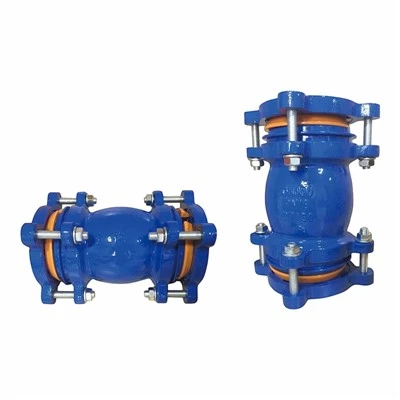
First off, let’s cut to the chase – no, you can’t just grab any standard elbow repair clamp and throw it on a 45-degree fitting. Wait, hold up, before you write that off, it’s not a hard no for every scenario. But there’s a ton of nuance here, and I see way too many people guessing wrong and ending up with leaks that cost them downtime or even safety hazards. Let’s break this down like I would explain it to a buddy who’s standing in a plant hallway holding a clamp in one hand and a pipe section in the other.
First, let’s make sure we’re on the same page about what each part is. An elbow repair clamp (sometimes people call it a pipe repair clamp, but it’s specific to elbows) is that two-piece, rubber-lined metal clamp we make here – it wraps around the outside of a damaged elbow, compresses, and seals cracks, corrosion pits, or pinholes without cutting out the old pipe. A 45-degree elbow, obviously, is a pipe bend that turns 45 degrees, versus a 90-degree which is the big boy everyone’s used to.
Here’s the core difference most folks miss: standard elbow repair clamps are engineered for the curve radius of 90-degree elbows. A 90 elbow has a fixed center-to-center radius – for example, a 6-inch 90 elbow typically has a 6-inch radius (called “short radius”) or 12 inches (long radius). The clamp’s inner curve is custom-machined to match that exact bend, so when you bolt it tight, the rubber seal sits perfectly against the pipe all the way around, no gaps.
A 45 elbow, though? Its radius is different. A 6-inch 45 short radius elbow, for instance, has a 6-inch radius too, but the bend is only half as steep. Wait, no – let me double-check that (I do this with our engineering team every month, so I don’t mess this up). Radius is just the distance from the center of the pipe to the center of the bend, right? So a 90 elbow and a 45 elbow of the same nominal size can have the same radius, but the curve itself is way shorter. So a standard 90 elbow repair clamp has a curved body that’s longer to wrap the full 90-degree turn. If you try to put that on a 45 elbow, the clamp’s curve is way too long. It’ll only touch the 45 elbow at the two ends (the straight pipe sections) and leave a huge gap in the middle of the bend. That gap is where leaks happen – even if you crank the bolts all the way down, the rubber seal can’t compress into that middle spot to seal the crack.
Okay, so that’s the bad news. Now the good news: we don’t just make 90-degree elbow clamps. Our engineering team spent two years developing line of repair clamps that specifically target 45-degree elbows, and they work when other clamps fail. Wait, but even our 45-specific clamps have limits, so let’s get into what makes a 45 elbow clamp different, and when it actually works.
First, let’s talk about when it will work. If you’ve got a small damage – like a pinhole leak from corrosion, a small crack from a previous impact, or a spot of pitting that’s just starting to seep – on a 45-degree elbow, our 45-specific elbow repair clamp is built for that. The inner curve is machined to match the exact 45-degree bend’s arc, not the 90, so the seal makes full contact all the way around the damaged spot. Also, we line it with EPDM (or nitrile, if you’re working with oil or chemicals) which is rated for up to 200 PSI – that’s more than enough for most water, steam, or commercial HVAC lines.
But here’s where I see people mess up even with our 45 clamps: size and type of elbow. Let’s say you’ve got a schedule 40 steel 45 elbow, and you grab a clamp made for a schedule 80 plastic 45. Don’t do that. Schedule 40 and 80 have different wall thicknesses, so the outer diameter of the elbow is different. Our clamps are sized to match the exact outer diameter (OD) of the pipe/elbow they’re going on, so if your OD is 6.625 inches, you need a 6-inch clamp – not a 5 or 7. I can’t tell you how many calls we get from guys who ordered the wrong size and wonder why it’s loose.
Also, what kind of damage are you dealing with? If your 45 elbow has a large crack – like, one that goes halfway around the bend, or a split from a freeze – even a 45-specific elbow clamp might not be enough. Elbow repair clamps are for external damage, right? If the elbow’s split all the way through, you might need a replacement elbow, or a full encirclement clamp, not just a repair clamp. That’s a common misconception – we don’t sell our elbow clamps as a replacement for bad pipe, just for sealing up small external flaws so you don’t have to shut down the line and replace the whole elbow right away.
Wait, let’s throw in a real example from last month, because that’s how I like to talk. A facility in Ohio had a 12-inch 45-degree elbow in their chilled water line that developed a corrosion pit – tiny, but it was leaking 2 gallons a minute. The maintenance team first tried using a standard 12-inch 90 elbow clamp, and it leaked so bad they had to shut down the line, which cost them like $15,000 in lost production. Then they called us, grabbed our 12-inch 45-specific clamp, installed it in 15 minutes, and no leaks. Saved them a ton of cash and downtime. That’s exactly why we built those 45 clamps – to fix that mistake people make when they grab the first clamp they see.
Now, let’s address the other side: what if someone says “Wait, can I modify a standard 90 clamp to fit a 45 elbow?” Don’t do that. I’ve seen guys cut a standard clamp down with a saw to make it shorter for the 45 bend, but that’s a bad idea. First, you’re cutting through the metal, which weakens the clamp and can create sharp edges that puncture the rubber seal. Second, you’re messing up the structural integrity of the bolt holes – cutting them off will make the bolts pull unevenly, so the seal won’t compress evenly, leading to leaks. Third, that’s not code-compliant in most industrial settings. OSHA and plumbing codes require repair clamps to be manufacturer-made for the specific pipe/elbow size, not modified on site. So skip the DIY mods, trust the product designed for the job.
Another thing people ask: what about 45 elbows that are part of a pipe spool, or have a different radius? Like, some industrial 45 elbows have a long radius – so a 12-inch long radius 45 elbow has a 18-inch radius, not the 12-inch short radius. Our 45 clamps are available in both short and long radius variants, so you’ve got to measure that radius too. How do you measure it? Easy: take a tape measure, measure from the center of the straight pipe on one end of the elbow to the center of the straight pipe on the other end, and that’s your center-to-center length, which is the same as the radius. If that number matches our spec, you’re good. If not, we can custom-machine a clamp, but most of the time, standard sizes work for common elbows.
Wait, let’s get into materials, because that matters too. Our elbow repair clamps for 45 elbows are made of either ductile iron (for standard water lines) or stainless steel (for corrosive environments, like chemical plants or coastal areas). The rubber liner is EPDM for general use, nitrile for oil/gas, and Viton for extreme chemicals. So if you’re working with something like hydrochloric acid, don’t grab the EPDM-lined clamp – get the Viton one, otherwise the seal will break down and you’ll have a leak in a week. That’s another mistake I see: people just grab whatever clamp is cheapest, not matching the liner to their fluid.
Now, let’s wrap this up with a clear, actionable answer to the original question: Can you use an elbow repair clamp on a 45-degree elbow? Here’s the short version:
- No, if you’re using a standard 90-degree elbow repair clamp – it won’t fit the curve right, will gap, and leak.
- Yes, if you use a 45-degree-specific elbow repair clamp, sized to your elbow’s OD and radius, with the right liner for your fluid, and the damage is external (small crack, pinhole, pitting).
But wait, what if you’re not sure? That’s what our team is for. I can’t tell you how many installers call us at 7 a.m. panicking because they’re standing in a plant, holding a clamp and a 45 elbow, not sure if it’ll work. We walk them through measuring the OD, the radius, what kind of fluid’s in the line, and tell them exactly which clamp to grab. We don’t just sell products – we give advice, because we want this to work for them as much as it works for us.
Last thing: don’t wait until you have a leak to check. If you have a 45 elbow that’s even starting to show corrosion, or you’ve had a small leak before, get the right clamp installed before it turns into a big shutdown. Downtime for industrial facilities costs thousands of dollars an hour, so spending $200 on a repair clamp is way cheaper than losing revenue.
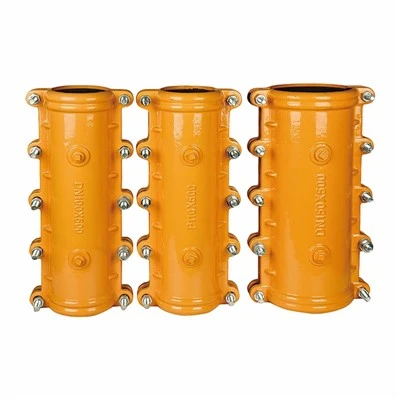
If you’re in a spot where you need a repair clamp for a 45-degree elbow, or you’re not sure which one you need, reach out to our team to chat through it. We can help you confirm the size, material, and everything else to make sure you get a seal that lasts.
Bell End Repair Clamp references:
- Hydraulic Institute. (2020). Pipe Repair Clamp Design and Application Standards.
- American Society of Mechanical Engineers (ASME). B31.1 Power Piping Code, Chapter VIII: Repair and Modification of Piping Systems.
- National Association of Plumbing, Heating and Cooling Contractors (APHCC). (2022). Commercial Pipe Repair Best Practices Guide.
Fujian Fufa Valve Manufacturing Co., Ltd.
As one of the most professional elbow repair clamp manufacturers and suppliers in China, we’re featured by quality products and good price. Please rest assured to buy durable elbow repair clamp made in China here from our factory. Welcome to view our website for more information.
Address: Meilin Xikou Industrial Zone, Nan’an City, Quanzhou City, Fujian Province
E-mail: hongwenjin@fufafamen.cn
WebSite: https://www.fufavalve.com/
