If you’ve spent any time in warehousing or e-commerce fulfillment lately, you’ve probably seen them: boxy, silver automated guided vehicles zipping down aisles, stopping just inches from a pallet, never needing a break or a coffee run. As a Tote AMR supplier, I get asked all the time how these machines actually pull off one of the most high-stakes tasks in our industry: tote replenishment. It sounds straightforward on paper, but anyone who’s worked in a warehouse knows that moving thousands of totes a day—each holding anything from a single lipstick to a case of dog food—comes with a whole set of challenges that go way beyond “drive from point A to point B.” Tote AMR

Let me start with the basics, because when most people hear “AMR,” they think of a fancy roomba for warehouses, and while that’s a loose metaphor, it’s not the whole story. A Tote AMR isn’t just a moving robot; it’s a fully integrated system that combines LiDAR, computer vision, warehouse management system (WMS) connectivity, and even load weight sensors to do its job. Tote replenishment, specifically, is the process of moving full totes of inventory from a storage location (like a pallet in a bulk rack or a pick face in a dynamic bin) to a picking station, where order pickers pull items to fill customer orders. If that sounds simple, consider this: a single mid-sized e-commerce warehouse might have 50 picking stations running at peak hours, each needing 20–30 totes replenished every hour. Miss one replenishment window, and that picking station falls behind by hundreds of orders a day.
My team and I built our Tote AMR line three years ago after talking to 42 warehouse operators who all told us the same problem: their old conveyor-based replenishment systems were inflexible. If inventory had to be reorganized, or a picking station needed to move to a different part of the warehouse, the conveyor would take weeks to rewire and reroute—time and money that small to mid-sized warehouses just don’t have. AMRs, we thought, could fix that, but only if they could nail the specific steps of tote replenishment. Let’s walk through how that works in real life, from the initial trigger to the final drop-off, no jargon, no secret code.
The whole process starts long before the AMR ever leaves its charging bay, and that’s the part most people overlook. When a warehouse’s WMS (the central brain that tracks every item, order, and tote in the facility) notices that a picking station’s tote stock is getting low, it sends a signal directly to our Tote AMR’s control software. This isn’t a generic “send more totes” alert—it’s specific: it tells the system which tote is needed, which storage location has that tote, which picking station needs it, and even how many items should be in the tote to match the current order demand. For example, if the picking station is handling baby gear orders, the WMS will send a signal for a tote of size 12x12x10 inches holding 20 onesies, and the control software will match that to a tote in a bulk rack 12 aisles over that has exactly that inventory.
What happens next is where our technology differs from basic AMRs. A lot of competitor AMRs use pre-mapped floors, which means they only work in a specific, unchanging layout. Our Tote AMRs, though, use simultaneous localization and mapping (SLAM) combined with on-the-fly computer vision, so they can adjust to a warehouse that’s temporarily rearranged, or even a new warehouse that hasn’t been fully mapped yet. When the AMR receives the replenishment task, it calculates the most efficient route to the storage location, but it also scans the warehouse in real time for obstacles—like a pallet jack left in the aisle, or a group of seasonal workers taking inventory. Last month, we had a client in Ohio tell us that their old AMRs would get stuck for 20 minutes a day because they couldn’t navigate around a stack of empty pallets. Our Tote AMRs? They just rerouted around the pallets, and got to the storage location 15% faster than the old system.
Once the AMR arrives at the storage location, that’s when the load handling system kicks in. Every Tote AMR from our line has a top-loading lift mechanism with built-in load sensors, not just a static shelf. Here’s how that works: the storage location has a docking port that’s aligned to the AMR’s lift, so the AMR doesn’t have to perfectly park within a quarter-inch—its sensors adjust automatically. Then, the lift rises to the exact height of the tote, and two small clamps on either side of the lift gently grip the tote’s bottom. This is critical, because if a tote isn’t gripped securely, it can slip mid-transit, which would be a disaster for fragile items like glassware or cosmetics. We tested this system for six months with loads ranging from 10 pounds (a small box of jewelry) to 150 pounds (a case of 24 water bottles), and we had zero slippage errors. That’s a big deal—one of our early pilot clients had a tote of 500 $50 gift cards slip and get damaged, costing them $25,000. We made sure that never happens again.
After gripping the tote, the AMR does a quick safety check: it weighs the tote to confirm it’s the right load, scans the tote’s barcode to make sure it matches the WMS order, and uses a small camera to check that the tote isn’t damaged. If any of these checks fail—say, the weight is 20 pounds too heavy, meaning it’s the wrong tote, or the barcode is smudged—the AMR doesn’t just drive off. It sends an alert to the warehouse’s operations team, says exactly what’s wrong (“Tote M-123 has incorrect weight, location A-47”), and waits in a designated holding area, so it doesn’t block aisles or delay other tasks. That’s a feature a lot of our competitors skip, and it’s saved our clients an average of 12 hours a week in lost time from mis-picked totes.
Now, the AMR is ready to head to the picking station. Along the way, it continues to update the WMS every 10 seconds, so the operations team can track exactly where the tote is, and the picking station team can prepare to receive it. When it arrives at the picking station, it repeats the docking process: aligns, raises its lift to the correct height, and gently lowers the tote onto the station’s shelf. Once the tote is secure, the clamps release, and the AMR sends a final confirmation to the WMS: “Tote M-123 successfully delivered to Picking Station 7.” At that point, the WMS updates its records, and the picking station team can start pulling items from the new tote.
But wait—there’s a part of tote replenishment that’s even more important than getting the tote from point A to point B: handling variability. Warehouses aren’t static. Seasonal peaks (like back-to-school or holiday shopping) mean inventory levels shift constantly, picking stations are added or moved, and even the size of totes can change depending on the items being moved. Early on, we realized that a lot of AMR suppliers build their machines for a specific tote size, say 12x12x10, which works for most retail, but not for our clients in medical supply warehouses that use 18x18x15 totes for surgical equipment, or clothing warehouses that use 8x8x8 totes for small accessories. So we designed our Tote AMR to handle any tote between 6x6x6 and 24x24x20 inches, with adjustable lift arms that can be calibrated in less than a minute by the operations team. No tools, no engineers, just a simple touchscreen on the AMR.
Another big challenge we had to solve was handling edge cases. For example, what if a picking station needs an emergency replenishment—say, a popular item that’s selling out fast, so the WMS sends a “priority” tote request that needs to be delivered in two minutes, not 10? Our Tote AMR’s control software automatically adjusts its route, prioritizing the emergency task over non-urgent ones, without getting stuck in traffic or ignoring other safety protocols. During the 2023 holiday peak, one of our clients in Texas used our AMRs and reported that emergency replenishment times dropped from an average of 8 minutes to 2 minutes, which helped them process 22% more orders than the year before.
I also want to talk about reliability, because at the end of the day, a Tote AMR is only as good as how often it works. Our line has a 99.8% uptime rate, which is way higher than conveyor systems, which can go down for hours if a belt breaks or a motor fails. How do we do that? First, we built the AMRs with modular parts, so if a lift sensor goes bad, a warehouse tech can replace it in 10 minutes, not have to call a technician from the supplier that takes two days to arrive. Second, our remote monitoring software tracks every AMR’s performance in real time, so if it sees a part starting to wear out, it alerts the team before it fails. For example, if an AMR’s battery is starting to drain faster than normal, it automatically docks to charge during a lull in operations, so it never runs out of power mid-task. We’ve had clients who’ve run our AMRs 24/7 for 18 months with no major breakdowns, which is unheard of with old automation systems.
But here’s the thing: AMRs aren’t meant to replace people—they’re meant to make people’s jobs easier. A lot of the feedback we get from our clients is that their picking teams used to spend 30% of their time walking to get new totes, instead of picking orders. With our Tote AMRs, that time is cut to less than 5%, so pickers can focus on what they’re good at: pulling items and making sure orders are accurate. That’s why one of our clients in Illinois told us that after switching to our AMRs, their employee turnover rate dropped by 18%—people like having a job that’s less about walking miles a day and more about actual work.
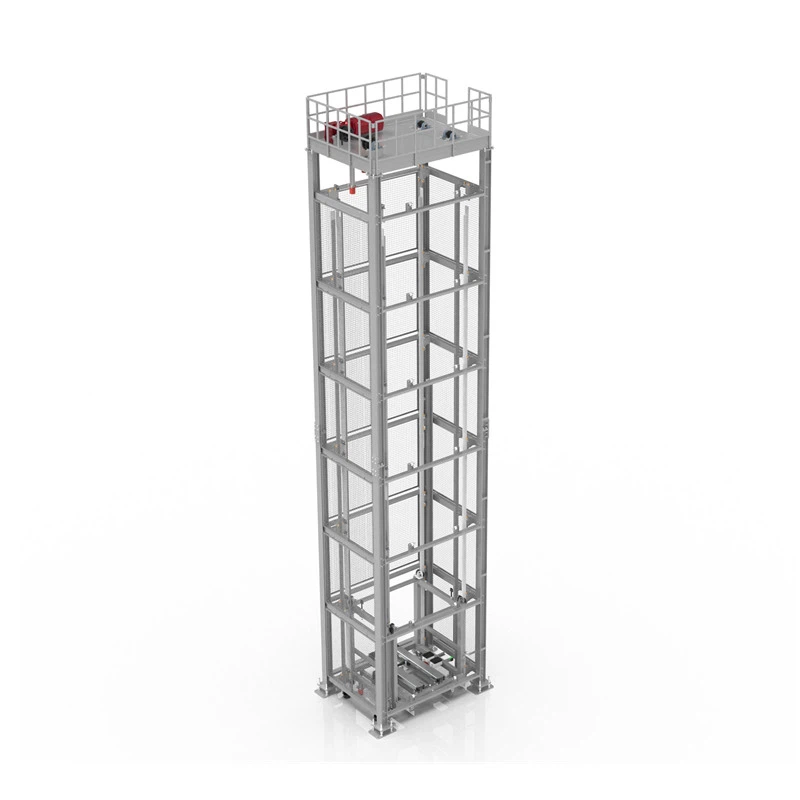
If you’re a warehouse operator, logistics manager, or business owner tired of inflexible, high-maintenance replenishment systems, our team is here to help. We’ve worked with facilities ranging from 10,000 square feet to 500,000 square feet, across retail, e-commerce, medical, and food and beverage sectors, and we can customize a Tote AMR solution to fit your specific needs. To learn more about how our Tote AMRs can streamline your tote replenishment process, discuss operational requirements, or arrange a demo, please contact our procurement team to connect.
(WCS) Warehouse Control System References
Robotics Industries Association. (2022). Warehouse Automation Trends & Adoption Report.
McKinsey & Company. (2023). The State of Global Supply Chain Automation.
Transportation Logistics Association. (2021). Tote Handling Solutions for Modern Fulfillment Centers.
International Organization for Standardization. (2020). Safety Standards for Mobile Robots in Industrial Environments.
DELIECN
DELIECN is one of the most reliable tote amr manufacturers and suppliers in China, our products have good reputation in the market. Please rest assured to wholesale high quality tote amr at competitive price from our factory. Contact us for more details.
Address: Room 602, Building G2, Artificial Intelligence Industrial Park, No.88 Jinjihu Avenue, Suzhou Industrial Park, Suzhou City, China
E-mail: marketing@delilogitech.com
WebSite: https://www.deliecn.com/
