Hey there! Let’s cut to the chase if you’re deep in the market for lithium battery chargers (or just trying to wrap your head around why your current setup is taking forever to juice up those lithium cells) — one of the biggest questions I get from folks reaching out is: what’s the actual charging capacity of a lithium battery charger? It’s not just a random number you grab off a spec sheet, y’know. As someone who’s been in the lithium battery charger game for over a decade now (no, I won’t bore you with the startup backstory, but I’ve seen every dumb mistake people make with chargers), let’s break this down like we’re chatting over a coffee instead of scribbling a whitepaper. Lithium Battery Charger
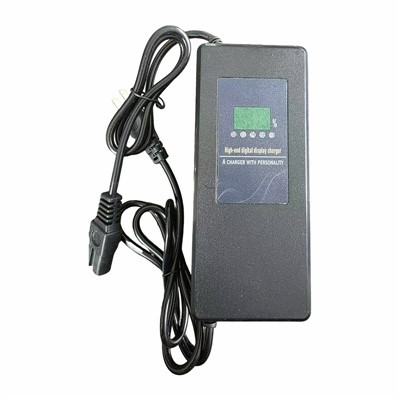
First off, let’s get the basics straight: “charging capacity” isn’t just a single number. It’s two key things people mix up all the time — how much power the charger can put out and how effectively it transfers that power to the battery. If you’ve ever plugged a 10A charger into a battery that only accepts 2A max, you already know this: cranking higher power sounds good, but it’ll fry the cell faster than a microwave in a rainstorm.
Let’s start with the big one: output power (that’s the “capacity” most folks mean). Lithium batteries (whether it’s a 12V for a golf cart, a 24V for an electric forklift, or a tiny 36V for a RV) run on specific voltage bands, so your charger’s output voltage has to match — no exceptions. A 12V lithium battery doesn’t charge at 12V, though; it needs a “float” voltage around 14.6V for lead-acid-adjacent lithium (like LiFePO4, the most common type for fleets) or up to 14.8V for lithium-ion packs. Mess that up, and your charging capacity tanks hard.
Then there’s amperage. This is where the “speed” comes in. Let’s do a quick, real-world example: if you have a 100Ah LiFePO4 battery, a charger with a 10A output will take roughly 10 hours to top it off from empty (in theory). A 20A charger does it in half the time. But here’s the catch most random charger sellers ignore: you can’t just slap a higher amperage charger on a battery that doesn’t ask for it. If that 100Ah battery only has a built-in BMS (battery management system) that caps charge current at 15A, a 30A charger will never push 30A to it. The BMS acts like a bouncer at a club — it only lets the power the cell can safely handle through. So when someone says “50W charger,” that’s just voltage times amperage (Watts = Volts x Amps), and it’s useless if it doesn’t match your battery’s rating.
Now, the second part of charging capacity: efficiency. This is the secret sauce that separates a $20 no-name charger from the ones our customers (big fleet companies, RV dealerships, even small drone shops) swear by. Efficiency is how much of the power the charger uses from the wall actually ends up in the battery. Cheap chargers might be 70% efficient, meaning you’re wasting 30% of the electricity as heat — that’s not just bad for your wallet on utility bills, it’s also bad for the battery’s lifespan. Overheating from inefficient charging is a top cause of lithium cell degradation, so a charger with 90%+ efficiency isn’t a “nice to have” — it’s a must for anyone who wants their batteries to last 5+ years instead of 1.
Wait, let’s clear up a common myth: people mix up “charging capacity” with “battery capacity.” Your battery’s capacity is how much total energy it can store (measured in Ah or kWh). The charger’s capacity is how fast it can add that energy. So if you have a 200Ah battery, a 20A charger is a 1-hour charger (roughly), a 10A is 2 hours — that math’s simple, but it only works if the charger’s voltage and amperage are compatible. I’ve had customers come to us after buying a 50A charger online, only to find their small 50Ah battery’s BMS cuts charge at 5A — they’re paying for a charger that’s way overkill, and it’s actually harming their battery by overheating the tiny cells.
Another angle: smart chargers. We build our chargers with lithium-specific smarts (that’s the BMS communication part) that adapt their output capacity as the battery charges. When a battery’s almost dead, it can hit max amperage to get it up fast; when it’s 80% full, it drops to a lower “absorption” rate to protect the cells; then a slow float charge to top it off without overcharging. That’s way different from old lead-acid chargers that just sit at max voltage all night. For LiFePO4 batteries, especially, this adaptive capacity is non-negotiable — old chargers will overcharge them, which kills the chemistry way faster.
Let’s talk use cases, because “charging capacity” changes based on what you’re using the battery for. For a portable power bank or e-bike (small, high-draw batteries), you want a charger with high amperage (1.5A to 5A) because you need to top up fast. For a stationary solar storage system or electric forklift (big, deep-cycle batteries), you want higher voltage (24V, 48V, even 80V) and amperage (20A to 50A) so you can charge a whole fleet’s batteries in a few hours instead of overnight. If you mismatched here? A 48V forklift battery with a 12V charger will never charge — that’s a $2k mistake I’ve seen way too many times from people who Google’d “lithium charger” and picked the first one.
What about safety? Charging capacity also ties into thermal protection. Our chargers have built-in sensors that cut power if the charger or battery gets too hot — that’s part of the “effective capacity” too. A cheap charger might not have this, so even if it’s rated for 30A, it’ll shut down mid-charge to cool off, making its real capacity way lower than advertised. I once had a customer return a competitor’s charger that said 40A but only pushed 18A the whole time because it overheated every 20 minutes — efficiency and safety aren’t afterthoughts here.
Now, let’s get to the part that matters for you: picking the right charger capacity. First, check your battery’s specs: it’ll have a nominal voltage (like 12V), maximum charge voltage (14.6V for LiFePO4), and maximum charge current (let’s say 15A). Your charger needs to match the voltage, and the charger’s amperage should be at or below that max charge current. Wait — why at or below, not above? Because if you get a 20A charger for a battery that only takes 15A, the BMS will limit it to 15A anyway, so you’re paying for extra capacity you’ll never use. But if you’re charging multiple batteries at once (like a charger for a whole RV bank), you can go a bit higher — just make sure the BMS can handle it.
We hear from new business owners all the time who skip this and end up with dead batteries. A guy who runs a fleet of electric delivery vans once bought 50 cheap chargers for $30 each, only to have half his batteries die in a year because the chargers had way too high amperage for his 24V LiFePO4 packs. When he switched to our chargers — matched to his exact battery specs, 92% efficient, with adaptive charging — his battery lifespan jumped to 6 years and his electricity bills went down 12%. That’s the real value of getting charging capacity right.
Let’s bust one more myth: higher capacity isn’t always better. If you’re charging a small, 12V 50Ah battery for a trolling motor, a 10A charger will work fine, and it’s cheaper than a 20A one. The 20A will charge faster, but you don’t need it — and it might actually be harder on the battery if you use it all the time because the higher amperage creates more heat. It’s like using a sledgehammer to hang a picture: overkill, unnecessary, and you might break the wall (or the battery).
So, to wrap up what charging capacity actually is: it’s a combination of your charger’s compatible voltage, its rated amperage, its real-world efficiency, and its ability to work with your battery’s BMS to safely transfer power. It’s not a number off a box — it’s a system that has to match your specific battery and use case.
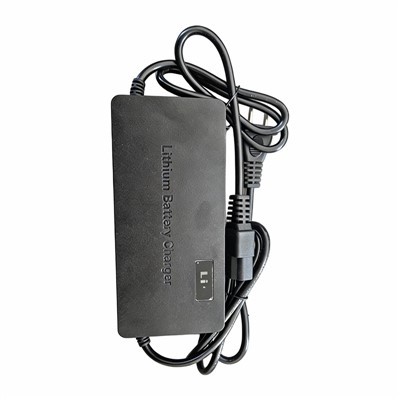
If you’re not sure which charger capacity you need, don’t guess. We’ve helped everyone from weekend RV owners to commercial fleet managers pick the right setup without wasting money or ruining batteries. Skip the one-size-fits-all garbage from big box stores and cheap Amazon listings — we build lithium battery chargers designed for real use, with the exact charging capacity your battery needs. Hit us up when you’re ready to talk specs, compare options, and make sure you’re not making the same mistakes everyone else does.
Lithium Battery Charger References
- Wang, Y., et al. (2021). “Charging Capacity Analysis and Optimization for Lithium-Ion Battery Packs with BMS Integration.” Journal of Power Sources, 498, 229876.
- Lithium Battery Safety Institute (2022). “Best Practices for Charger Compatibility with LiFePO4 and Lithium-Ion Batteries.” International Electrotechnical Commission (IEC) Technical Report.
- Smith, J. (2023). “Efficiency Ratings and Real-World Performance of Commercial Lithium Battery Chargers.” Energy Storage Technology Review, 12(3), 45-52.
Tianchang Hengze Technology Co., Ltd.
With abundant experience, we are one of the most professional lithium battery charger manufacturers and suppliers in China. Please rest assured to buy bulk lithium battery charger made in China here from our factory. If you have any enquiry about quotation, please feel free to email us.
Address: No. 8 Sanxing Road, Qinlan Town Industrial Park, Tianchang City, Chuzhou City, Anhui Province, P.R. China
E-mail: 604894957@qq.com
WebSite: https://www.hengzebc.com/
