If you work in electrical contracting, building maintenance, or industrial facility management, you’ve probably heard the phrase “distribution panelboards” tossed around. For the uninitiated, these are the workhorses of every electrical system: they split main incoming power into smaller, manageable circuits, protect those circuits with breakers, and keep buildings from overloading or shorting out. As someone who’s spent the last 12 years supplying distribution panelboards to contractors, electricians, and facility managers across the Midwest, I’ve seen first-hand how a small skill gap here can turn a routine installation into a safety hazard, or even a costly outage. Distribution Panelboards

Today, I want to break down the skills that actually matter when working with these units—no fluff, just what you need to get the job done right, whether you’re installing a new panel, upgrading an old one, or maintaining an existing setup. I’ll also share what I look for in the contractors I partner with, because at the end of the day, the quality of your work depends on these core abilities.
First, let’s start with the basics that everyone who works with panelboards needs: a solid foundation in electrical theory and code compliance. I can’t tell you how many times we’ve gotten a call from a contractor who bought a panel from us, only to admit they’re not sure how to calculate the correct load for the circuits it will feed. That’s a red flag. Panelboards aren’t one-size-fits-all—you can’t just pick the largest available unit and call it a day. You need to know how to perform load calculations per the National Electrical Code (NEC), which is the standard we follow for every distribution panel we supply. For example, NEC 220 outlines how to factor in continuous loads (like HVAC systems, which run for 3 hours or more) and non-continuous loads (like outlet circuits, which you might use for tools only occasionally). If you miscalculate, you’ll end up with a panel that’s either too small (causing breakers to trip constantly) or too large (wasting money on unused capacity).
Code compliance goes way beyond load calculations, too. Every distribution panel we sell is UL-listed, which means it meets strict safety standards, but it’s up to the installer to adhere to NEC rules for spacing, grounding, and labeling. For instance, NEC 110.26 requires a 30-inch wide, 36-inch deep, and 80-inch high clear space in front of a panel—no tools, storage, or other equipment blocking it. I once had a facility manager tell me they installed a new panel in a basement utility room, but they stacked water heaters and cleaning supplies in front of it. That’s a huge safety risk; if there’s an arc flash, no one can get to the panel to shut off power quickly. You also need to know how to properly bond the neutral and ground conductors in the panel’s main enclosure—get that wrong, and you risk ground faults that can shock someone or start a fire. A lot of new installers skip this part, so I always advise taking a refresher course on NEC basics at least every two years.
Next, hands-on technical proficiency with panelboard components. A distribution panel is made up of more than just the metal box and a few breakers. There are bus bars, which are the thick copper bars that carry power from the main breaker to the branch circuits; terminal lugs for connecting incoming and outgoing wires; and internal hardware like circuit protectors, insulation barriers, and door interlocks. You don’t need to be an engineer, but you need to know how each part works, and how to install it correctly. For example, when connecting wires to bus bars, you have to make sure the lugs are tightened to the manufacturer’s specified torque—usually 15 to 20 foot-pounds for most 200-amp panels. I’ve seen too many contractors over-tighten, which cracks the bus bar or strips the lug, or under-tighten, which causes a loose connection that generates heat. Loose connections are one of the top causes of electrical fires in buildings, so this small detail is non-negotiable.
You also need to be able to read schematics and wiring diagrams. Every distribution panel comes with a diagram that shows how the main power connects to the bus bars, how breakers slot in, and which circuits are assigned to which phases. For a 3-phase panel, this is especially important—if you connect a 240V dryer circuit to a single phase instead of two, it won’t work, and you could damage the dryer. When we train new installers who work with our panels, we have them walk through a mock installation using a sample panel and a wiring diagram, to make sure they can trace each circuit correctly. It’s a simple skill, but it separates someone who can install a panel safely from someone who’s guessing their way through it.
Then there’s safety competence, specifically around arc flash and shock prevention. Panelboards are high-energy environments—even a 120V circuit can cause a serious shock, and a 480V panel can produce an arc flash with temperatures over 35,000 degrees Fahrenheit, hot enough to melt steel. That’s not a hypothetical; every year, the Electrical Safety Foundation International reports thousands of arc flash incidents, many of which involve misworked panelboards. So, what skills do you need here? First, you have to know how to perform an arc flash study for any panel you’re working on. This study calculates the incident energy at the panel’s location, which tells you what level of personal protective equipment (PPE) you need—arc-rated gloves, face shields, flame-resistant clothing, and more.
You also need to know the proper lockout/tagout (LOTO) procedures. Before you open a panel door to work inside, you have to turn off the main power, lock the breaker in the “off” position, and tag it with your information, so no one accidentally turns it on while you’re working. I once worked with a contractor who skipped LOTO on a small 100-amp panel in an office building; they had just finished replacing a breaker and reached to adjust a wire, and the power came back on unexpectedly. They ended up with second-degree burns on their arm, and the building had to be evacuated for 2 hours. That’s a story we share with every contractor who buys a panel from us, because it’s a reminder that safety isn’t optional. If you’re working on panelboards, LOTO should be second nature, not something you do when you remember to.
Another key skill is problem-solving for common panelboard issues, because not every job goes according to plan. Sometimes, you’ll upgrade an old panel and find that the existing wiring is too small for the new breakers. Or you’ll have a panel that keeps tripping breakers, and you have to trace the circuit to find a short or a ground fault. For example, last year we had a contractor come to us with a 400-amp panel they’d installed in a retail store; the main breaker kept tripping, even after they replaced it. We walked through the steps with them: first, they checked the load on the panel to make sure it wasn’t over 400 amps, then they tested each branch circuit to find a short in a freezer circuit. The original installer had run the wire through a sharp metal edge in the wall, which had frayed the insulation and caused a ground fault. That’s the kind of problem you can’t just look up in a manual—you need to know how to test continuity with a multimeter, how to inspect wiring for damage, and how to adjust if the original installation doesn’t meet code.
Problem-solving also means being able to recommend the right panel for a job, not just install what someone orders. A lot of facility managers don’t know the difference between a main lug panel and a main breaker panel, for example. A main lug panel doesn’t have its own breaker; it’s fed by a main breaker upstream, so it’s used for subpanels in large buildings. A main breaker panel has a built-in breaker for disconnecting the entire panel, which is better for small shops or residential buildings. If a manager orders a main lug panel for a small office building, it won’t work, because there’s no way to turn off the entire panel for maintenance. That’s why I always ask the contractors we work with to know the different types of panels, their applications, and how to match them to a building’s needs.
Soft skills matter here, too, which might surprise some people. Working with distribution panelboards isn’t just about technical stuff—you have to communicate clearly with other trades. For example, if you’re installing a new panel in a renovation project, you need to coordinate with carpenters, electricians, and plumbers to make sure the panel has enough space, that wires can run through the walls, and that there’s no interference with other equipment. I’ve seen jobs delayed for weeks because an electrician installed a panel in a spot that blocked a new ductwork run, or because they didn’t tell the plumber that a water line would need to be rerouted around the panel. Being able to listen to other trades, explain your needs clearly, and adjust your timeline is just as important as knowing how to tighten a bus bar lug.
You also need to pay attention to detail when it comes to labeling and documentation. Every circuit in a panel has to be clearly labeled, so when there’s an outage, maintenance staff can tell which circuit is the kitchen, the office AC, or the garage door without guessing. We’ve had customers come to us after installing a new panel that’s completely unlabeled; they end up having to shut down half the building just to find a faulty circuit. Good documentation also means keeping records of the panel’s capacity, load calculations, and any modifications you make. When a building owner comes to you in 5 years to add a new workshop, those records will tell you if the existing panel can handle the new load, so you don’t have to guess.
Now, let’s talk about what I look for when I’m connecting with contractors for supply partnerships, because I want to make sure we’re working with people who know these skills. It’s not just about having a license or insurance—it’s about someone who takes the time to get load calculations right, who follows LOTO procedures every time, and who asks questions when they’re not sure about something. I’ve worked with contractors who will buy a panel from us, call to ask how to calculate the load, and then call back a month later to say they’ve referred a colleague. Those are the people we want to work with.
If you’re a contractor, facility manager, or electrician working with distribution panelboards, you know that the right skills don’t just make your job easier—they keep people safe and prevent costly mistakes. Whether you’re installing a new panel in a new office building, upgrading an old panel in a warehouse, or maintaining a residential panel, the skills we’ve covered here are the foundation of every good job.
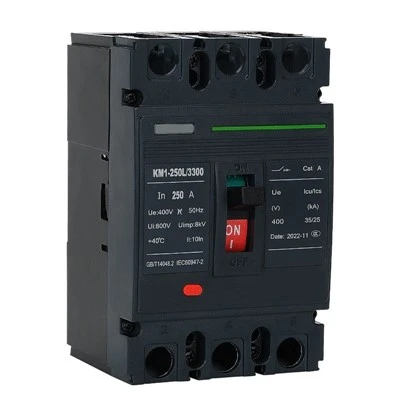
If you need a reliable distribution panel for your next project, or if you have questions about which panel is right for your building, I’m here to help. We’ve supplied panels for projects small and large, and we can walk you through everything from load calculations to product specifications to make sure you have the right equipment for the job. Reach out to us to discuss your project, and we’ll connect you with the support you need to get it done right.
LV Pole Mounted Circuit Breakers References
- National Electrical Code (NEC), 2023 Edition, National Fire Protection Association.
- Electrical Safety Foundation International (ESFI), “Arc Flash Safety Best Practices,” 2022.
- UL Standard 67, “Standard for Safety for Switchgear, Panelboards, and Switchboards,” Underwriters Laboratories Inc., 2021.
- Occupational Safety and Health Administration (OSHA), “Lockout/Tagout of Energy Sources (LOTO),” 29 CFR 1910.147, 2023.
Wenzhou Lanen Electrical Co., Ltd.
Wenzhou Lanen Electrical Co., Ltd. is one of the most professional distribution panelboards manufacturers and suppliers in China, also supports customized service with low price. Please feel free to buy CE approved distribution panelboards made in China here from our factory. Contact us for more discount information.
Address: Zhiguang Liushi Town Yueqing City Wenzhou City Zhejiang Province
E-mail: lanen@luyele.cn
WebSite: https://www.lanenelectrical.com/
