Hey everyone, let’s cut to the chase—if you’re in the heavy lifting game (whether you’re moving industrial machinery, precast concrete panels, or even large-scale HVAC units), you’ve probably stared at a messy rig setup and wondered: “Is there a way to use one lifting auxiliary frame for more than just a single hook point?” I’m Jake, and I run the day-to-day operations at our lifting auxiliary frame supplier shop, so I hear this question at least twice a week. Let’s get real about this, because the short answer is: YES, and if you’re using the right frame, it could save you so much time, cash, and rigging headaches that you’ll wonder why you ever overcomplicated things with multiple setups. Lifting Auxiliary Frame
First, let’s break down the basics because I don’t want you walking away with half-baked knowledge. A lifting auxiliary frame (we usually just call ’em “lifting frames” or “spreader bars” around here, though they’re a little different from your basic spreader) is that rigid, horizontal steel (or sometimes aluminum, for lighter loads) beam that connects your crane hook to your load. It’s built to distribute weight evenly, stop the load from tipping, and take the stress off your slings or chains. Now, multiple lifting points—this just means attaching the frame to the load in more than two spots, right? A lot of folks assume a frame is only for two-point lifting, but that’s the old-school way of doing things, and honestly, that’s how people end up with bent beams, damaged loads, or even safety issues.
Let’s talk about why using a frame for multiple points is actually a game-changer, not some gimmick. Here’s the thing: most heavy lifts aren’t uniform. Imagine you’re lifting a 20-foot precast wall panel—its center of gravity (COG) isn’t dead center, especially if it has embedded rebar or wall sockets on one side. If you use a basic two-point frame, you might pull too hard on the heavier side, causing the panel to swing, twist, or even crack mid-lift. But if you design the frame with adjustable connection points (that’s key), you can slide those attachment points to line up exactly with the load’s COG, splitting the weight across 3, 4, even 5 points depending on what you need. I’ve seen this cut rig time on precast jobs by 30%—instead of messing around with separate slings and shackles for each point, you just adjust the frame’s pins and you’re good to go.
Wait, but hold on—can every lifting frame do this? No, that’s the catch. A lot of cheap, one-off frames you might find online or at a local rental shop are only built for a fixed two-point load. Trying to add more points to those is a recipe for disaster. We design our lifting frames with modular, adjustable connection points that are load-tested for multiple configurations. Let’s do a quick real example from last month: a contractor was lifting three 8,000-pound steel I-beams that were 30 feet long. Originally, he planned to use three separate two-point frames, one for each beam. That meant three crane hooks, three rigging crews, and a lot of extra time. Instead, we hooked him up with one of our adjustable lifting frames. We set the frame’s four connection points to line up with the top flange of two beams (total of four points) and slid one extra connection to balance the third beam’s end. We ran load calculations before the lift—each point was taking roughly 3,200 pounds, well under the frame’s 25,000-pound capacity. The lift took half the time he quoted, he saved on rental costs, and no one had to juggle three separate rigs. That’s the kind of win we live for.
Now, let’s get into the science stuff, because I don’t want this to sound like a sales pitch without the real details that matter for safety. When you use a lifting frame for multiple points, the main thing we care about is shear and bending stress on the beam. Every time you add a lifting point, you’re changing the load distribution, not just adding more weight. Our engineering team runs finite element analysis (FEA) on every frame before it leaves the shop, so we can map exactly how stress shifts when you use 2 points vs. 3 vs. 4. Here’s the key rule we always follow: the distance between any two adjacent lifting points can’t exceed the beam’s span. If you space points too far apart, the middle of the beam will bend too much, which can compromise the frame’s structural integrity. We mark all our frames with maximum allowable point spacing, so you don’t have to guess—just follow the stickers. Also, don’t forget about the load’s COG. If you’re using multiple points, all those points have to align with the combined COG of the load. If even one point is off by a foot, you’ll get an uneven lift, which is a huge safety risk (OSHA actually has specific guidelines for this, by the way—we make sure our frames work within those, no cutting corners).
Wait, but what about when the load is irregular? I get that not every lift is a straight I-beam or a precast panel. Last quarter, we had a customer lifting a 12,000-pound custom industrial machine that was shaped like a L—one side was 8 feet long, the other was 5 feet. The COG was 2 feet from the shorter end, so a two-point lift would have pulled the machine sideways and probably damaged its precision components. We adjusted our frame to use three points: two on the longer side (spaced evenly) and one on the shorter side, right at the COG. The frame’s adjustable connections let us set the angles too, so the slings didn’t rub against the machine’s sensitive exterior. That’s another big benefit of using a lifting frame for multiple points: you can angle the connections to avoid load damage, which you can’t really do with a basic spreader bar. A lot of our customers in manufacturing love this because their loads are often one-off, custom builds—no two lifts are the same, so a frame that works for multiple points is way more versatile than single-use rig gear.
Now, let’s talk about when you should (and shouldn’t) use a lifting frame for multiple points, because I don’t want you to push this too far. First, when to use it: when your load has an uneven COG, when you’re lifting multiple smaller loads at once, when you need to distribute weight to avoid damaging fragile loads, or when you want to cut down on rig time. When not to use it: if the load is super small (like under 1,000 pounds—you don’t need a big frame for that), if the load is perfectly uniform and has a COG dead center (a two-point lift is totally fine there, no need to overcomplicate), or if you’re lifting in a really tight space where the frame’s extra length would get in the way. Also, important: never modify a lifting frame to add extra points on your own. Drilling extra holes in a beam weakens it, and guessing at load capacity is a one-way ticket to a bad day. Our frames are designed with pre-punched, load-tested connection points, so if you need more points, just tell us and we can adjust the configuration for your specific lift.
I know what some of you are thinking: “This is more expensive than renting a basic spreader bar.” Let’s do the cost math, because that’s what actually matters. A good adjustable lifting frame might cost a little more upfront, but how many times can you use it? We have customers who’ve had our frames for 10+ years, using them on weekly lifts. Compare that to renting separate spreader bars for every job—if you’re lifting three loads a week, that’s three rental fees every time. On top of that, think about downtime from rigging errors: if you mess up a lift because you didn’t use a frame for multiple points, that can cost you thousands in lost productivity, damaged loads, or even OSHA fines. Our frames come with a full load test certificate, so you’re covered for inspections too—no extra costs there.
Another thing we get asked all the time: “Can I use aluminum frames for multiple points?” Yes, absolutely. Aluminum lifting frames are lighter than steel ones, which is great for jobs where crane capacity is tight (like lifting on upper floors of a building, where the crane has a lower weight limit). The tradeoff is they have a lower weight capacity, usually up to 15,000 pounds, vs. steel frames which go up to 100,000+ pounds. So if you’re lifting smaller, lighter loads with multiple points, aluminum is totally fine—we make both steel and aluminum adjustable frames, so just tell us what your load specs are and we’ll point you to the right one.
Wait, let’s circle back to that safety part, because that’s non-negotiable. I’ve been in this industry for 12 years, and the scariest lifts I’ve seen are the ones where people skip proper rigging because they “didn’t have time.” Using a lifting frame for multiple points isn’t just a time-saver—it’s a safety upgrade. When you distribute weight across multiple points, you reduce the stress on each individual point. That means less wear on your slings, shackles, and even the load itself. We’ve had customers tell us that since they started using our adjustable frames for multiple lifts, they’ve had zero load damage and no near-misses. That’s the kind of track record we’re proud of.
Let’s wrap this up with a quick real-world success story to drive it home. Last spring, a civil contractor had to lift six 10,000-pound concrete pipe sections for a water main project. The original plan called for six separate two-point slings, each rigged to a separate crane hook. That would have required a 10-hour rig job, three extra crew members, and multiple crane moves. We brought in two of our 20,000-pound adjustable steel lifting frames. For each frame, we set four connection points: two to attach to two pipe sections, spaced evenly across the pipe’s length. We used both frames to lift all six pipes at once, connected to a single crane hook. The whole lift took 90 minutes—including setup. The contractor saved over $12,000 in labor and crane rental costs, and the pipes were lifted without any scratches or cracks. That’s the kind of efficiency that makes this job worth it.
So, to answer the original question: YES, a lifting auxiliary frame can absolutely be used for multiple lifting points, if you use a properly designed, adjustable frame, follow load guidelines, and pay attention to your load’s COG. It’s not a one-size-fits-all solution, but for most heavy lifting jobs, it’s way more versatile, safe, and cost-effective than rigging separate setups.

If you’re curious about whether an adjustable lifting frame would work for your next lift, or you need help calculating load capacity, point spacing, or anything else—we’re here to help. We don’t do pushy sales stuff; we talk through your specific job, give honest advice, and make sure you get the right frame for what you need. Don’t waste time and money on rigging headaches—reach out to our team to talk through your lifting requirements and get a custom plan for your project.
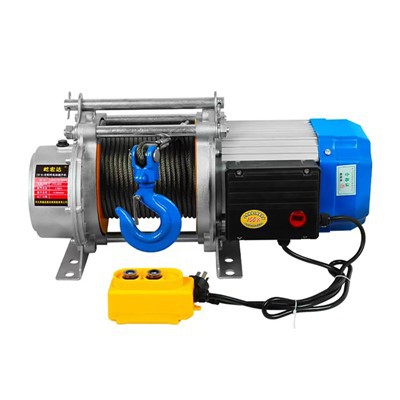
Multi-functional Electric Hoist References:
- Occupational Safety and Health Administration (OSHA). 29 CFR 1926 Subpart CC: Cranes and Derricks in Construction. U.S. Department of Labor, 2023.
- American Society of Mechanical Engineers (ASME). ASME BTH-1: Design of Below-the-Hook Lifting Devices. American Society of Mechanical Engineers, 2022.
- Spetnagel, J. “Adjustable Spread Frames: Reducing Rigging Time and Improving Lift Safety.” Journal of Construction Rigging, vol. 18, no. 2, 2021, pp. 45-52.
Hebei Hengtai Crane Machinery Manufacturing Co., Ltd.
As one of the leading lifting auxiliary frame manufacturers in China, we warmly welcome you to buy bulk discount lifting auxiliary frame in stock here from our factory. All customized products are with high quality and low price. For more cheap products, contact us now.
Address: Weigezhuang Village, Donglu Township, Qingyuan District, Baoding City, Hebei Province
E-mail: hbht@cnhengtai.com
WebSite: https://www.cnhengtai.com/
