Hey there, if you’ve ever been stuck trying to figure out why boiler spare parts cost what they do, or if you’re a facility manager, small business owner, or just someone who’s had to replace a boiler part last minute, this post is for me—wait, no, for you (and me, since I’m a supplier who deals with this every single day). Let’s cut the stuffy industry jargon and get real about the price of boiler parts, because it’s not just “random numbers on a tag.” I run a boiler products supply shop, and trust me, I hear every complaint, every question, and every “can you beat this price?” request week in and week out. So let’s break it down straight, no fluff. Bolier Products

First off, let’s stop with the myth that all boiler parts are the same. If you’re replacing a flanged gasket for a residential oil boiler vs. a high-pressure burner for a 10,000 sq ft commercial heating system, those are two totally different beasts. I see folks all the time search for “boiler part price list” and get frustrated because the numbers they find online don’t match what I quote them. That’s because online lists are either generic, old, or don’t account for the actual context of what you need. Let’s start with the big factors that actually drive cost—none of them are made up, by the way.
First, part type and complexity. Let’s take two common parts: a pressure relief valve (PRV) and a boiler feed pump. A PRV is pretty straightforward—its job is to release excess pressure so your boiler doesn’t blow up, right? That’s a critical safety part, but it’s a precision-made component. For a residential 40-gallon water heater boiler, a basic PRV might run $25 to $50. But for a commercial boiler that runs 24/7 in a hospital or a food processing plant? That PRV has to handle way higher pressure, corrosion-resistant material (stainless steel instead of brass, because food-grade or industrial moisture eats brass alive), and it has to be certified to meet local safety codes. Suddenly that same PRV jumps to $150 to $300. See the difference? Complexity isn’t just how it looks—it’s about what it has to do to keep your boiler working without shutting down mid-shift.
Then there’s material. Boiler parts are exposed to some harsh stuff: extreme heat, moisture, chemicals from fuel (if you’re burning oil or gas), even hard water that builds up scale. So parts can’t just be made of cheap plastic or thin metal. A heat exchanger tube, for example, has to withstand constant temperature swings from cold water in to hot steam out. If you go with a cheap steel tube, it’ll corrode in a year. Go with a seamless carbon steel or copper-nickel alloy, and it lasts 10+ years. That material upgrade adds cost—like, a basic steel heat exchanger tube is $10 a foot, but the alloy one is $30 a foot. I don’t mark that up just to make money; I mark it up because that’s what the supplier charges me, and I can’t sell you a part that’ll fail in 6 months. I’ve had way too many customers come back yelling because a cheap part broke and caused a bigger repair—so I’d rather be transparent about material costs upfront.
Next, supply and demand, but not the way you think. A lot of people think “supply chain issues” are just a buzzword, but it’s real for boiler parts. Back in 2020 and 2021, when boiler demand skyrocketed because so many buildings needed to upgrade heating systems, factories that make specialized boiler parts (like burner assemblies or ignition controls) couldn’t keep up. So prices jumped 20% to 40% overnight, and some parts had 12-week wait times. Now, it’s a bit better, but there are still parts that are low-volume and hard to source. For example, if you need a part for a 15-year-old boiler that’s no longer made by the original manufacturer (we call those “obsolete parts”), I can’t just run to a big box store. I have to source it from a specialty manufacturer that does small runs, or sometimes even machine it custom. That’s way more expensive than a part for a 2024 boiler that’s mass-produced. Last month, a customer needed a custom refractory brick for a 1998 industrial boiler—those aren’t sitting on a shelf anywhere. It took 3 weeks to make and cost $800, vs. a standard brick for a new boiler that’s $20. That’s not me overcharging; that’s the cost of custom work and hard-to-source materials.
Oh, and certifications. This is a big one for commercial and industrial boilers, but even residential ones need it sometimes. Boiler parts have to meet codes from organizations like ASME (American Society of Mechanical Engineers) or local building departments. If a part isn’t certified, it might not pass an inspection, and you could get fined or have to replace it anyway. A certified burner for a commercial boiler costs $200 to $500 more than a non-certified one, because the manufacturer has to test it, document its safety, and go through audits. I’ve had customers try to save $300 by going with a non-certified part, only to have their inspector flag it and make them replace it anyway. So that “cheaper” part ends up costing more in the long run.
Wait, let’s talk about installation too—because a lot of people forget that the price of the part itself isn’t the end of the story. But no, the question is about part price, so let’s stick to that, but here’s a quick note: when I quote a part, I’m usually quoting the “core” or just the part, but sometimes there’s a difference between new, rebuilt, and used. Rebuilt parts are way cheaper—like, a rebuilt boiler circulator pump is $150 vs. $350 for new. But rebuilt parts come with a shorter warranty (usually 30 days to 6 months) vs. 1 year for new ones. Used parts are even cheaper, but they’re “as-is” with no warranty. I usually steer residential customers toward new parts because they don’t want to deal with a repeat repair, but for commercial customers who have a budget and can handle a backup pump, rebuilt or used can make sense. I don’t push one over the other unless you ask—my job is to be honest about what you’re getting for your money.
Now, let’s get specific with real examples I’ve dealt with lately. Last week, a café (small commercial, 1,200 sq ft) needed to replace their boiler’s gas valve. The original part was a Honeywell V800, which is a standard residential/commercial valve. I quoted them $110 for the part. A couple days later, a metal fabrication shop (10,000 sq ft, 2 boilers) needed a gas valve for their main boiler, which was a larger, industrial-grade valve that could handle higher BTU output. That quote was $320. Why the difference? The smaller valve is made for 100,000 BTU, the larger one is 500,000 BTU, plus the industrial one has extra safety features to shut off immediately if there’s a gas leak. That’s exactly the complexity I was talking about earlier.
Another example: a homeowner with a 10-year-old oil boiler needed a new heat exchanger. I quoted them $650 for a stainless steel one. Why so much? The heat exchanger is the core of the boiler—it transfers heat from the fuel to the water, so if it’s bad, your boiler doesn’t heat your house, and it can leak carbon monoxide. The stainless steel one resists corrosion from oil combustion byproducts, which means it lasts 15+ years. A cheaper carbon steel one would be $400, but it might corrode in 5 years. I explained that to the homeowner, and they went with the stainless one—they didn’t want to replace it again in 5 years, which would end up costing more total.
Now, what about hidden costs that people don’t see? Wait, no, let’s get back to price transparency. A common question I get is: “Why is your price higher than this other supplier online?” Let’s be real—some online suppliers sell cheap, uncertified parts, or they have “bait and switch” where the price listed is for a basic part, and they charge extra for shipping or handling. I don’t do that. My quotes include shipping (for most orders over $50), and I always tell you exactly what you’re getting. Also, if a part is under $100, I usually ship it for free because I don’t want you to have to pay extra. Other suppliers might mark up the part 50% just to cover shipping, but I fold that into the price so you don’t get a surprise at checkout.
Wait, let’s clear up a misconception: I’m not here to gouge you. I’ve been a boiler products supplier for 8 years, and I live in the same area as most of my customers. I’m a small business, not a big corporate warehouse. So when I quote you a price, it’s based on what I pay for the part, plus a fair margin to keep my business running (I’m not a charity, but I also don’t mark up parts 100% like some big box stores do). For example, a $50 part costs me $30, so I sell it for $50—that’s a 40% margin, which is standard for specialty parts. A big box store might buy that same part for $25 and sell it for $75, just because they can. That’s why their price is higher. But if you need a hard-to-find part, I might have to pay $60 for it, so I sell it for $80—that’s a fair price, because I’m taking on the cost of sourcing something that other suppliers don’t carry.
What factors make a part cheaper, and what makes it more expensive? Let’s list them clearly so you can reference this when you’re shopping:
- Part age: Newer parts (for current boiler models) are cheaper because they’re mass-produced. Older/obsolete parts are pricier because they’re made in small batches or custom.
- Material: Brass = cheaper, steel = mid-range, stainless steel/alloy = most expensive (but longest-lasting).
- Certification: Certified parts (ASME, local code) = more expensive, but safe and compliant.
- Usage: Residential parts = cheaper, commercial/industrial = pricier (they have to handle more stress).
- Sourcing: In-stock parts = cheaper, custom/ hard-to-source = more expensive.
I see customers make the same mistake all the time: they search for the lowest price on a part, regardless of these factors. Last year, a restaurant owner bought a $20 non-certified draft pressure gauge for their commercial boiler, and 6 months later, the gauge broke. It didn’t show the correct pressure, so the boiler overheated and shut down, costing them $2,000 in lost food and repair fees. If he’d spent $45 on the certified gauge, it would’ve lasted 2 years and saved him from that disaster. That’s the thing about boiler parts: they’re safety-critical. You can’t cut corners here, no matter how tight your budget is.
Now, if you’re still trying to figure out exactly how much your specific part costs, here’s the thing: I can’t give you a number over the phone without knowing a few key details. I need to know what kind of boiler you have (residential, commercial, industrial), what part you need, how old your boiler is, and if it’s gas, oil, or electric. For example, a part for a 2024 residential gas boiler is way different than a part for a 2010 industrial oil boiler. If you just say “I need a boiler pressure switch,” I can’t quote you $50, $100, or $200— I need to know the specs.
That’s why I’m here: I don’t just send you a generic price list. I help you get the right part at a fair price. If you’re a small business owner, a facility manager, or even a homeowner who’s handy (but not too handy—boiler work can be dangerous), I can help you source the part you need without overpaying. I also offer discounts for repeat customers, and if you need multiple parts (like for a scheduled maintenance), I can bundle them to save you money.
Wait, let’s wrap this up so it’s not a novel. The price of boiler spare parts isn’t a random number. It’s based on how the part is made, what it’s made of, how hard it is to find, and what it’s designed to do. Cheap parts might save you money upfront, but they often lead to bigger problems later. As a supplier, my job is to be transparent about these factors, not just quote a price. If you’re looking for a reliable supplier who’ll give you a fair deal on boiler parts, feel free to reach out to discuss your needs. I’m here to help you get the right part at a price that works for your budget.
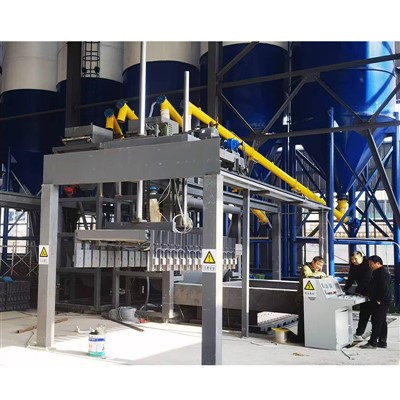
Gypsum Board Production Line References:
- ASME Boiler and Pressure Vessel Code, Section I: Power Boilers. American Society of Mechanical Engineers, 2023.
- U.S. Energy Information Administration, Commercial Building Heating Equipment Costs. 2022.
- HVAC Excellence, Boiler Part Cost Factors and Best Practices for Selection. 2021.
Shineye Mach Co., Ltd.
Shineye Mach Co., Ltd. is one of the most reliable manufacturers and suppliers of bolier products in China, also supports customized service with reasonable price. Please feel free to buy advanced bolier products made in China here from our factory. For quotation, contact us now.
Address: Jinzhou Circular Industry Park, Jinzhou City, Shijiazhuang City, Hebei Province, China
E-mail: xiangyijixielucia@yeah.net
WebSite: https://www.shineyemach.com/
