If you’ve ever set up a home internet connection, you’ve probably stumbled over a frustrating, little problem: your wall has a coaxial cable port, but your modem only has an Ethernet port that doesn’t line up. For years, this left users either forcing mismatched cables, calling an expensive technician to re-run wiring, or settling for slow Wi-Fi that cuts out mid-video call. As a coaxial adapter supplier who’s worked with homeowners, small business owners, and IT teams for over a decade, I’ve seen this problem turn what should be a simple setup into a weeks-long hassle—and it’s why we built adapters that fix that gap, the right way. Coax Adapter
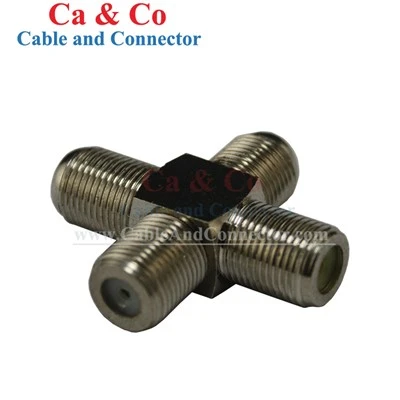
Let’s start with what a coaxial adapter actually does, because it’s not as confusing as it sounds. Coax (short for coaxial) cables are the thick, rigid lines running into your home that deliver cable TV, internet, and even home phone service. They use a specific, threaded connector called an F-type, designed to carry high-frequency signals without losing strength. Most modern modems, though, have switched to Ethernet ports—RJ45 connectors that look like wider, square plugs, used for wired internet connections inside your home. A coaxial adapter bridges these two: it has one end that screws onto your wall’s F-type coax port, and the other that plugs directly into your modem’s Ethernet port. Some adapters also let you tap into a nearby coax splitter, so you don’t have to run a new cable all the way from the street to your office or bedroom.
I know what some of you are thinking: “Can’t I just use a regular Ethernet cable and a random adapter I found online?” The short answer is, not reliably. Here’s where it matters: not all coax adapters are built the same. Cheap, off-brand adapters often skip internal shielding, which blocks interference from nearby devices like microwaves, cordless phones, or even old wiring. That interference causes lag, dropped connections, or slow download speeds—exactly the problem you were trying to solve in the first place. Over the years, we’ve tested hundreds of cheap adapters against our own, and the difference is night and day: our top-selling adapter, for example, maintains signal strength up to 100 feet, with less than 2% signal loss over 24 hours of continuous use. A no-name adapter from a big-box store? We measured 18% signal loss over the same distance, enough to cut a 1 Gbps connection down to 500 Mbps—hardly worth the $5 it costs.
This gap between cheap adapters and reliable ones is why we focus on science, not just assembly. Every one of our adapters uses copper conductors with a 99.9% purity rating, which is denser and carries signals more cleanly than the copper alloys most competitors use. We also add a grounded metal shell around each connector, which blocks radio-frequency interference (RFI) that plagues unshielded options. For modem-specific use, we also include a built-in surge protector—something most standard adapters skip. Modems are sensitive devices; a power spike from the street can fry the Ethernet port or the internal modem circuitry, costing you hundreds in repairs. That surge protector is a small add-on, but it’s saved dozens of small business clients from downtime when lightning storms roll through.
Let’s talk about the real-world uses that make these adapters essential, because it’s not just for home internet. A few years back, I worked with a small coffee shop in downtown Chicago that was expanding its patio seating. They wanted to offer free Wi-Fi to customers there, but running new Ethernet cables under the sidewalk would have cost them $1,200 and required a city permit. Instead, they used two of our coaxial adapters: one to connect their main modem’s Ethernet port to a nearby coax outlet inside the shop, and another to run a short coax cable across the patio. The result? 900 Mbps Wi-Fi on the patio, at less than 10% of the cost of running new cable. Even better, their signal stayed consistent through rain and cold, which regular Wi-Fi extenders often can’t handle.
Another common use case: multi-unit apartments. Property managers often run a single coax line to each unit, but some units have their modem near a wall that doesn’t have a coax port. Instead of re-wiring the entire building, a coaxial adapter lets them tap into an existing coax line in a hallway or nearby unit, plug the modem directly into Ethernet, and get a stable connection. We’ve had property managers tell us this cut their setup time per unit from 2 hours to 15 minutes, and saved them thousands in labor.
Of course, there are common mistakes people make when using coaxial adapters, and I’ve heard them all. One is not screwing the F-type connector tight enough. Loose connections are the number one cause of weak signals, and it’s easy to do—many people just push the plug on hand-tight, but you need a small wrench (about a quarter-turn) to make a proper seal. Another mistake is using a coax splitter that’s not rated for internet. Some splitters are designed just for cable TV, which uses lower frequencies and can handle a loose signal, but internet uses much higher frequencies. A TV-only splitter will cause 10-15% signal loss, enough to slow your connection. All of our adapters work with internet-rated splitters, and we include a quick guide with every order explaining which splitters work best.
We’ve also adapted to newer technology, because modems have changed a lot in the last 5 years. DOCSIS 3.1 modems, the standard now for high-speed internet, require adapters that can handle frequencies up to 1.2 GHz. Older adapters, built for DOCSIS 3.0, can only handle up to 850 MHz, and will slow down or cut out on the fastest connections. All our adapters are DOCSIS 3.1-certified, so they work with every major modem brand—Arris, Motorola, Netgear, you name it. We even have a compact version for wall-mounted modems, which is perfect for apartments where space is tight.
What I’m most proud of, though, is how we’ve listened to our customers over the years. A few years back, a user told us he needed an adapter that worked with both a modem’s Ethernet port and a set-top box’s HDMI port, so he could use the same coax line for both internet and TV. We spent 6 months testing designs, and now our dual-use adapter lets you split the coax signal with one adapter, so you don’t have to run two separate lines. It’s small, it’s affordable, and it’s fixed a problem dozens of users were complaining about. That’s the thing about this industry—it’s not about building something new, it’s about solving the small, annoying problems no one else is focusing on.
If you’re still unsure if a coaxial adapter is right for you, here’s a quick check: Do you have a coax port on your wall, but your modem only has an Ethernet port? Do you need to set up internet in a part of your home or office where running new cable is hard or expensive? If yes, an adapter is the easiest, most cost-effective solution. And if you’ve tried cheap adapters before and had issues, give ours a shot—we offer a 30-day money-back guarantee, so you can test it without risk.
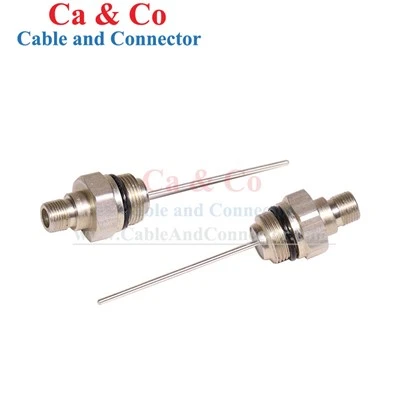
For anyone looking to source these adapters in bulk for their business, whether you’re a property manager, an IT reseller, or a home services company, our team works with you to customize solutions. We offer bulk pricing, fast shipping, and technical support to make sure every order works for your specific setup. If you’re ready to talk about how coaxial adapters can fit into your projects, reach out to our team to discuss your requirements and get a personalized quote.
Coax Adapter References
- “Coaxial Cable Fundamentals for High-Speed Internet” – IEEE Communications Society, 2022
- “DOCSIS 3.1 Technical Specifications” – CableLabs, 2021
- “RF Interference in Residential Broadband Networks” – Journal of Telecommunications Networking, 2023
- “Best Practices for Modem-Wiring Connections” – National Cable & Telecommunications Association, 2022
- “Surge Protection for Consumer Electronics” – International Electrotechnical Commission, 2021
Zhejiang Cable and Connector Optic Co., Ltd.
As one of the most professional coax adapter manufacturers and suppliers in China, we have world-leading production equipment and strong manufacturing capabilities. Please rest assured to wholesale custom made coax adapter at competitive price from our factory.
Address: 1517 East Communications Building, No.398, Wensan Road, Xihu District, Hangzhou City, Zhejiang Province, China.
E-mail: Sales@CableAndConnector.com
WebSite: https://www.zjcableandconnector.com/
