If you work in the nuclear power space, you’ve probably heard that the reactor vessel is basically the heart of a plant—it’s the pressure boundary that holds all the fuel, coolant, and the fission reaction itself. As a reactor vessel supplier, I get asked this question all the time: how do we actually monitor radiation around that big, thick steel vessel? It’s not just a random check—this stuff matters for safety, longevity, and making sure the vessel does its job for 40, even 60 years. Let me break this down like I would to a new engineer joining our team, no fancy jargon I can’t explain over a coffee. Reactor Vessel
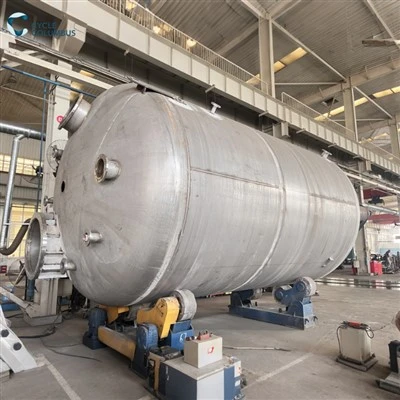
First, let’s start with why monitoring even exists here. The reactor vessel’s steel gets hit with two main types of radiation over time: neutrons and gamma rays. Neutrons are the big one here—they slam into the steel’s atomic structure, cause tiny defects that add up, and that’s what leads to embrittlement over decades. Gamma is more of a background check for leaks, but neutrons are the priority for vessel health. If we don’t track how much radiation it’s seeing, we can’t tell when the steel’s getting too weak to keep containing the reaction. That’s a non-starter for us as a supplier—we don’t just hand over a steel tank and walk away. We have to make sure our vessels stay safe and perform as promised.
Now, the actual methods. Let’s start with the ones that are built right into the vessel before we ship it to the plant—those are called in-vessel dosimeters, and they’re my go-to because they’re the most direct. Wait, no, actually, first there’s ex-vessel monitors, but hold on—let’s get the order right for someone who’s new. Ex-vessel monitors are the ones you find outside the reactor vessel’s steel, attached to the reactor cavity wall. They’re basically radiation detectors sitting in the water that fills the gap between the vessel and the concrete cavity. The water blocks a bunch of radiation, so these monitors are calibrated to count how much neutrons and gamma get through that shielding water. But here’s the thing: ex-vessel monitors are good for a plant’s daily checks, but they don’t tell you exactly which spot on the vessel is getting the most radiation. That’s where in-vessel dosimeters come in, and that’s where our role as a supplier really shines.
We build into every reactor vessel small, flat dosimeters that sit in the upper and lower portions of the vessel, right where the neutron flux is highest. These dosimeters don’t use power—they’re passive, so they just sit there and collect radiation over the lifecycle. At planned outages (that’s the 18-month or 2-year shutdowns plants do for refueling), we pull these dosimeters out, send them to a lab, and measure how much radiation they picked up. Let me tell you, that’s a big deal for us. Every dosimeter is customized to the vessel we’re building, so we know exactly where it’s placed, and the data we get from it lets both the plant and us verify that the vessel is performing as intended. No guesswork here—if the dosimeter data lines up with our design calculations, we can all be confident the steel’s holding up.
Wait, there are also self-powered neutron detectors (SPNDs), right? Those are active, so they need a tiny bit of power, and they’re also placed inside the vessel. They give real-time data, not just data you get once every two years. I worked on a boiling water reactor (BWR) project a few years back, and we installed SPNDs in the lower plenum of the vessel— that’s where the coolant comes in after going through the core. Those detectors feed data straight to the plant’s control room, so operators can watch neutron flux levels minute by minute. That’s way different from the passive dosimeters, which are like a snapshot over months or years. The SPNDs are more for operational safety, while the passive dosimeters are for long-term vessel integrity. I should mention, though—SPNDs are only good for a few years, because the neutron radiation wears out their sensors. So when we supply a vessel, we make sure to note how often those SPNDs need replacement, because it’s part of ongoing maintenance.
Then there’s the indirect method, using surveillance specimens. That’s a trick we use to check embrittlement without testing the actual vessel steel. We take small pieces of the same steel we use for the reactor vessel, machine them into tiny coupons, and put them in the vessel right alongside the fuel. They get hit with the same radiation as the vessel wall, and when we pull them out at outages, we test them for hardness, tensile strength, all that stuff. If the surveillance specimens show a lot of embrittlement, we can correlate that to the vessel’s steel—since it’s the same material, same exposure. As a supplier, we control the quality of those surveillance specimens, so we know their exact composition, which means the data is super reliable. No one wants a wrong assumption about vessel health, so that’s a key part of what we provide beyond the vessel itself.
Let’s talk about challenges here, because it’s not all straightforward. The reactor is hot, like 300 degrees Celsius hot, and under high pressure—so any monitoring gear has to withstand that. The dosimeters we use have to be rated for those temps, no cheap stuff. Also, the water in the reactor cavity has some impurities, right? Those can activate when hit with radiation, which adds a background signal to the ex-vessel monitors. We have to calibrate our detectors to filter that out, otherwise we’d get false readings. That’s where experience matters—we’ve been supplying reactor vessels for 15 years now, so we know exactly which calibration settings work for different plant types (PWR vs BWR, for example). I can’t tell you how many times a new plant operator has called us panicking because their ex-vessel monitor was showing a spike, and we walked them through checking for activated impurities in the water. That’s the support we offer, not just a product.
Another big challenge is access. Once a reactor vessel is installed, you can’t just pop the lid off to check it (well, you can at outages, but even then it’s a controlled, slow process). So all the monitoring gear has to be installed during manufacturing, before the vessel leaves our shop. That means we have to plan every placement perfectly—too many dosimeters in one spot, and they might interfere with coolant flow; too few, and we don’t get a full picture. I remember one project where we initially placed SPNDs too close to the core, and the neutron flux was so high they burned out in 18 months instead of 3 years. We fixed that by adjusting their mounting brackets, and now that design’s standard for all our BWR vessels. Lesson learned, and that’s part of why we’re good at what we do—we don’t just copy past designs, we iterate based on real data.
Let’s also clear up a common misconception: people think the radiation monitoring is only for keeping the plant safe, but it’s also for extending the vessel’s lifecycle. Right now, most reactor vessels are licensed for 40 years, but plants want to extend that to 60, even 80 years. The monitoring data we provide lets them do that. If the dosimeters and surveillance specimens show the steel isn’t as embrittled as we calculated, the NRC (or equivalent regulatory body) will approve the extension. That’s a huge win for everyone—plants don’t have to replace their most expensive component, and we get to stand behind the vessel we built. As a supplier, that’s why we put so much work into the monitoring systems, not just the vessel steel itself.
Wait, should I mention new tech? Yeah, there are some cool developments. We’ve started using digital dosimeters instead of the old film-based ones—they store data digitally, so when we pull them out, we don’t have to send them to a lab, we can read the flux right there at the outage. That cuts down on time, which is big because outages cost plants a ton of money. Also, we’re testing small, wireless sensors that can be placed inside the vessel without wires—no need to run cables that might get damaged by radiation. Those are still in the testing phase, but we’re excited about them because they’ll give even more real-time data without the hassle of wiring.
Now, a little insight from my side as a supplier. A lot of companies just sell a reactor vessel and consider the job done, but we know the monitoring data is half the product. When a plant works with us, we don’t just hand over the vessel—we share all the calibration data for our detectors, the placement maps for the dosimeters, and we’re available whenever they have questions about the readings. Last year, a small nuclear plant in the Midwest called me at 2 a.m. because their ex-vessel monitor was showing a higher gamma count than usual. I walked them through checking for a tiny leak in the vessel’s head gasket, which turned out to be the issue. They fixed it during the outage, no big shutdown, and that’s the kind of support we pride ourselves on.
If you’re a plant manager, engineer, or someone involved in reactor vessel specs, you know that reliable radiation monitoring isn’t optional—it’s a requirement for safety, compliance, and long-term operation. We don’t cut corners here; every detector, every dosimeter, every surveillance coupon is manufactured to strict standards, and we back all of our work with years of field experience.

If you’re looking to upgrade your reactor vessel monitoring setup, or you’re in the market for a new reactor vessel and want integrated monitoring systems, we’re here to help. Reach out to our team to talk through your needs, whether that’s custom dosimeter placement, SPND installation, or lifecycle support for monitoring data. We’ll work with you to make sure your reactor vessel stays safe and performs for as long as you need it to.
Distillation Towers References
- U.S. Nuclear Regulatory Commission. "Reactor Vessel Aging Management." NRC Regulatory Guide 1.191, 2012.
- International Atomic Energy Agency. "Radiation Monitoring for Nuclear Power Plant Reactor Vessels." IAEA Technical Report Series No. 471, 2014.
- Nuclear Energy Institute. "Reactor Vessel Surveillance Programs: Best Practices for Lifecycle Management." NEI Report 12-06, 2021.
Beijing Cycle Columbus Environmental Science & Technology Co., Ltd.
Beijing Cycle Columbus Environmental Science & Technology Co., Ltd. is one of the most professional reactor vessel manufacturers and suppliers in China. We are committed to providing high quality customized products with competitive price. Please feel free to buy advanced reactor vessel made in China here from our factory. Also, quotation is available.
Address: 1201, 12/F, Tower B, Bldg 8, Guancheng Garden, Haidian District, Beijing, China
E-mail: Info@saikekanglun.com
WebSite: https://www.cycle-columbus.com/
