If you’re in the moldmaking, tool and die, or precision machining space, you’ve probably heard of conventional high speed wire EDM—but how many of us actually stop to think about what makes the machine run? I’m Jake, and as someone who’s spent the last 12 years selling and supporting conventional high speed wire EDM machines, I get asked this question all the time: “What’s the big deal with the power supply unit on these machines?” Most folks just see a box humming in the corner of the control cabinet and assume it’s just a “power box” that turns on the machine. Spoiler: It’s way more complicated, and it’s the reason your cuts are clean, your wire doesn’t break mid-job, and you’re not wasting hours troubleshooting a messy edge. Let me break this down like I would to a machinist standing in my shop, no textbook jargon promise. Conventional High Speed Wire EDM
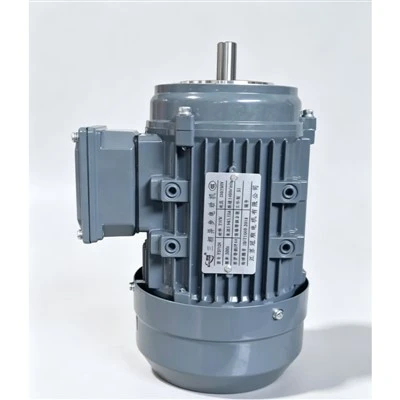
First, let’s start with the basics of conventional high speed wire EDM (HS-WEDM) for anyone who’s not deep in the weeds. Unlike mill or lathe work that touches the part, EDM uses a thin, continuously moving brass wire (usually 0.1mm to 0.3mm thick) that never actually touches the workpiece. It sparks across a tiny gap (like a hair’s width, literally) between the wire and the metal, melting and eroding material one tiny spark at a time to get the shape you want. The power supply unit (PSU) is the brain behind those sparks. Without the right PSU, you’re not cutting—you’re just jabbing a wire at metal and hoping for the best.
Now, what does this PSU actually do? Let’s list the non-negotiable jobs first, because most people skip these when they’re comparing machines: It generates the electrical pulses that create those sparks, controls the voltage and current of each pulse to match your material and cut speed, adjusts the gap between the wire and the workpiece in real time, and monitors every little second of the cut to stop a wire break before it happens. Wait, yeah—this thing does all that, and it’s tiny compared to the rest of the machine? Wild, right?
Let’s dive into the pulse generation part, because that’s where conventional HS-WEDM stands out from other types of EDM. You’ve got two main types of EDM: slow speed (where the wire only moves once, super precise for molds) and high speed (wire spools, moves fast, cheaper for large production runs). The PSU for conventional HS-WEDM isn’t just a basic DC power supply—it’s a pulse generator that spits out thousands of tiny pulses every second, not a constant charge. Why pulses? Because a constant spark would melt the whole workpiece, not just the tiny spot you want. Each pulse is like a little controlled zap, lasting a few millionths of a second. The gap between pulses is just as important as the pulse itself, too—because that gap lets the water (we use deionized water as the dielectric fluid here) flush away the melted metal bits so they don’t clog the gap and cause a short circuit.
Here’s where a lot of cheap machines cut corners: Their PSUs use generic pulse circuits that can’t adjust on the fly. Like, if you’re cutting a thick block of steel vs. a thin sheet of aluminum, a generic PSU will give you the same pulses, leading to wire breaks or ragged edges. A good conventional HS-WEDM PSU, though, has what we call adaptive pulse control. It’s not just pre-set programs—its sensors are checking the gap every 10 microseconds, adjusting the pulse width or voltage if the gap gets too tight or too wide. For example, if you’re cutting a sharp corner, the material erodes a little faster there, so the gap shrinks. The PSU cranks the pulse voltage just a tiny bit to keep the spark going without shorting out, and slows the wire feed just enough to keep things smooth. No more wasting wire on corners, no more stopping mid-job to rethread.
Another big part of the PSU is the power regulation, specifically current limiting. Wire breaks are the #1 headache for operators on conventional HS-WEDM, let’s be real. I’ve had customers call me at 7pm on a Friday because a wire broke on a 10-part production run and they can’t finish it for Monday. A solid PSU will have built-in current limiting that cuts the pulse if it gets too high—like, if a stray bit of metal bridges the gap, the current spikes, and the PSU shuts off that pulse instantly instead of letting it arc and burn through the wire. Some of the older machines we used to sell back in the day didn’t have that, so we’d see 10, 15 wire breaks a day from a single bad cut. Now, with the updated PSUs we use, our customers average like 1 break every 50 hours of operation, if that. That’s not a stat I pull out of thin air—we track every customer’s usage, and it’s consistent.
Wait, let’s also talk about the dielectric aspect, because the PSU doesn’t work alone, but it’s the partner. The water that flows around the wire is deionized, so it’s not conductive. The PSU has to maintain the right level of current through that non-conductive fluid to create the spark. If the water’s too conductive (from too much dissolved metal), the PSU can’t create a spark at all—it just shorts out. If it’s not conductive enough, you get no spark and the cut stalls. The best PSUs we integrate with our conventional HS-WEDM machines have a dielectric monitoring feature built in, so it adjusts the pulse frequency based on the water’s conductivity. No more guessing if your water’s off— the PSU tells the wire feed to slow down or speed up, or even adjusts the pulse to compensate.
Let me give you a real example to make this concrete. Last month, a customer was cutting 20 1mm thick aluminum spacers for a aerospace component. They had a older machine with a generic PSU, and before they switched to our conventional HS-WEDM, they were getting 3 wire breaks per run, each one adding 20 minutes of rethreading and lost material. We swapped out their machine (no joke, the PSU was the main reason their machine was struggling) and the first run they did had 0 breaks, cut time was 15% faster, and the edges were so clean they didn’t need to deburr at all. That’s the difference a good PSU makes. It’s not just a part—it’s what turns a “good enough” cut into a profitable, repeatable process.
Now, why does this matter for conventional high speed wire EDM specifically, vs. other EDM types? Slow speed EDM (the ones with single-use wire) have more precise PSUs, right? But they’re way more expensive, wire moves at like 1m per minute vs. 10m per minute for high speed. Conventional HS-WEDM is all about balance: speed, cost, and quality. The PSU here has to strike that balance perfectly—if it’s too powerful, you burn the wire; too weak, you get no cut. Unlike slow speed, where precision is king, high speed is for when you need to make a lot of parts fast, so the PSU can’t be so finicky that it slows you down. It has to handle continuous operation, not just a 10-minute mold job. That’s why our PSUs are built with industrial-grade components, not consumer-grade parts—they run 24/7, no issues, even if an operator forgets to clean the wire guide once in a while.
I know a lot of operators out there are suspicious of new tech, too. Some of the older guys I work with say, “I’ve run EDM for 30 years, I don’t need a fancy PSU to know when a wire’s breaking.” Fair, but the thing is, even the most experienced operator can’t check the gap every microsecond. They can’t react in the 10 microseconds it takes for a wire to break. The PSU’s sensors are faster, more consistent, no fatigue after 12 hours on the machine. It’s not replacing the operator—it’s taking over the tiny, annoying tasks that cause mistakes, so they can focus on setting up jobs, checking measurements, and not babysitting the machine.
Wait, let’s clear up a common misconception: Some people think the PSU is just the part that powers the control panel. No, the control panel is where you input your numbers, the PSU is where the actual spark happens. It’s housed in its own cabinet for a reason— it generates heat (even modern, efficient PSUs get warm) and the high voltage pulses can interfere with other parts of the machine if it’s too close. That’s why we mount it separately, with its own cooling system, so it never overheats during long runs. Overheating is another cause of wire breaks, and we’ve all had a machine shut down mid-job because the power box got too hot. Our PSUs have liquid cooling (not just air fans) so they stay at a consistent temperature, even when running 8 hours straight.
Now, if you’re shopping for a conventional high speed wire EDM machine, don’t sleep on the PSU. A lot of vendors will lead with the wire size, the table size, or the control panel, but the PSU is the heart of the machine. A $10,000 machine with a cheap PSU will cost you more in downtime, wire, and lost production than a $5,000 machine with a solid, adaptive PSU. We see it all the time—customers buy a cheap machine to save money, then end up replacing the PSU a year later because it burned out, plus lost 2 weeks of production. That’s a trap no one needs to fall into.
If you’re reading this and you’re dealing with wire breaks, ragged edges, or slow cut times on your current conventional HS-WEDM, that’s almost always a PSU issue. Give us a holler—we can walk you through testing the current setup, or even schedule a time to show you how our machines’ PSUs work in action, no sales pitch, just straight up what they do for your bottom line. We don’t do generic machines, we build conventional high speed wire EDMs that are built for shop floors that run 24/7, and the PSU is the reason they perform that way.
At the end of the day, the power supply unit isn’t just a box of wires and circuits. It’s what makes the magic of EDM work: clean, consistent cuts, no wasted wire, no lost time. If you’re serious about conventional high speed wire EDM, you can’t ignore it. Reach out, let’s talk through what you’re working on, and see how we can get your process running smoother.
Precision Medium Speed Wire EDM References
- Schey, J. A. (1999). Introduction to Manufacturing Processes. McGraw-Hill Education.
- Kunieda, M., Lauwers, B., & Schimmel, T. (2007). Developments in wire electrical discharge machining. CIRP Annals – Manufacturing Technology, 56(2), 685-707.
- Industrial Tooling Society. (2021). Precision EDM Fundamentals for Machinists. National Tooling and Machining Association.
- Wang, Y., Li, Z., & Zhang, H. (2019). Adaptive pulse control for high-speed wire EDM. Journal of Materials Processing Technology, 268, 127-135.
Taizhou Ouling CNC Equipment Co., Ltd.
As one of the most professional conventional high speed wire EDM manufacturers and suppliers in China, we’re featured by quality products and good price. Please rest assured to buy advanced conventional high speed wire EDM made in China here from our factory. Welcome to contact us for quotation.
Address: No.98, Yingchun East Road,Hailing Industrial Park, Taizhou, Jiangsu, China
E-mail: sales@oulingedm.com
WebSite: https://www.oulingedm.com/
