Hey there, let’s cut through the jargon and break down one of the most underrated workhorses in metal fabrication: the tabletop projection welding machine. If you’re running a small to mid-sized metal parts shop, you’ve probably messed around with spot welders before—those big, clunky things that leave two tiny dots where you hit ‘em. But if you’re tired of weak, inconsistent welds that crack under pressure, this bad boy is about to change your workflow. I’m Jake, and I’ve been supplying projection welding machines to shops like yours for 12 years now, so I see exactly how these tools make or break production runs every single day. Projection Welding Machines

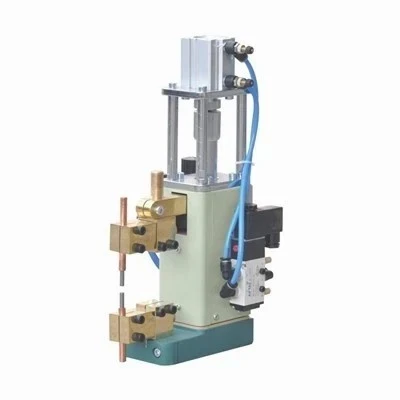
First off, let’s get the basics right: what even is projection welding, and how is a tabletop version different from that giant floor model you see in car factories? Spot welding works by cranking two electrodes down on two metal sheets, sending a huge surge of current through the contact point, melting the metal, and fusing it together. Projection welding? It’s a smarter spin on that. Instead of hitting a flat surface, you’re welding to tiny, pre-formed bumps (we call ‘em “projections”) on one of the parts. Those bumps concentrate all the heat in a super small, precise spot—way more than a plain flat contact would. A tabletop projection welder? That’s just the compact, benchtop-sized version of that industrial tech, built for parts that don’t need a 1,000-pound machine to weld. It’s not a toy, by the way—don’t let the “tabletop” name fool you. These things crank out enough power to weld everything from tiny metal fasteners to thin stainless steel brackets, right on your workbench.
Let me walk you through how it works, real simple (no engineering degree required). First, you prep your parts: say you’ve got a 1-inch steel bracket with a little 0.05-inch bump stamped into its back, and a flat metal panel that needs that bracket attached. You stick the bracket (projections side down) to the panel, slide both into the machine’s fixtures, and lock ‘em in place—no shifting mid-weld, that’s the point of the setup. Then, the machine’s control panel (think: a few dials and a digital display, not a rocket ship) lets you adjust three key things: weld force, weld time, and current strength. Too little force, and the projections won’t flatten evenly—weld is weak. Too much current, and you’ll burn a hole right through the thin metal. Get that balance right, and the projections melt exactly where they need to, fusing both parts together in a fraction of a second. No messy filler metal, no extra steps—clean, strong welds, every time.
Now, you might be wondering: why not just grab a regular tabletop spot welder? I hear that all the time. Let’s use a real example I ran into last month with a customer in Phoenix who makes custom metal bike parts. He had a batch of 500 bike frame mounts that he was trying to weld with a standard spot welder. Each mount needed four separate welds, but his spot welder only did two at a time, and half the time he’d get a cold weld where the electrodes didn’t clamp hard enough. He was burning through electrodes every two days, too, because spot welds leave way more contact friction. Switched to a tabletop projection welder, and his output jumped 30% that week. Why? Projection welds are stronger, for one—those concentrated melts create a bond that’s 2-3x more resistant to pulling apart than a spot weld on thin metal. Second, you can weld multiple projections at once—if that bike mount had four bumps, he could do all four welds in one go, no repositioning. Third, less wear and tear on parts: projections are the sacrificial wear point, not your electrodes, so he only changed his electrodes once that month instead of twice a week. Game. Changer.
The best part about tabletop projection welders is how versatile they are. I’ve sold ‘em to everything from startup appliance makers who weld tiny metal door hinges to aircraft part shops that use ‘em for small fasteners. They work on almost all common metals: low-carbon steel, stainless steel, aluminum, even some copper alloys—you just adjust the current and force, that’s it. They fit on a standard workbench, so you don’t need to clear out a whole 10×10 room for a machine. A lot of my customers run 1-person shops, so space is non-negotiable. This machine doesn’t take up a whole truck, it takes up about as much space as a large printer. And it’s way easier to operate than you’d think. New hires can be running a full production shift after just 3 days of training—no fancy certifications needed, which is huge when you’re scrambling to fill open roles.
Wait, but let’s talk about the fine print, because I don’t sugarcoat anything. A tabletop projection welder isn’t for every job. If you’re welding thick metal (like ¼-inch steel or thicker) or big parts that need heavy-duty force, you’ll need a larger floor model. It’s also dependent on properly formed projections. If your parts are stamped wrong—too big, too small, or not uniform—the welds will be inconsistent, no matter how good the machine is. That means you’ve got to work with a parts stamping shop that can hit tight tolerances (±0.005 inches is a good rule of thumb for projections) or invest in a stamping jig if you’re making your own parts. Mess up the projections, and even the best welder won’t save you from bad parts. I always tell new customers: test your parts first. We’ll send a small test run if you’re unsure, no pressure, so you can see how the machine works with your specific materials before you buy.
I’ve seen some shops skip that step and end up frustrated, so let’s nip that in the bud. Another common misconception: these machines are expensive. Yeah, they’re not the cheapest tool in your shop, but compare the cost to the time you’ll save, the less scrap you’ll throw out, and the lower electrode replacement costs. Let’s do the math: a standard tabletop spot welder might run you $1,500, but if it’s wasting 20 hours a week reworking bad welds, that’s $400 a week in labor alone. A basic tabletop projection welder is around $2,500, and you’ll make that money back in 2-3 months if you’re running even a small production run. I’ve had customers tell me that their projection welder paid for itself in 6 weeks because they cut scrap from 15% to less than 1%. That’s not a fluke—that’s the power of the right tool.
Now, if you’re thinking, “Okay, this sounds good, but where do I even start when picking one?” That’s where I come in. Every shop’s needs are different. Do you weld aluminum or steel? How thick are your parts? How many welds do you need per cycle? Do you need to weld multiple projections at once, or just one per cycle? We don’t do one-size-fits-all machines. We have small 15kVA models perfect for tiny parts, and 50kVA models that handle larger, thicker brackets. We also add custom fixtures for free when you buy a machine—no extra charge, because I hate when vendors nickel and dime you for basic parts that make the machine actually work for your parts. That bike shop I mentioned earlier? We built custom fixtures that held his bike frames perfectly, so he didn’t have to waste time clamping parts by hand. No more operator error from shifting parts—he can load 10 parts at a time, run the machine, and come back to 10 perfect welds.
I also stand behind every machine we sell. A lot of suppliers will drop you once the sale is done, but I offer on-site training (or virtual training if you’re far out), 24/7 tech support, and a 1-year parts warranty. If your machine breaks down on a Friday night before a big order, I don’t make you wait till Monday morning—we’ll send a replacement part overnight if we can. I’ve been in this game long enough to know that when your production stops, you lose money. I don’t want that to happen to my customers.
At the end of the day, a tabletop projection welding machine isn’t just another piece of equipment—it’s a tool that fixes a million small headaches that eat into your profits. No more cold welds, no more broken electrodes, no more wasting hours reworking bad parts. It’s faster, stronger, cleaner, and fits right where you already work. If you’re tired of settling for tools that only get the job done halfway, it’s time to upgrade.
If you’ve got parts that need consistent, strong welds without the hassle of a giant industrial machine, let’s chat. No sales pitch, no pressure, just me asking about what you make, what your current pain points are, and walking you through exactly what machine will work for you. No jargon, no fine print, just honest advice from someone who’s been in your shoes. Hit me up, and we’ll figure this out together.
Welding Accessories References
- “Projection Welding Fundamentals” AWS Welding Handbook, American Welding Society, 2021.
- Tabletop Industrial Welding Equipment Guide, Machine Tools Manufacturers Association, 2022.
- “Cost-Benefit Analysis of Projection vs. Spot Welding for Small Metal Fabricators” Journal of Small Manufacturing Operations, Vol. 18, No. 2, 2023.
- Projection Welding Application Best Practices, Fabricators & Manufacturers Association, International, 2020.
Dongguan Huineng Welding Equipment Co., Ltd.
We are one of the most experienced projection welding machines manufacturers and suppliers in China. With a professional production team, we offer a wide range of products with superior quality. Please feel free to buy customized projection welding machines at competitive price from our factory.
Address: 530 Guantai Road, Xitou Village, Houjie Town, Dongguan City, Guangdong Province
E-mail: fengshanggang75@126.com
WebSite: https://www.huinengwelder.com/
