Hey everyone, if you’re in the plastic packaging, agricultural film, or even flexible packaging for food products, you’ve probably wondered: what’s the actual production capacity of a film blowing machine? As a supplier that works with small startup teams to big manufacturing plants every day, I get this question all the time — and it’s not a one-size-fits-all answer, honestly. Let me break this down like I chat with clients over coffee, no fancy jargon to confuse you. Film Blowing Machine
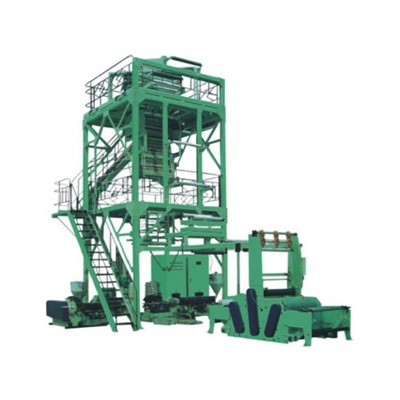
First off, let’s get what a film blowing machine does straight for anyone new here. It’s that machine that turns raw plastic resin — think polyethylene pellets, like LDPE, HDPE, or LLDPE — into thin, flexible plastic film. You blow it up like a giant bubble, cool it down, and roll it up into big, usable rolls. Capacity isn’t just “how much it makes in an hour” either; there’s a ton of factors that change that number, so let’s skip the vague stats and get real.
Let’s start with the basic, no-fuss numbers for standard machines, since that’s what most small to mid-sized businesses use. A small, entry-level machine (the kind for startup packaging lines, 20-60mm screw diameter) usually runs at 10-50 kilograms per hour (kg/h) when it’s cranking out regular LDPE film. Medium-sized machines (60-90mm screw, the workhorse for most factories) hit 50-200 kg/h. Then the big ones — 90mm+ screws, used for large agricultural film or industrial packaging — can push 200-600 kg/h. Wait, but that’s just the base, right? There’s so much that tweaks this. For example, I once had a client who makes thin cling wrap (super thin film) got 15% more capacity than someone making thick construction film on the same machine. Thinner film means you can run faster without overloading the line, that’s a trick a lot of new operators don’t figure out right away.
Now, the big variables that actually change your real-world capacity, not just the label number on the machine. First, resin type matters so much. LDPE is way easier to blow than HDPE, right? HDPE is stiffer, so you have to slow down a little to keep the bubble from breaking, so you lose about 10-20% capacity there. If you’re doing a mix, like a blend of LDPE and LLDPE, that’s in between. Then there’s film thickness — I mentioned this earlier, but it’s worth repeating. A 20 micron grocery bag film is way faster than a 100 micron greenhouse film. Thicker film needs longer cooling times, slower line speeds, so capacity drops hard. If you’re switching between different thicknesses, that downtime for changing settings also eats into your daily total — another thing people forget when they calculate capacity.
Machine size is another one, obviously, but not just screw diameter. The die size (the circle the film comes out of) matters too. A big die makes wider film rolls, so you can cover more area per roll, but if you’re making narrow rolls for snack bags, a smaller die is more efficient. Also, automatic vs manual machines: the semi-automatic ones (with auto-winders, auto-thickness controllers) run way more consistent than full manual ones, so you get less scrap, less downtime, more actual good film out. Manual machines have way more operator error, so their real capacity might be 20% less than the label number.
Wait, scrap rate is a huge one. No machine runs perfect, right? If you’re a new operator, you might have 5-8% scrap in the first week while you get the settings right, that cuts into your total. Even experienced teams get 2-3% scrap for regular runs. So when someone asks “how much can it make a day,” I never just give the kg/h number — I take that, subtract the scrap, and also subtract 1-2 hours for maintenance or small adjustments. A lot of suppliers skip that, and then clients are shocked when their actual output is lower than the “rated” number.
Let me throw in a real example I ran into last month, that makes this concrete. A small e-commerce packaging startup came to me, they were looking at two medium machines. The first supplier said theirs was 180 kg/h, the second (our machine) said 150 kg/h. They almost went with the first one till we walked through the details. The first machine was rated for thick HDPE film, their product is thin LDPE poly mailers. On thin film, that 180 kg/h machine would actually run at 120 kg/h, and since it was a manual auto-winder, scrap was 6%. Our 150 kg/h machine, with semi-auto, ran at 140 kg/h on their film, scrap was 2.5%. So their actual daily output (8 hours of running) was: their machine = (120 x 8) x 0.94 = ~902 kg, our machine = (140 x 8) x 0.975 = ~1092 kg. Way more output, even with the lower rated number. That’s why you can’t just look at the box number — you have to match the machine to what you’re making.
Also, what about industrial or specialty film? Like biodegradable film, or multi-layer film? Multi-layer machines (the ones with 2 or 3 layers, for better strength or barrier properties) have lower capacity than single-layer, right? Each extra layer means more complicated extrusion, slower line speeds. A 2-layer machine might be 30% less than a single-layer of the same screw size. Biodegradable resins are tricky too — they often melt differently, so you have to adjust temperatures and speeds, so capacity can be 15-25% lower than regular plastic films. I had a client doing compostable produce bags, their machine was 200 kg/h for regular film, but only 150 for the biodegradable stuff. That’s just how it works with new materials.
Wait, another thing people don’t think about: roll size. If you’re making small rolls for retail, you change rolls more often, which takes time. Big industrial rolls, you change rolls way less, so that downtime is lower. So a machine making 500mm wide film, rolling into 100kg rolls, has less downtime than one making 100mm wide film into 5kg rolls. That adds up over a day — 10 extra roll changes a day is 20 minutes gone, so that’s 20 kg you’re not making.
Now, let’s talk about how to calculate your own actual capacity, not just what the supplier tells you. Let’s say you need 500 kg of film a day for your snack bags. Let’s walk through the steps: first, pick your resin (LDPE, so no slowdown), film thickness 25 microns, die size fits your roll width. Then, for a medium 75mm screw machine, rated at 120 kg/h for that exact setup. Subtract 2% scrap, that’s 117.6 kg/h. Subtract 1 hour for downtime (maintenance, roll changes, settings checks) in an 8-hour run, so 7 hours of actual running. That’s 117.6 x7 = 823.2 kg a day. Wait, that’s more than the 500 you need, perfect. If you were only getting a rated 180 kg/h and didn’t adjust for all that, you’d think you could do 1440 kg, but in reality you’d be overbuying a machine you don’t need. That’s the mistake I see a lot of new business owners make — they go for the biggest number, not the right number for their product.
Also, maintenance plays a role. If you skip cleaning the extruder every week, the machine will run slower, and even have more scrap. We tell all our clients to do a small clean every 500 hours, a full clean every 2000, and that keeps capacity consistent. A well-maintained machine runs 5-10% better than a neglected one, that’s a simple tip that saves a lot of headaches.
Let me also clear up a common myth: “bigger screw = more capacity” — not always. If you have a 100mm screw but your line’s cooling system is too small, you can’t blow the bubble fast enough, so you can’t actually run the screw at full speed. The cooling system is just as important as the screw. I’ve seen guys with giant 120mm machines that only run at 250 kg/h because their cooling was outdated, while a 80mm machine next to it runs at 300 kg/h because the cooling is on point. That’s a huge waste of money, right? So when you’re looking at machines, don’t just look at screw size — check the cooling system, the winder, the thickness gauge, all the parts that tie into how fast you can actually run.
Now, if you’re in the market for a film blowing machine, here’s the deal: don’t ask “what’s the capacity” — ask “what’s the capacity for my specific film type, thickness, and daily output needs.” That’s how you avoid overspending on a machine that’s too big, or underspending on one that can’t keep up. I’ve had clients come to me before who bought a cheap machine from a no-name supplier, the rated capacity was high, but the actual output was half because they cut corners on cooling. It’s a total waste, because you’re not saving money — you’re losing time and output.
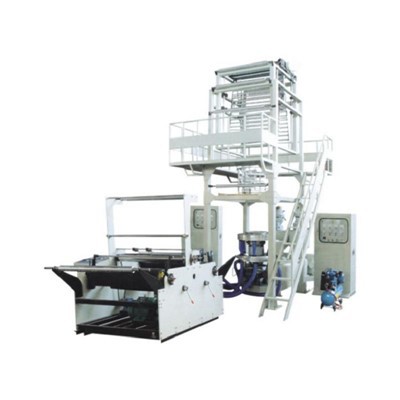
At the end of the day, film blowing machine capacity is a mix of the machine’s specs, what you’re making, and how well you run it. There’s no universal number, but once you factor in your product details, you can nail down exactly what you need. If you’re not sure where to start, or you want to run the numbers for your own production, just reach out. We’re here to walk through your needs, break down the actual capacity for what you’re making, and make sure you get a machine that fits, not just the one with the highest label number. Don’t overcomplicate it — just tell us what film you’re making, how much you need, and we’ll make it easy.
Film Blowing Machine References:
- Modern Extrusion Technology, Society of Plastics Engineers, 2021
- Film Blowing Process Guide, Plastics Technology Association, 2022
- Industrial Plastic Packaging Equipment Manual, Global Machinery Manufacturers Association, 2023
Ruian Huawei Machinery Co., Ltd.
As one of the most professional film blowing machine manufacturers and suppliers in China, we’re featured by quality products and low price. Please rest assured to buy discount film blowing machine made in China here from our factory. Also, quotation is available.
Address: No. 1, Building 2, Jingye Road, Dongshan Street, Rui’an City, Zhejiang Province
E-mail: 13695753569@163.com
WebSite: https://www.hw-machines.com/
