If you’ve ever stared at a messy interior and felt a rush of relief when you pared everything down to only the essentials—clutter cleared, surfaces unadorned, lines sharp and unbroken—you know the magic of a minimalist space. It’s not just about emptying shelves or sticking to a neutral color palette; it’s about intentionality, every serving a purpose, every element working in harmony. That’s what drew me into lighting fixtures over a decade ago, when I started my journey as a small independent supplier of lights, not just as a business, but as a way to turn empty corners into quiet, functional sanctuaries. I’ve spent years talking to homeowners, interior designers, and renters who crave that minimalist vibe, and the number one question I get is: “What lighting fixtures actually fit that style—without being boring?” Let’s break this down, no fancy jargon, no overpriced gimmicks, just real, tested choices that work for real minimalist interiors. Lighting Fixtures

First, let’s ground this in what minimalist design really is, because it’s easy to confuse “minimalist” with “cold” or “sparse.” At its core, minimalism is about subtraction, not addition. You keep only what you need, and every remaining piece has a clear, useful job. That applies to light more than most people realize. A minimalist interior doesn’t need a chandelier with 20 crystals or a floor lamp that looks like a modern art sculpture for art’s sake. It needs light that does its job, blends seamlessly into the space, and doesn’t shout for attention. That’s why form follows function isn’t just a design slogan here—it’s the rule. When I was a new supplier, I made the mistake of stocking fixtures that looked sleek but cast harsh, uneven light, and a designer client of mine quickly set me straight. She said, “Minimalist spaces shouldn’t make you squint or feel like you’re in a laboratory. The light has to feel like it’s part of the wall, not stuck on top of it.” That stuck with me, and it’s shaped every fixture I’ve stocked since.
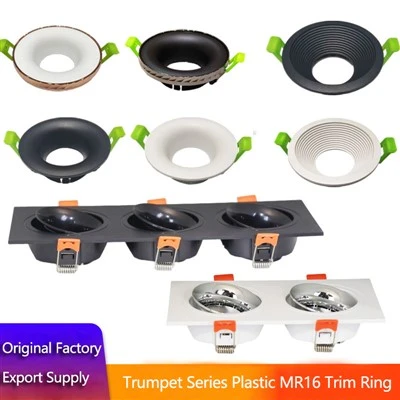
Let’s start with the most important lighting in any room: ambient light, the kind that fills the space evenly when you’re cooking, working, or just relaxing. For minimalist interiors, recessed downlights are a no-brainer for many spaces, but not just any. The key here is “flush-mounted,” not the kind that sticks out an inch from the ceiling like a misplaced frisbee. A slim, flush recessed downlight sits level with your ceiling, so it disappears when it’s not on, blending into your drywall without creating visual clutter. But size matters. I’ve seen too many homeowners install 6-inch recessed lights in a 10×12 bedroom, and the result is harsh, overlapping light that makes the room feel stark. For most residential spaces, 4-inch or 5-inch downlights are perfect, spaced 4 to 6 feet apart, depending on the room size. The best ones also have a color temperature of 2700K to 3000K—soft, warm white, not that bright, blueish cool light that makes minimalist spaces feel like an office. I learned this the hard way when I stocked a batch of cool-white downlights; customers came back saying they felt “unwelcoming.” Warm light, even at a higher brightness, feels inviting, which is crucial for a home.
Another great ambient option for larger spaces, like open-concept living rooms or kitchens, is the linear pendant light. Wait, I know what you’re thinking—pendant lights can feel clunky or decorative, but linear pendants are designed for long, wide spaces. Think of a slim, rectangular bar, usually 24 to 48 inches long, with 3 to 5 small light sources along it, no frills, no extra metalwork. For a kitchen island, this is ideal because it covers the entire surface evenly, so you don’t have dark spots where you’re chopping vegetables or doing dishes. The best linear pendants have a thin, flat profile, not a bulky frame, and they’re available in finishes like brushed nickel, matte black, or white—no shiny gold, no brass that feels too ornate. What I love about these is that they’re scalable: if you have a smaller island, you can get a 24-inch bar; for a 10-foot island, a 48-inch bar works. It’s one piece, no multiple pendants that would clutter the space, exactly what minimalist design calls for. I’ve supplied these to hundreds of kitchen designers, and the feedback is consistent: they eliminate the need for multiple, conflicting fixtures, and they feel intentional, not just added on.
Now, what about task lighting, the light you need for specific activities like reading, working at a desk, or applying makeup? For minimalist spaces, task lighting shouldn’t be a bulky desk lamp that takes up half your work surface or a floor lamp with a huge, decorative base. Instead, go for under-cabinet strip lights for kitchens and bathroom vanities, or slim wall-mounted task lights for desks. Under-cabinet strips are perfect because they mount flush to the underside of your upper cabinets, so they’re hidden when not in use, and they cast bright, even light directly onto your counter or sink—no glare, no dark edges where you’re preparing food. For home offices, slim wall sconces (sometimes called picture lights, but sized for desks) that swing out or tilt slightly give you focused light for working, and they take up zero space on your desk. I recently had a customer who worked from home and hated her big, clunky desk lamp taking up space on her small desk. She installed two 12-inch slim wall sconces on either side of her desk, and she said it changed her whole workspace—more room for her laptop, no glare on her screen, and it fit perfectly with her minimalist decor. The key here is to avoid task lights that have ornate shades, multiple adjustable arms, or extra decorative elements. Keep it thin, keep it functional, keep it unobtrusive.
Accent lighting is the final piece, the light that highlights a piece of art, a plant, or a shelf, without drawing attention to itself. This is where a lot of people overcomplicate things, using bright, spotlight-like fixtures that make the room feel like a gallery. For minimalist interiors, small, track-mounted spotlights or tiny recessed accent lights are the way to go. The best accent lights are directional, so you can point them exactly where you want, and they have a narrow beam (around 25 to 30 degrees) so they don’t spill light all over the room. They’re also small—no big, bulky fixtures that stick out. For art, I often recommend tiny recessed wall lights placed 12 to 18 inches above the frame, so they shine directly onto the art without casting shadows. For tall plants, a small track spotlight mounted near the ceiling, pointing down at the plant, adds warmth and highlights the foliage without cluttering the space. The rule here is simple: less is more. You don’t need 5 accent lights to make a room feel intentional; one or two, placed exactly where you need them, is enough. I’ve had clients come to me wanting to highlight every piece of decor, and when we scale back to just the most important items, they always say the room feels more calm and uncluttered, exactly what they wanted in the first place.
Now, let’s talk about finishes and materials, because even the most functional fixture can break a minimalist look if it’s the wrong material or finish. For minimalist interiors, less is more when it comes to color and texture. Stick to neutral finishes: matte black, brushed nickel, matte white, or clear glass (no frosted glass that feels bulky, no tinted glass that adds color). Avoid shiny finishes like polished chrome or gold—they catch the light and create visual noise, which is the last thing you want in a minimalist space. Materials should be simple too: metal (aluminum or steel, not cast iron that feels heavy), glass, and sometimes thin, smooth wood, if the wood is light and unadorned. No exposed wiring, no decorative hardware, no extra details. I remember a few years ago, a designer told me that “minimalism isn’t about no ornament; it’s about only ornament that serves a purpose.” That’s why I only stock fixtures with clean lines, no extra curves, no carved details, no unnecessary parts. Every piece should look like it was made for a specific job, not just to look pretty.
Another often-overlooked factor is dimmability. A true minimalist interior adapts to how you use the space—bright for cooking and working, soft for movie nights or reading. That means every fixture should be dimmable, and not just dimmable with a special smart system. I’ve had too many customers buy cheap fixtures that only work with one brand of dimmer, which becomes a headache if they want to replace it later. All the fixtures I supply are compatible with standard wall dimmers, so you can control the light without extra hassle. For smaller spaces, like bedrooms, even a single slim flush-mount with a dimmer is enough—no need for multiple fixtures, just one that adjusts to your mood. That’s the beauty of minimalist lighting: it’s flexible, not one-size-fits-all.
Wait, let’s address a common misconception: minimalist lighting has to be expensive. I’ve heard people say, “Oh, minimalist fixtures are all designer prices,” but that’s not true. There are great, durable options at every price point, if you know what to look for. The key is to focus on function over brand. You don’t need a designer label to get a slim flush downlight or a linear pendant. What matters is the quality of the LED bulbs (I always recommend built-in LEDs, since they last 10+ years and use less energy, so they’re practical too), the thickness of the metal frame (avoid fixtures with thin, flimsy metal that bends), and the finish (make sure it’s not going to chip or fade after a year). As a supplier, I work directly with factories to cut out the middleman, so I can offer high-quality minimalist fixtures at prices that don’t require breaking the bank. A lot of my customers are renters or young homeowners on a budget, and they tell me my fixtures fit their style and their budget, which is why they come back.
Now, let’s talk about mistakes to avoid. The biggest one is over-lighting. It’s easy to think more fixtures mean more light, but in a minimalist space, too many fixtures clutter the ceiling and walls, creating visual chaos. A common mistake is installing 6 recessed lights in a 10×12 room—instead, 3 or 4, spaced evenly, with a linear pendant over a kitchen island if needed, is enough. Another mistake is choosing fixtures that are too big for the space. A 48-inch linear pendant in a small 6-foot island will look huge and overwhelming; a 24-inch pendant is the right size. Measure your space before you buy: for pendants, the width should be 12 to 18 inches narrower than the surface they’re hanging over. That’s a simple rule that makes a huge difference. Also, avoid fixtures with multiple light sources that are visible—like pendants with 10 small bulbs sticking out. Those look cluttered, and they don’t cast even light. Stick to fixtures that have the light sources hidden behind a thin metal bar or diffuser, so the only thing you see is the light, not the bulbs.
I’ve seen firsthand how the right lighting can make a minimalist space feel complete. Last year, a client moved into a new apartment that was all white walls, light wood floors, and bare surfaces—she’d worked hard to keep it minimalist, but she said it felt “cold and uninviting.” We installed 3 slim flush recessed downlights in her living room with warm 2700K bulbs, a 24-inch linear pendant over her kitchen island, and a slim wall sconce by her reading nook. When she came back, she texted me a photo: the room felt warm, not crowded, every element worked together, and it still had that calm, uncluttered feel she wanted. That’s the power of good minimalist lighting—it doesn’t just light a room; it enhances the space you’ve already built.
If you’re redesigning your minimalist interior, or just replacing outdated fixtures that are cluttering your space, I’m here to help. As a supplier, I work with homeowners, interior designers, and contractors to find exactly the right fixtures for their space, no matter the size, budget, or style. Whether you need recessed downlights for a bedroom, a linear pendant for a kitchen, or slim wall sconces for a home office, I can help you choose fixtures that are functional, durable, and perfectly fit the quiet, intentional vibe you’re going for. If you’re ready to discuss your project and find the right lighting solutions, feel free to reach out to me for a consultation.
No Main Light References:
- Susanka, S. (2000). The Not So Big House: A Blueprint for the Real World. Taunton Press.
- Calkins, C. (2011). Lighting for Interiors: Architectural Design and Specification. Wiley.
- Jenner, C. (2018). Minimalism Now. Phaidon Press.
- Boyce, P. R. (2014). Human Factors in Lighting, 3rd Edition. CRC Press.
Ruiting Lighting
As one of the most professional lighting fixtures manufacturers and suppliers in China, we’re featured by quality products and good service. Please rest assured to wholesale customized lighting fixtures at competitive price from our factory. Contact us for quotation.
Address: 3rd Floor, Building A, Guansheng Industrial Park, No. 6 Hengxing Road, Guzhen Town, Zhongshan City, Guangdong Province
E-mail: ruitinglighting@126.com
WebSite: https://www.ruitinglighting.com/
