Well, folks, as a supplier of transmission shafts, I get asked a lot about the difference between a driveshaft and a transmission shaft. It’s a common question, and it’s important to understand these components if you’re in the automotive or mechanical industry. So, let’s dive right in and break it down. Transmission Shaft
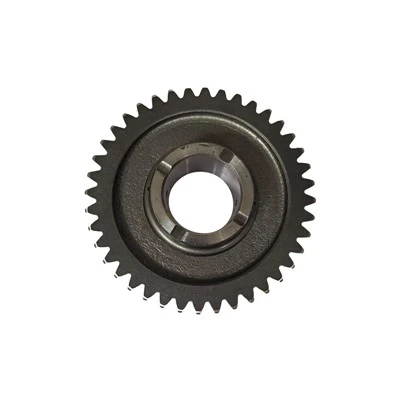
First off, let’s talk about what a transmission shaft is. A transmission shaft is a key part in a vehicle’s transmission system. You can think of it as the main carrier of power within the transmission. It’s responsible for transferring rotational power from the engine to the gears in the transmission. This shaft is designed to handle high levels of torque and rotation, and it has a very specific job within the transmission housing.
Most transmission shafts are made from high – strength steel or aluminum alloys. Why? Well, they need to be strong enough to withstand the forces exerted on them during gear shifting and power transfer. They also have various splines and grooves machined onto them. These splines are crucial because they allow the gears to mesh properly with the shaft, enabling smooth gear changes.
For example, in a manual transmission, the transmission shaft rotates at different speeds depending on the gear you’re in. When you shift from first gear to second gear, the transmission shaft has to adjust to a new rotational speed while continuing to transfer power efficiently. It’s a pretty complex operation, and the transmission shaft plays a vital role in making it happen.
Now, let’s shift our focus to the driveshaft. The driveshaft is a long, rotating shaft that connects the transmission to the differential in a vehicle. Its main job is to transfer the power from the transmission to the wheels. In other words, if the transmission shaft gets the power from the engine to the transmission, the driveshaft takes that power from the transmission and sends it out to the wheels, making the vehicle move.
Driveshafts come in different types. In rear – wheel – drive vehicles, there’s usually one long driveshaft that runs from the back of the transmission to the rear differential. In four – wheel – drive and all – wheel – drive vehicles, there are multiple driveshafts. There’s a front driveshaft that goes to the front differential and a rear driveshaft that goes to the rear differential.
One of the key features of a driveshaft is its ability to adjust to changes in length. As the vehicle moves over bumps and uneven terrain, the distance between the transmission and the differential can change slightly. A driveshaft has universal joints (U – joints) at either end, which allow it to flex and adjust to these changes in length and angle. This ensures that power is continuously transmitted to the wheels, even when the vehicle is going through rough patches.
So, what are the main differences between the two?
1. Location and Function within the Vehicle
The transmission shaft is located inside the transmission housing. Its function is limited to the internal operation of the transmission, transferring power between the engine and the gears. On the other hand, the driveshaft is outside the transmission. It works to transfer power from the transmission to the wheels, connecting the vehicle’s drivetrain to the wheels themselves.
2. Design and Construction
The design of a transmission shaft is more focused on meshing with gears. It has precise splines and a relatively compact size because it operates within the confined space of the transmission. The driveshaft, however, is much longer and has to be designed to handle the movement and changes in angle as the vehicle moves. The universal joints are a characteristic feature of a driveshaft, which you won’t find on a transmission shaft.
3. Loading and Stress
The transmission shaft experiences stress mainly from the gear – meshing forces and the rotational power from the engine. The stress is more concentrated and related to the internal workings of the transmission. The driveshaft, in contrast, endures a different kind of stress. It has to deal with the weight of the vehicle, the forces from acceleration and deceleration, and the dynamic forces caused by the vehicle’s movement over different terrains.
4. Maintenance and Replacement
When it comes to maintenance, the transmission shaft is a bit trickier to access since it’s inside the transmission. You often have to remove a significant part of the transmission to get to it. The driveshaft, however, is more accessible. If a U – joint on a driveshaft fails, it can usually be replaced without major disassembly of the vehicle.
As a supplier of transmission shafts, I know how important it is to have high – quality components. Whether you’re building a new vehicle, doing a major repair, or just upgrading your existing setup, the quality of the transmission shaft can make or break the performance of your transmission.
Our transmission shafts are made with the highest standards in mind. We use the best materials, and our manufacturing processes ensure that each shaft meets strict quality control measures. Our goal is to provide you with a product that is reliable, durable, and efficient.
If you’re in the market for transmission shafts or have any questions about them, don’t hesitate to reach out. Whether you’re an automotive manufacturer, a repair shop, or a DIY enthusiast, we’re here to help you get the right transmission shaft for your needs. Contact us to discuss your requirements, and let’s work together to find the perfect solution for your project.
Transmission Shaft References
- Automotive Engineering textbooks (e.g., "Automotive Mechanics Fundamentals")
- Industry technical manuals and specifications
- Interviews with automotive technicians and engineers
Yancheng Botu Transmission Machinery Co., Ltd.
As one of the most professional transmission shaft manufacturers and suppliers in China, we have world-leading production equipment and strong manufacturing capabilities. Please rest assured to wholesale cheap transmission shaft for sale here from our factory. Contact us for more details.
Address: No. 33, Yongxing Road, Economic Development Zone, Jianhu County, Yancheng City, Jiangsu Province
E-mail: 15261979878@163.com
WebSite: https://www.ycbtcdjx.com/
