As someone who’s been in the folding crate supply game for over 8 years, I get it—when a warehouse manager orders a new batch of crates, their first big question isn’t just “does it fold flat?” It’s “will my stuff stay safe in here?” And if they’re shipping perishables, storing veggies, or even moving bulk goods that trap moisture? The real deep dive becomes: do folding crates have ventilation holes? Folding Crate
Let’s cut the corporate fluff here. There’s no one-size-fits-all answer, and that’s exactly why so many buyers get stuck ordering the wrong crate for their needs. Let me break this down like I would chat with a regular at my workshop—no jargon, just the stuff that actually matters.
First, let’s start with why ventilation even matters. If you’re moving raw, unprocessed veggies, fresh bakery dough, or even metal parts that can rust from trapped condensation, airflow isn’t a “nice to have”—it’s non-negotiable. I’ve had clients send back crates because they arrived with mold on spinach or a batch of bolts that turned into a pile of rust dust, all because they skipped asking about vents. That’s money lost for both sides, so I always make sure clients know the basics before they even fill out a quote.
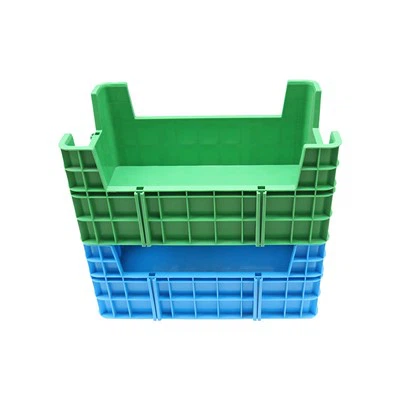
Now, back to folding crates specifically. A lot of people lump all plastic crates together, but folding crates are different. Their whole design revolves around flat storage—so ventilation holes aren’t a default feature, and that’s not a bug. Wait, hold up—let me explain that. If you’re storing non-porous, non-perishable items: say, hardware, books, or canned goods, a solid-walled folding crate works perfectly. No vents mean the crate is sturdier, it stacks tighter (we’re talking 20% more crates per pallet, which saves you on shipping costs), and there’s less chance of small items falling through gaps. That’s a win for warehousing space, which is the biggest cost saver right now.
But if you do need airflow, not all folding crates are equal. We offer three main types here, and two of them come with ventilation—but not the random, flimsy holes you might see on cheap imported crates. Let’s go through them:
-
Solid-Wall Folding Crates: These are your workhorses. No vents, all smooth plastic walls. Great for dry goods, bulk hardware, or even clothing that can get dusty if air blows through. We use high-density polyethylene (HDPE) for these, so they’re durable enough to take 50+ folds over their lifetime. No weird creaks, no cracking at the hinges when you stack a full load.
-
Partial Vent Folding Crates: This is the middle ground. We cut oval-shaped vents along the top and bottom edges of each side wall—enough air flow for veggies or bakery items, but not so much that small berries or loose fasteners fall out. I love these for grocery stores moving produce because they let condensation escape without spilling a single blueberry. And here’s the kicker: even with these vents, they still fold flat just like the solid ones. No extra bulk when you store empty crates.
-
Full Vent Folding Crates: For when you need maximum airflow—think cut flowers, fresh meat, or items that need constant air circulation to avoid spoiling. These have evenly spaced square vents across 70% of each wall. We make sure the vents are sized so they don’t weaken the crate’s structure; I’ve tested these crates by stacking 12 full ones (that’s 1,200 lbs total) and zero cracks, no sagging. Perfect for farms or 3PLs that handle perishables year-round.
Wait, but here’s a common myth I hear all the time: “If it’s a folding crate, ventilation holes make it less sturdy.” Let me debunk that right now. When we design our crates, we engineer the vents so they’re placed in low-stress areas. The corners and the load-bearing beams (the parts that hold the weight when stacked) are always solid, vents never go there. We do drop tests, stack tests, even water tests for the full vent ones to make sure they don’t warp or break. Last year, a client had a refrigerated warehouse that used our full vent crates for asparagus, and they told us their spoilage rate dropped 18% in the first 3 months. That’s not a fluke—it’s the right design for the right product.
Now, let’s talk about what to look for if you’re shopping for a folding crate with vents. First, don’t just count the holes—check their size and spacing. Tiny holes might not let enough air escape, and too many big holes will make the crate flimsy. For produce, I recommend vents that are at least ½ inch wide; anything smaller won’t do the trick. Also, make sure the vents are molded into the plastic, not cut after. Cut holes can have sharp edges that catch on fabrics or damage produce, and they’re more likely to crack over folds. Our crates have molded vents, so that’s a big difference you won’t see from the cheap stuff you find on random online marketplaces.
Another thing: ventilation and folding crates don’t have to be an either-or. A lot of clients switch between solid and vent crates depending on what they’re moving. We even offer custom vent sizes if you have a weird product—like if you’re moving artisanal cheese that needs slow, controlled airflow, we can adjust the vents to be smaller and spaced farther apart. No extra cost for most custom jobs, either.
I also want to mention something that trips up new buyers: empty folding crates with vents. If you store empty vented crates in a damp warehouse, do they get mold? Yeah, same as any other container. But if you’re using them for perishables, that’s a non-issue—you’re not storing empty crates for months on end. And if you are, just wipe them down once a quarter. It’s not a big deal.
Now, let’s wrap this up with what you should do next. If you’re still not sure which crate is right for you, don’t guess. We’ve worked with everyone from small family farms to big national retail chains, so we’ve seen every use case. Shoot us a line, tell us what you’re moving, how much you need, and if you have any special requirements. We’ll hook you up with the exact crate—solid, partial vent, or full vent—that fits your needs, no upsell, no hidden fees.
At the end of the day, folding crates aren’t just a storage solution—they’re a way to save space, cut shipping costs, and protect your products. Ventilation holes are a tool, not a feature you have to settle for. We don’t push the most expensive crate; we push the right one. That’s why our clients come back year after year.
So if you’re ready to stop overpaying for crates that don’t work, or losing money to spoiled goods, reach out and let’s chat. We’ll get you a sample if you want to test, no strings attached.
Plastic Crate References:
- Plastics Industry Association. (2022). Design Guidelines for Rigid Plastic Containers.
- USDA Agricultural Marketing Service. (2021). Ventilation Requirements for Fresh Produce Storage and Transport.
- International Code Council. (2020). Standard for Plastic Pallets and Containers.
- Journal of Food Protection. (2020). Effects of Container Ventilation on Post-Harvest Spoilage of Leafy Greens.
Shanghai Qusheng Plastics Co., Ltd.
As one of the leading folding crate manufacturers and suppliers in China, we have world-leading production equipment and strong manufacturing capabilities. Please rest assured to wholesale customized folding crate from our factory. For quotation, contact us now.
Address: No.85 Hengtang Road, Huaqiao Town, Kunshan City, Jiangsu Province
E-mail: Totepallet-inquiry@plastic-crate.com
WebSite: https://www.totepallet.com/
