If you’ve ever had to source industrial mixing equipment, you know the question “how much does an agitator cost?” never has a single, straightforward answer. As an agitator supplier with 12 years in the game, I’ve fielded this question hundreds of times—from small-batch craft brewers needing a 5-gallon tank mixer to chemical plants ordering units that move millions of gallons of slurry a minute. The reality is that agitator pricing depends on a handful of non-negotiable factors, and cutting corners on any one of them will only lead to headaches down the line. Let me break this down the way I talk to my customers, no sales fluff, just real numbers and context. Agitator
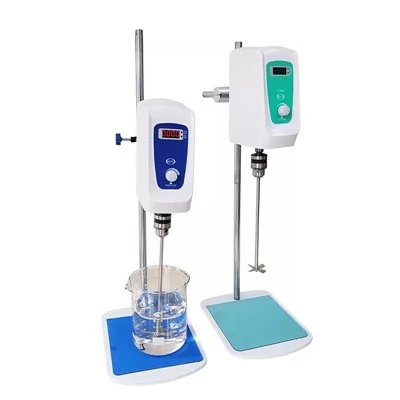
First, let’s start with the basics: what even is an agitator for this context? I’m not talking about the tiny handheld wand you use to mix paint. I’m talking about industrial mixing equipment used across food and beverage, pharmaceuticals, water treatment, mining, and chemical processing. These units aren’t one-size-fits-all, and that’s where the cost equation starts to shift.
The biggest driver of price is size and power output. A simple, low-speed agitator for a 500-gallon tank, used for mixing syrups in a craft soda plant, will run between $1,200 and $3,500. That unit is made with 304 stainless steel, has a 1.5 horsepower motor, and is built for gentle, consistent mixing. On the opposite end, a high-torque agitator for a 100,000-gallon mining slurry tank, rated for 50+ horsepower, can cost $15,000 to $50,000 or more. Why such a huge gap? That larger unit has to handle corrosive, heavy solids, requires reinforced shafts, heavy-duty bearings, and a motor built to run 24/7 without overheating. I had a customer last year who tried to save $8,000 by buying a used 20-horsepower unit for their 80,000-gallon tank. It lasted 3 months before the shaft bent under the weight of the slurry—and the replacement and downtime cost them $25,000, plus the cost of disposing of the failed unit. That’s the kind of mistake I see all the time when people fixate on upfront price over performance.
Next, material construction. This is another huge variable that most buyers overlook at first glance. If your agitator is mixing food products or pharmaceuticals, you can’t use just any steel. 304 stainless steel is standard for most sanitary applications, and a 5-horsepower unit in this material will run about $200 more than the same size made with carbon steel. But if you’re working with corrosive chemicals—like hydrochloric acid or some brines—you need 316 stainless steel, or even Hastelloy. A 5-horsepower 316 SS agitator is $800 more than the 304 version, and for high-powered units for chemical processing, that material jump can add $5,000 to $10,000. I had a winery customer a few years back who was mixing wine with a small amount of sulfur dioxide; they tried a 304 unit, and within a year the sulfur had pitted the steel. They had to replace it early, costing them $4,000 instead of paying an extra $500 upfront for a 304 unit rated for sulfur exposure. That’s the kind of detail that makes all the difference in long-term cost.
Then there’s the type of agitator and its design features. Not all agitators mix the same way, and different designs serve different needs. For example, a propeller agitator is the cheapest type, good for low-viscosity liquids like water or juice. A 5-horsepower propeller agitator will be around $1,800. A turbine agitator, which is better for higher viscosity liquids or creating more uniform mixing, costs a bit more—about $2,200 for the same horsepower. Then there are anchor agitators, used for thick pastes or dough-like materials; those start at $3,000 for small units and go up depending on the tank size. If you need variable speed control (common for batch processing where you adjust mixing speed for different stages), that adds $200 to $500. If you need a unit that can run with a control panel or integrate with your plant’s automation system, that’s another $1,000 to $2,000. Even things like shaft length and mounting style matter: top-mounted units are standard, but side-mounted or bottom-mounted designs for specific tank configurations add extra engineering time and cost.
Installation and service are also part of the total cost, and I always make sure my customers understand that upfront. A lot of suppliers will quote you just the agitator itself, but you have to account for installation, wiring, and any necessary modifications to your tank or floor space. For a small unit, installation might be a few hundred dollars, but for large, heavy agitators, you might need to rent a crane or hire specialized technicians, which can add $2,000 to $10,000. Then there’s ongoing maintenance: filters, bearings, seals, and motor parts. Most industrial agitators require annual service, and replacement parts can add $300 to $1,500 a year depending on the unit. I offer annual service plans for all my customers, and many of them tell me that the peace of mind and reduced downtime is worth the cost.
Now, let’s talk about common misconceptions I run into. A lot of small business owners, especially startups, ask if they can save money by buying off-the-shelf or used agitators. Used units can be a good option if you’re working with very basic applications—like mixing water for a small agricultural operation—but you have to inspect them thoroughly. I’ve seen used units that looked fine but had hidden shaft damage or worn bearings that would fail in a matter of months. Off-the-shelf units work if your needs are standard, but if you have a unique tank size or mixing requirement, custom engineering is non-negotiable. For example, a customer who makes specialty chocolate needed an agitator for a 1,000-gallon jacketed tank; off-the-shelf units didn’t fit the tank’s port size, so we engineered a custom mount that cost an extra $1,200, but it worked perfectly and hasn’t had issues in 4 years.
Another thing to consider is warranty. Cheap agitators often come with a 90-day warranty, while units from reputable suppliers like mine come with a 1-2 year full warranty on parts and labor, plus extended warranty options. That might sound like the supplier is marking up the price, but think about it: if a $5,000 unit has a 2-year warranty, that means the supplier stands behind their engineering and materials, so you’re far less likely to have unexpected breakdowns. I had a customer last year who bought a $3,000 off-the-shelf unit that failed 6 months in; the replacement cost them $3,000 again, plus $1,500 in downtime, while a comparable unit from me would have cost $5,000, but the warranty would have covered every part and labor, including lost production time. It’s a trade-off that almost always works out in favor of quality.
Let me give you some real-world examples to make this concrete, based on jobs I’ve done in the last year. First, a craft brewery in Ohio: they needed 2 agitators for their mash tun and lauter tun. The mash tun unit was 3 horsepower, 304 stainless steel, top-mounted, with variable speed. Cost: $2,800. The lauter tun unit was 5 horsepower, same materials, custom propeller design. Cost: $3,500. Total for both: $6,300, plus installation $800. They’ve had them for 18 months, no issues, and the consistency in their mash has cut their beer production time by 10%. Second example: a municipal water treatment plant in Texas. They needed 6 agitators for their clarifier tanks, 20 horsepower each, 316 stainless steel, bottom-mounted, with automated control panels. Cost per unit: $18,500, total for 6: $111,000, plus installation $12,000. These units run 24/7, 365 days a year, and the plant has reported zero unplanned downtime in the last year, which has saved them over $50,000 in operational costs. Third example: a specialty chemical manufacturer in Illinois. They needed a custom agitator for a high-corrosion slurry tank, 40 horsepower, Hastelloy construction, side-mounted, with a pressure seal to prevent leaks. Cost: $42,000, plus engineering and installation $5,000. That unit has been running for 2 years, no corrosion issues, and the company hasn’t had to replace a single part.
So, when someone asks me “how much does an agitator cost?” my answer is always, “it depends on what you need it to do, and how long you want it to last.” Upfront price is important, but it’s not the only cost. Downtime, replacement parts, and premature failure can add up to way more than investing in a quality unit from the start.
At the end of the day, I’ve been doing this long enough to know that every customer’s needs are different. A bakery mixing cake batter has very different requirements than a mining company mixing ore slurry, and their agitator costs will reflect that. That’s why I never give a one-size-fits-all quote over the phone; I take the time to ask questions: what’s your tank size? What are you mixing? What’s the viscosity of the material? How many hours a day does the agitator run? What’s your budget for installation and maintenance? That way, I can recommend a unit that works for their needs, not just the cheapest option.

If you’re in the market for an agitator and you’re tired of generic quotes or salespeople who don’t know your industry, I’m here to help. Whether you’re a small business with a single tank or a large plant needing multiple units, I can walk you through the factors that affect cost, show you real examples of installations similar to yours, and give you a transparent quote that includes everything from the unit itself to warranty and service. Don’t make the mistake of choosing an agitator based on price alone—spend a little time understanding your requirements, and you’ll end up with a unit that works for years, not months. Reach out to discuss your project, and let’s find the right agitator for your needs.
Shaker References:
- Industrial Mixing Equipment: Cost Considerations for Process Industries. Global Industrial Manufacturing Journal, 2022.
- Material Selection for Industrial Agitators: Corrosion Resistance and Longevity. Journal of Process Engineering, 2021.
- Total Cost of Ownership Analysis for Industrial Mixing Equipment. International Society of Automation, 2023.
- Sanitary Agitator Design for Food and Pharmaceutical Applications. Food Processing Technology Magazine, 2022.
Hangzhou Qiwei Instrument Co., Ltd.
Hangzhou Qiwei Instrument Co., Ltd. is one of the most reliable manufacturers and suppliers of agitator in China, featured by quality products and good service. Please rest assured to buy bulk durable agitator in stock here from our factory. We also accept customized orders.
Address: Room 101, Building 25, No. 488-1, Donghu North Road, Linping District, Hangzhou City, Zhejiang Province, China
E-mail: info@qiweilab.com
WebSite: https://www.qiweilab.com/
