Hey there! I’m a supplier of monitoring accessories, and today I wanna chat about whether these nifty gadgets can be used in industrial settings. It’s a question I get asked a lot, so let’s dig in and see what’s what. Monitoring Accessories
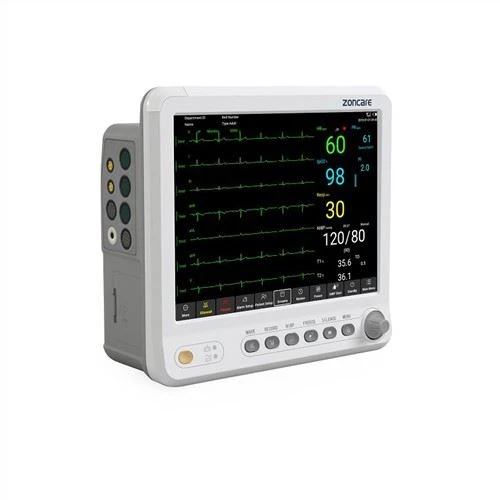
First off, let’s talk about what monitoring accessories are. They’re basically devices that help you keep an eye on different aspects of a system or process. This can include things like sensors that measure temperature, pressure, or humidity, as well as cameras for visual monitoring. There are also data loggers that record information over time, and alarms that can alert you when something goes wrong.
Now, the big question: Can they be used in industrial settings? The short answer is yes, and here’s why.
Why Monitoring Accessories are a Good Fit for Industry
1. Safety
Safety is a top priority in any industrial environment. Monitoring accessories can play a crucial role in keeping workers safe. For example, temperature sensors can detect overheating in machinery, which could lead to a fire or explosion. Pressure sensors can monitor the pressure in pipes and tanks, preventing dangerous leaks. By having these sensors in place, you can catch potential problems before they turn into disasters.
Let me give you an example. I had a client in the chemical industry. They were using a large reactor vessel, and the temperature inside was critical. If it got too high, it could cause a chemical reaction that would be extremely dangerous. We installed temperature sensors on the vessel, and they were connected to an alarm system. One day, the sensors detected a sudden increase in temperature. The alarm went off, and the operators were able to take immediate action to cool down the vessel. This prevented a major accident and saved the company a lot of money in potential damages.
2. Efficiency
In an industrial setting, efficiency is key. Monitoring accessories can help you optimize your processes and reduce waste. For instance, flow sensors can measure the amount of fluid flowing through a pipe. By knowing the exact flow rate, you can adjust the system to use the right amount of resources. This can save energy and reduce costs.
Another example is in a manufacturing plant. They were using a conveyor belt to move products from one area to another. By installing speed sensors on the conveyor belt, they were able to monitor its speed and make sure it was running at the optimal rate. This reduced the amount of time products spent on the conveyor belt, increased the throughput, and improved overall efficiency.
3. Quality Control
Monitoring accessories are also great for quality control. In industries like food and beverage, pharmaceutical, and electronics, maintaining a high level of quality is essential. Sensors can measure things like the pH level, moisture content, or electrical conductivity of a product. This allows you to ensure that the product meets the required standards.
For example, in a food processing plant, they were making cheese. The quality of the cheese depends on the pH level during the production process. By using pH sensors, they were able to monitor the pH in real-time and make adjustments as needed. This resulted in a more consistent and higher-quality product.
Challenges of Using Monitoring Accessories in Industrial Settings
Of course, it’s not all sunshine and rainbows. There are some challenges to using monitoring accessories in industrial settings.
1. Harsh Environments
Industrial environments can be pretty tough on equipment. There’s often a lot of dust, dirt, and moisture, as well as extreme temperatures and vibrations. This can damage the monitoring accessories and affect their accuracy.
To overcome this, you need to choose accessories that are designed to withstand these harsh conditions. For example, some sensors are made with rugged casings that can protect them from dust and moisture. Others are designed to operate in a wide range of temperatures.
2. Compatibility
Another challenge is making sure that the monitoring accessories are compatible with the existing systems in the industrial setting. You need to ensure that they can communicate with the control systems and that the data they collect can be integrated into the overall management system.
This requires careful planning and testing. You may need to work with a professional to make sure that everything is set up correctly.
3. Cost
Monitoring accessories can be expensive, especially if you need a large number of them or if they are high-end models. However, you need to look at the long-term benefits. The cost of preventing an accident or improving efficiency can far outweigh the initial investment.
Types of Monitoring Accessories for Industrial Use
Now, let’s take a look at some of the different types of monitoring accessories that are commonly used in industrial settings.
1. Temperature Sensors
Temperature sensors are one of the most widely used monitoring accessories in industry. They can be used to monitor the temperature of machinery, processes, and products. There are different types of temperature sensors, such as thermocouples, resistance temperature detectors (RTDs), and infrared sensors.
Thermocouples are simple and inexpensive, and they can measure a wide range of temperatures. RTDs are more accurate and stable, but they are also more expensive. Infrared sensors can measure temperature without making contact with the object, which is useful in some applications.
2. Pressure Sensors
Pressure sensors are used to monitor the pressure in pipes, tanks, and other systems. They can detect changes in pressure and alert you if there is a problem. There are different types of pressure sensors, such as strain gauge sensors, piezoelectric sensors, and capacitive sensors.
Strain gauge sensors are the most common type. They work by measuring the change in resistance of a strain gauge when it is subjected to pressure. Piezoelectric sensors are more sensitive and can measure very small changes in pressure. Capacitive sensors are used in applications where high accuracy is required.
3. Flow Sensors
Flow sensors are used to measure the flow rate of fluids, such as water, oil, or gas. They can help you optimize the flow of resources and prevent waste. There are different types of flow sensors, such as electromagnetic flow sensors, ultrasonic flow sensors, and turbine flow sensors.
Electromagnetic flow sensors work by measuring the voltage generated by the flow of a conductive fluid through a magnetic field. Ultrasonic flow sensors use ultrasonic waves to measure the flow rate. Turbine flow sensors use a turbine to measure the flow rate.
4. Camera Systems
Camera systems are used for visual monitoring in industrial settings. They can be used to monitor production processes, detect defects, and ensure the safety of workers. There are different types of camera systems, such as fixed cameras, pan-tilt-zoom (PTZ) cameras, and thermal cameras.
Fixed cameras are used to monitor a specific area. PTZ cameras can be controlled remotely to pan, tilt, and zoom, allowing you to view different areas. Thermal cameras can detect heat signatures, which is useful in applications where temperature monitoring is important.
How to Choose the Right Monitoring Accessories for Your Industrial Setting
When choosing monitoring accessories for your industrial setting, there are a few things you need to consider.
1. Application
The first thing you need to consider is the application. What do you need to monitor? What are the specific requirements of your industrial process? For example, if you need to monitor the temperature of a chemical reactor, you will need a temperature sensor that can withstand high temperatures and corrosive chemicals.
2. Environment
You also need to consider the environment in which the monitoring accessories will be used. Is it a harsh environment with a lot of dust, dirt, and moisture? If so, you will need accessories that are designed to withstand these conditions.
3. Accuracy
The accuracy of the monitoring accessories is also important. How precise do you need the measurements to be? If you are monitoring a critical process, you will need accessories that can provide accurate and reliable data.
4. Cost
Finally, you need to consider the cost. How much are you willing to spend on the monitoring accessories? You need to balance the cost with the benefits. Remember, the cost of preventing an accident or improving efficiency can far outweigh the initial investment.
Conclusion
So, can monitoring accessories be used in industrial settings? Absolutely! They offer a wide range of benefits, including safety, efficiency, and quality control. However, there are also some challenges that you need to be aware of, such as harsh environments, compatibility, and cost.
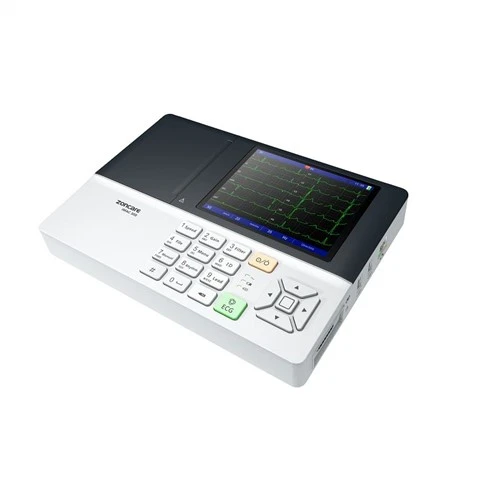
If you’re looking for high-quality monitoring accessories for your industrial setting, I’m here to help. I’ve got a wide range of products that are designed to meet the needs of different industries. Whether you need temperature sensors, pressure sensors, flow sensors, or camera systems, I can provide you with the right solution.
Ultrasonic Accessories If you’re interested in learning more about our monitoring accessories or have any questions, feel free to reach out. We can have a chat and figure out the best options for your specific requirements. Let’s work together to make your industrial processes safer, more efficient, and more productive.
References
- "Industrial Automation and Control Handbook" by David A. H. Thompson
- "Sensor Technology Handbook" by John Wilson
- "Monitoring and Control of Industrial Processes" by Michael J. Moran
Wuhan Zoncare Bio-medical Electronics Co., Ltd.
Wuhan Zoncare Bio-medical Electronics Co., Ltd. is one of the leading monitoring accessories manufacturers and suppliers in China. We warmly welcome you to wholesale discount monitoring accessories from our factory. All customized products are with high quality and low price. Contact us for more cheap products.
Address: Zoncare building, No. 380, High-tech 2nd Road, Eastlake High-tech Development Zone, Wuhan, Hubei 430206 P. R. China.
E-mail: info@zoncare.com
WebSite: https://www.zoncareglobal.com/
