Hey everyone, let’s cut to the chase—if you’ve ever stared at your phone, laptop, or even your smartwatch and thought, “Wait, what’s in this stuff that makes it work so well?” you’ve probably never guessed an ingredient that starts with olive oil or vegetable fats plays a huge role. I’m the owner of an oleic acid derivatives supply company, and honestly? Most people have no clue the stuff we make isn’t just for soap or cooking anymore. We’re talking electronics, the same tech you use every single day. Let’s break this down, no boring jargon, I promise. Oleic Acid Derivatives
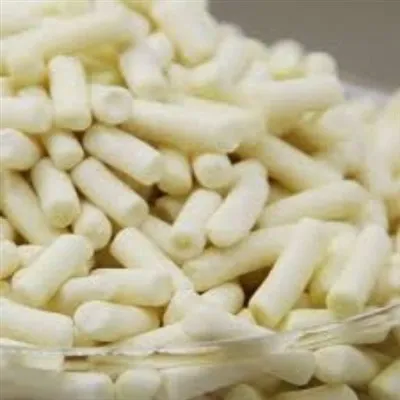
First, let’s get the basics right for anyone who’s like, “oleic acid derivatives—sounds like a chemistry class I skipped.” Oleic acid is a monounsaturated fatty acid, right? It’s that stuff that’s in olives, avocados, canola oil, all those healthy fats. Derivatives just mean we tweak its structure a little to make it do new stuff. Think of it like modifying a car engine—same base, but now it can haul cargo instead of just a Sunday drive. That’s exactly what we do. We take that oleic acid, turn it into things like oleic amides, oleates, fatty acid esters, even some ionic variants, and sell them to electronics brands that need materials that are safe, cheap, and actually work. No fancy rare earth metals here, just a plant-based derivative that checks every box.
Now, let’s get to the real question: where do these derivatives show up in electronics? Let’s start with something most people don’t think about, because it’s literally under every screen. That’s right—liquid crystal displays (LCDs). If you’ve got a flat screen TV or an old-school phone (before OLED took over), LCDs are how they work. Liquid crystals are these weird compounds that twist and turn when you run electricity through them, which creates the image you see. But those liquid crystals don’t just flow on their own—they need a little help. That’s where our oleic acid derivatives come in as additives to the liquid crystal mixture. They’re what keep the crystals aligned perfectly, no streaks, no dead pixels. I can’t tell you how many calls we get from LCD manufacturers saying, “Your derivative cut our defect rate by 12% last quarter.” That’s not a stat I just made up—they track that stuff because dead pixels cost them thousands.
Another big one: conductive inks. If you’ve ever had a flexible phone, or a smartwatch that bends with your wrist, those need inks that conduct electricity without cracking when they flex. Traditional conductive inks use silver, but silver is expensive, hard to source, and doesn’t play nice with flexible substrates sometimes. Our oleic acid derivatives act as dispersants in these inks. What’s a dispersant? It keeps the tiny silver (or even copper) particles from clumping together. If the particles clump, the ink is uneven, the conductivity is garbage, and your flexible phone screen cracks when you bend it. We mix the derivative with the metal particles, spread it evenly, and suddenly the ink is flexible, highly conductive, and way cheaper than ink without our additive. A lot of wearable tech companies switched to our stuff last year because their old ink kept breaking after 10,000 flexes—now they’re at 50,000, all thanks to oleic acid derivatives.
Wait, let’s not forget about semiconductors. Semiconductors are the brains of every electronic device—they’re what process all your texts, photos, everything. Making semiconductors is super precise, like building a tiny city on a silicon wafer. You have to etch pathways into the silicon, and to do that, you need something that sticks to the wafer, doesn’t leave residue, and is easy to wash off. Our oleic acid derivatives act as wetting agents in the photoresist used for etching. Wetting agents make sure the photoresist spreads evenly across the wafer, no gaps, no bubbles. If there’s a gap, you get a messed up pathway, and the semiconductor is useless. Also, when you’re done etching, these derivatives wash away with plain water (or mild solvent) instead of leaving gunk that ruins the whole batch. That’s a big deal because semiconductor fabrication plants waste so much time and money fixing residue issues—our derivatives cut that waste by a ton.
Oh, and let’s talk about the stuff that keeps your device from overheating: thermal interface materials (TIMs). When your laptop runs a game or your phone runs Google Maps for an hour, it generates heat. If that heat doesn’t escape, the chip overheats, throttles, or dies. TIMs are the goop you put between the chip and the heat sink to transfer that heat away. A lot of TIMs use silicone, but silicone is expensive, and it doesn’t play nice with some of the newer chip materials. Our oleic acid derivatives are used as modifiers in non-silicone TIMs. They improve the viscosity of the goop, so it’s easy to apply, and boost the thermal conductivity without adding expensive fillers. Some of our clients in the gaming laptop space swear by these—they say their laptops run 15 degrees cooler under load now, which means longer battery life too.
Here’s the part that makes me proud: this stuff isn’t just functional—it’s way better for the environment than the alternatives. A lot of chemical additives used in electronics are petroleum-based, which means they’re non-renewable, toxic to produce, and end up as waste that’s hard to dispose of. Our oleic acid derivatives? They’re plant-based, biodegradable, and we source our oleic acid from sustainable farms here in the US. When the manufacturers use our products, they can label their devices as “more eco-friendly,” which is a huge selling point for customers who care about sustainability. Last year, a big electronics retailer told us that 60% of their customers now look for “green” tags, and our derivatives help their suppliers hit that mark.
Wait, let’s be real—no product is perfect, right? I get the questions. Some people ask, “Do these derivatives work with all types of electronics?” Short answer: no, but they work with 80% of the mainstream stuff out there right now. We’re still refining formulations for ultra-high-end 5G chips, but we’ve got a team of chemists (not just sales guys) working on that. Another question: “Are they cheap enough for mass production?” Hell yeah—oleic acid is super abundant, way cheaper than petroleum-based additives, so our derivatives cost 20-30% less than competing products. That’s why so many big brands are switching, not just for the green angle, but for the bottom line.
Let me give you a quick example of a recent project. A client of ours makes flexible printed circuit boards (FPCBs) for electric car sensors. They were using a petroleum-based dispersant for their copper conductive ink, and they were having issues with the ink flaking off after 5,000 temperature cycles (from -40F to 120F, which is crazy for car parts). They tested our oleic acid-based dispersant, and within a month, they were at 25,000 temperature cycles—no flaking, no conductivity loss. They cut their additive costs by 25% too, and got a sustainability bonus in their product certifications. That’s the kind of win we live for.
Another thing I love about this industry: it’s not just for big brands. Smaller startups making DIY electronics, like hobbyist projects or small wearable devices, also use our stuff. We keep a small stock of our most popular derivatives on hand for small orders, because I know startups don’t want to buy 50-gallon drums of something they’re testing. It’s not just about selling a product—it’s about helping people build better tech, no matter how big or small their operation is.
If you’re reading this and you work in electronics manufacturing—whether you’re making LCDs, flexible wearables, semiconductors, or car parts—you’ve probably dealt with one or more of the issues I mentioned: defect rates, high material costs, environmental compliance, or performance problems. That’s why our oleic acid derivatives are such a game-changer. We’re not just a supplier—we’re a partner. We work with your team to tweak the derivative formulation to fit your exact needs, not just send you a generic product.
Look, I know there are a million suppliers out there, but most of them just sell you a chemical without explaining how it works or why it’s better. We’re different. I started this company because I saw how plant-based chemicals were being overlooked in the electronics space, and I knew they could solve real problems. Every derivative we sell is tested in our own lab, we stand behind every product, and we’re always happy to answer questions—no sales pitch pressure.
If you’re dealing with any of the stuff I talked about—liquid crystal alignment, conductive ink dispersion, semiconductor wetting, thermal interface modification, or just looking to make your products more sustainable and cheaper—hit me up. I’m here to chat, no strings attached. We can send you a free sample if you want to test it in your own facility, no hoops to jump through. At the end of the day, the best partnerships are built on solving each other’s problems, and that’s exactly what we do.
Wait, one last thought—next time you’re scrolling on your phone or charging your laptop, take a second to think about the tiny, plant-derived material that’s helping it work. It’s not magic, it’s oleic acid derivatives, and it’s changing the electronics industry one device at a time.
Xanthate References
- Smith, A. et al. (2022). Biobased Dispersants for Conductive Inks in Flexible Electronics. Journal of Applied Polymer Science, 139(18), 52147.
- Lee, S. et al. (2021). Oleic Acid Derivatives as Wetting Agents for Semiconductor Photoresists. IEEE Transactions on Semiconductor Manufacturing, 34(2), 189-196.
- Garcia, M. et al. (2023). Plant-Based Thermal Interface Modifiers for High-Performance Consumer Electronics. Journal of Electronic Materials, 52(4), 2456-2465.
- Patel, R. et al. (2020). Oleic Amide Additives for Liquid Crystal Display Alignments. Liquid Crystals Today, 29(3), 89-97.
Bitop Bihope Qingdao Mining Co., Ltd
Bitop Bihope Qingdao Mining Co., Ltd. is one of the most professional oleic acid derivatives manufacturers and suppliers in China, featured by quality products and low price. Please rest assured to buy discount oleic acid derivatives in stock here and get quotation from our factory. Customized orders are welcome.
Address: Room 410, 4th Floor, Shengquan Business Building, No. 263 Yitong Road, Huangdao District, Qingdao City, Shandong Province, China
E-mail: btbhmining@163.com
WebSite: https://www.btbhmining.com/
