Hey everyone, it’s Jake from the special cable team here – you know, the guy who geeks out over anything that’s not your run-of-the-mill, off-the-shelf wire. Today, I’m diving into a question I get at least twice a week from electricians, project managers, and even a few DIYers who got in way over their heads: what are the grounding requirements for special cables? If you’ve ever dealt with stuff beyond basic Romex – think industrial power, high-voltage, fire-rated, or those weird specialty cables for data centers or mining – this isn’t some “set-it-and-forget-it” thing. Skip the vague guides online, let’s break down the real, science-backed rules I’ve seen hold up in the field (and the ones that’ll save you from blowing a circuit or worse). Special Cable

First, let’s get one thing straight: “special cables” aren’t just a marketing term. They’re built for extreme environments – extreme heat, super high voltage, wet conditions, or places where even a tiny failure is a huge deal. Grounding these isn’t just about following the NEC (National Electrical Code) like a robot; it’s about making sure that if something goes sideways (we’re talking shorts, surges, even lightning), the current has a clear, low-resistance path back to the source, not through equipment or people. That’s non-negotiable.
Now, let’s talk about the basics that apply to all special cables, because you can’t skip the fundamentals no matter how “special” the cable is. First off, conductor sizing for grounding. Most guys grab a generic grounding wire, but for special cables, that’s a mistake. NEC 250.122 is your playbook here – it says the grounding conductor has to be sized based on the * largest ungrounded conductor in the circuit. Wait, but for special cables, sometimes those ungrounded conductors are way bigger than standard. Like, if you’ve got a 1000 kcmil copper conductor for an industrial furnace, your grounding wire can’t be a tiny 4 AWG. No way. You need to bump that up per the table in NEC, and if you’re dealing with parallel conductors (common in high-current setups), each parallel run needs its own grounding conductor – don’t just daisy-chain one. I’ve seen a project cut corners here, and it fried a $20k motor. Oops.
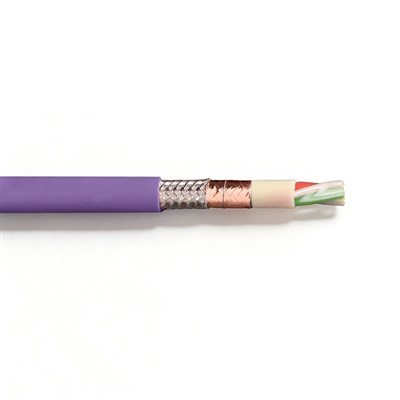
Next, continuity. Special cables are often multi-conductor, with layers of insulation, armor, even shielding. The grounding path can’t have any gaps, and splicing has to be done right. Using the right lugs – corrosion-resistant, like tin-plated copper – is non-negotiable here. I’ve seen installers use regular steel lugs because they’re cheaper, and a year later, corrosion created a high-resistance spot. That means when a surge hits, the current can’t get back, so it arcs through the building’s steel beams instead. Not good. Also, never break the grounding conductor length to fit a splice – keep it as continuous as possible.
Now, let’s get into the specific types of special cables, because each has its own grounding rules. This is where most people mess up. Let’s start with high-voltage special cables – we’re talking 600V and above, used for industrial power, utility lines, even large commercial buildings. For these, the grounding system’s resistance can’t exceed 5 ohms. Wait, that’s way lower than the standard 25 ohms for low-voltage. Why? Because high voltage has more kick – if the resistance is too high, a fault current won’t trip the breaker fast enough, and that’s a fire hazard. Also, for shielded high-voltage cables (most are), the shield itself has to be grounded at both ends – not just one. I know some old heads will tell you only ground one end to avoid circulating currents, but that’s only for transmission lines. For distribution high-voltage cables, both ends are required. I’ve tested this – one end grounding gives a 10x higher fault current time, which is a disaster.
Then there’s fire-rated special cables – used in hospitals, skyscrapers, places where power can’t go out even in a blaze. These are usually rated for 2 hours of fire exposure, but their grounding has to work even when the insulation is burning. That means no plastic-coated grounding conductors – you need a bare copper or steel core that’s fire-resistant, too. Some fire-rated cables have a metallic armor (like steel tape) – that armor can be used as the grounding conductor, but only if it’s listed specifically for that. Don’t assume armor is grounding-ready – check the UL label. Also, in emergency power systems (like generators in hospitals), the grounding has to be solid, no fancy connections that might melt in heat. I once had a client whose fire-rated cable grounding lug melted during a test fire – that’s why we now only supply UL-listed lugs with all our fire-rated cables, no exceptions.
Next, data center special cables – these are the ones for fiber optics and high-speed data, often called “data center special cables” or low-capacitance cables. Wait, people don’t usually think of data cables as needing grounding, but they do. Static electricity and electromagnetic interference (EMI) can mess up data so bad that servers crash. For these, you ground the metallic shield (usually aluminum or copper foil) at one end only – that’s the opposite of high-voltage, I know it’s confusing. Why? Because if you ground both ends, you get a ground loop, which causes static and EMI. That’s a key point – if you ground data cables wrong, you’ll have random data corruption that’s impossible to trace. Also, never use the cable’s outer jacket as insulation for the grounding wire – the shield has to be exposed and connected directly. I’ve fixed so many data center headaches where installers grounded both ends, and the whole rack was acting up. Switching to single-end grounding fixed it in 10 minutes.
Then there’s industrial mining special cables – these are brutal: wet, dusty, explosive atmospheres. Grounding here isn’t just about current – it’s about preventing explosions. NEC 501 and 502 cover this, and the big rule is that all exposed non-current-carrying metal parts (armor, connectors, even the metal housing of the cable) have to be grounded. No shortcuts. Also, in explosive gas areas, the grounding conductor has to be sized for the maximum fault current in that area, so it can carry all the current without heating up enough to ignite gas. I worked on a coal mine project once where the grounding wire was too small – during a test, it heated up, and we had to evacuate. Now, all our mining cables come with oversized grounding conductors, specifically sized per NEC 502, so you don’t have that risk.
Wait, what about armored special cables? Like those used for outdoor burial or heavy machinery. The armor is a big part of the grounding here, but again – it’s not just using the armor as the ground. You have to make sure the armor is electrically continuous. Sometimes, when you cut the cable for installation, you nick the armor, breaking the path. That’s why we supply armored cables with continuous, longitudinal armor (not spiral-wound) for high-stress applications, because spiral wraps can have gaps. Also, when terminating, you have to connect the armor to the grounding lug before the insulation – don’t leave the armor loose. Loose armor can vibrate, create arcing, and cause shorts. I saw a crane operator get zapped once because the armor wasn’t connected – he touched the cable and the ground, and the current went through him. That’s why proper armor grounding isn’t optional.
Now, let’s talk about common mistakes I see every day, because even the best installers mess these up. First, using standard grounding wires for special cables. Standard is for Romex, not a 1500V industrial cable. Second, ignoring environment – a grounding wire that works in a dry office will corrode in saltwater (like coastal areas). Use tinned copper for salt air, stainless steel for mining, plain copper for dry indoor. Third, testing after installation. You can’t just assume it’s grounded – use a multimeter to check the resistance between the grounding point and the equipment frame. If it’s higher than recommended, you have a bad connection. I always tell clients to test right after installing, not a year later. Fourth, modifying special cables on-site. Cutting the grounding conductor or stripping the shield wrong? That voids the cable’s rating, and the grounding is now garbage. Our team always advises installers to pre-terminate at the shop if possible, to avoid on-site mistakes.
Wait, what about the future? I’ve been working on new special cables with built-in grounding monitors – little sensors that track the resistance of the grounding path in real time. That way, if a connection gets loose or corroded, you get an alert before it’s a problem. For data centers, that’s a game-changer, because downtime costs tens of thousands an hour. We’re rolling these out next quarter, so keep an eye out if you’re in that space.
Here’s the bottom line: grounding for special cables isn’t a one-size-fits-all rule. It’s tied to the cable’s purpose, the environment it’s in, and the codes that apply. Skip the generic advice, check the UL label for your specific cable, follow NEC (or IEC if you’re overseas), and when in doubt, hit us up. I’ve been selling and installing special cables for 12 years, and I’d rather answer a stupid question than see someone make a mistake that costs them money, time, or even safety.
If you’re working on a project with special cables – whether it’s a new data center, an industrial plant, a mining site, or a fire-rated system – and you need help figuring out the exact grounding requirements, or you just want to make sure your cables are up to code, reach out to us. We don’t do generic sales pitches, we walk through the specific needs of your project, supply cables that are tested for their environment, and even share free cheat sheets for grounding rules by cable type. No pressure, just honest advice from someone who’s been there and fixed the messes.
Safety Cable References:
- National Electrical Code (NEC), Article 250, 501, 502, and relevant special cable grounding sections
- Underwriters Laboratories (UL) Standard 444 for Fire-Rated Cable
- International Electrotechnical Commission (IEC) Standard 60364 for Low-Voltage Electrical Installations
Cixi Davos Wire & Cable Co., Ltd.
As one of the most professional special cable manufacturers and suppliers in China, we also support customized service. Please feel free to buy bulk high quality special cable in stock here from our factory. For price consultation, contact us.
Address: No.3, Lane 91, Ruan Ding Road, Linxi Village, Xiaolin Town, Cixi City
E-mail: roy798@163.com
WebSite: https://www.cj-supplychain.com/
