If you’ve ever walked through a metal stamping facility, you’ll hear it before you see it: the rhythmic thud of a die press, the sharp snap of a die engaging with a sheet of steel, the low hum of a machine working 12 hours straight to turn raw metal into car parts, appliance brackets, or even smartphone components. For most people, the star of the show is the stamping die itself—the hard, precision-machined tool that shapes metal into the final part. But as a metal stamping dies supplier with 17 years in the business, I can tell you the die holder is every bit as critical. Metal Stamping Dies
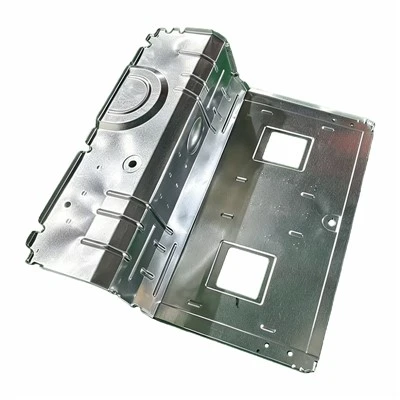
I’ve seen this play out on the shop floor more times than I can count. A customer might come to us with a tight deadline for a die that makes automotive brake brackets, only to run into delays because their die holder warped after a week of production, or it couldn’t align properly with the press, leading to scrap rates of 18% instead of the planned 2%. That’s why, when we design die holders for our customers, we don’t just treat them as a generic bracket to hold the die. We dig into the unique demands of their operation, the materials they stamp, and the production goals they’re trying to hit. Let’s break down the key design considerations that make a die holder work—not just for a single run, but for consistent, long-term production.
First, there’s the core function: load management. Stamping dies generate enormous force, even for small parts. A die that makes a 1-inch aluminum clip for electronics might exert 50 tons of force, while a die for a heavy truck chassis part can push 200 tons or more. The die holder’s job is to distribute that force evenly across the entire die surface, not just concentrate it at the points where the press connects. If force is concentrated in a small area, that’s where the die holder will flex, warp, or crack over time.
Early in my career, a customer came to us with a die holder that had failed mid-production on their 100-ton press. When we took it apart, we noticed the force from the die was only hitting two small, machined pads at the top of the holder. The rest of the holder’s surface was free-floating, so all that weight ended up bending the steel until a corner snapped. That’s when we changed our approach: we always map the entire force profile of the die before designing a holder. For most production runs, we use a high-grade carbon steel (AISI 4140, to be specific) that’s heat-treated to a tensile strength of around 180,000 psi—strong enough to handle heavy loads without being so brittle it breaks. For ultra-high-force applications (like forming thick steel plates for agricultural equipment), we use cast iron with a graphite content that improves impact resistance, but we reinforce it with internal ribs to distribute load even further.
Next, alignment accuracy. Even a 0.001-inch misalignment between the die holder and the press can throw off the entire stamping process. If the holder is slightly off, the die might not close evenly, leading to uneven burrs on the part, or the punch might hit the die edge at an angle, causing premature wear. That’s why we pay close attention to two key features here: pilot holes and guide pins.
Pilot holes are the small, precision-drilled holes on the die holder that match up with the press’s mounting bolts. If these holes aren’t machined to within 0.0005 inches of their required size, the bolts will bind, and the holder won’t seat flat. We use CNC machining for every die holder’s pilot holes, and we test fit each one on the customer’s press before it leaves our shop. We also add a set of hardened guide pins to the holder—these pins slide into matching bushings on the press bed, acting as a backup to ensure the holder stays perfectly aligned even if the press has a little wear or vibration during long runs. I’ve had customers try to skip the guide pins to save a few dollars, and within a month, they’re back asking us to redesign their holder because their scrap rate doubled from misalignment.
Then there’s thermal stability. This is a factor many first-time customers don’t think about, but it’s huge for high-volume production. When a die runs, it generates heat from friction between the punch, die, and the metal being stamped. Over a 24-hour production run, that heat can cause the die holder to expand. If the expansion is uneven, the holder will tilt slightly, throwing off the alignment with the press and the die.
Last year, we worked with a customer who stamped 16-gauge stainless steel appliance brackets, running their press 24 hours a day. For the first two weeks, their part quality was inconsistent—some brackets had tight bends, others were loose, and parts were getting stuck in the die. When we analyzed the problem, we found their original die holder was made of mild steel, which expands at a rate of 11.7 microinches per inch per degree Fahrenheit. The heat from 20,000 parts a day was making the holder expand 0.02 inches more than planned, which was enough to shift the die by 0.002 inches. We switched their holder to a low-expansion alloy steel (AISI 4340) with a thermal expansion rate of 9.6 microinches per inch per degree. The difference was immediate: scrap rates dropped from 12% to 1.5%, and they didn’t have to adjust their press settings every shift to compensate for heat. That’s a small material choice that makes a massive difference for long runs.
We also have to consider accessibility for maintenance. Stamping dies require regular upkeep: removing a worn punch, sharpening the die edge, or clearing scrap that gets stuck. If the die holder is too bulky, or has bolts in awkward places, maintenance can take twice as long, which cuts into production time. We design our die holders with modular features for this reason. For example, we add quick-release lugs instead of standard bolts, so a technician can unbolt the holder in 30 seconds instead of 5 minutes. We also leave open space along the sides of the holder so technicians can reach the die’s edges without having to dismantle half the press.
I’ll never forget the time a new customer brought a die holder they’d bought from a cheap supplier to our shop. They were spending 45 minutes removing and reinstalling it every time they needed to change the punch. Our holder for that same die had quick-release lugs, and we showed their technicians how to swap it out in 10 minutes. That alone saved them 8 hours a week in labor costs—money that goes straight to their bottom line. It’s not just about making the holder strong; it’s about making it work for the people who have to use it every day.
Another big consideration is compatibility with the specific press a customer uses. Not all die presses are the same. A 50-ton mechanical press is different from a hydraulic press, and each has its own mounting dimensions, stroke length, and vibration characteristics. We refuse to sell a one-size-fits-all die holder. For a hydraulic press, which is slower and generates more consistent force, we design the die holder with thicker mounting plates to handle the longer cycle times. For a high-speed mechanical press, which can run 1,000 parts per hour, we add vibration dampening pads between the die holder and the press bed to reduce wear on both the holder and the die.
We once had a customer who tried to use a die holder designed for a mechanical press on their hydraulic press. The holder didn’t have enough surface area to distribute the hydraulic press’s steady force, and it warped after 3 days. That’s a mistake we avoid by working closely with each customer to get their press specifications upfront—model number, tonnage, stroke length, even the age of the machine, because older presses might have slightly different mounting tolerances than new ones.
Scrap management is another design factor that’s easy to overlook, but it’s critical for high-volume operations. When metal is stamped, the scrap (the leftover sheet metal, offcuts, and burrs) has to be removed from the die area. If the die holder blocks the scrap chute on the press, scrap will build up, get caught in the die, and cause defects. We design every holder with clear, unobstructed access to the press’s scrap removal system. For example, for a die that runs on a press with a downward scrap chute, we cut a matching opening in the bottom of the die holder so scrap can fall straight through without hitting the holder. For internal scrap (like the small disks punched out of a blank), we add ejector pins that work in sync with the die, so scrap is pushed out into a bin instead of getting stuck between the die and the holder.
We’ve also learned to account for future scalability. A lot of our customers start with a small production run, then expand a year later. If their die holder can only handle the original die, they have to buy a new one when they ramp up production, which adds unnecessary cost. When we design a holder, we build in extra capacity for future force increases, or space to add features like scrap sensors or automatic lubrication systems, so the customer doesn’t have to replace the whole holder to upgrade. Last year, a customer came back to us after 2 years, wanting to increase their production run by 50%. We didn’t have to redesign their die holder—we just added a few reinforcing ribs and adjusted the alignment guides, and it worked perfectly for their new, higher-tolerance dies.
Now, I know some customers will look at these design choices and think, “That’s more expensive than the cheap holders I can buy from a big box supplier.” But over 17 years in this business, I’ve seen time and time again that a well-designed die holder pays for itself in scrap reduction, less downtime, and longer die life. A $500 difference in the initial holder cost can save a customer $10,000 or more in lost production and repairs over the course of a year.
At the end of the day, the die holder isn’t just a metal bracket—it’s a critical part of the stamping process that makes high-quality parts possible. That’s why we don’t just machine holders to drawings; we collaborate with our customers to understand their unique challenges, whether that’s tight delivery timelines, high-volume stainless steel stamping, or maintaining consistency for automotive parts that go into millions of cars.
If you’re in the market for a die holder that’s built for your specific metal stamping operation, we’re here to work with you to design something that fits your needs, your press, and your production goals. Reach out to us to discuss your requirements, and we’ll put our expertise to work for you.
Metal Stamping Dies References
- tooling magazine, "Die Holder Design: Balancing Strength and Precision for High-Volume Stamping", 2022
- American Society of Mechanical Engineers (ASME), "Design Guidelines for Metal Stamping Tooling", 2021
- Society of Manufacturing Engineers (SME), "Load Distribution in Stamping Tooling Components", 2020
Dongguan Changdong Tool & Die Co., Ltd.
With abundant experience, we are one of the most reliable metal stamping dies manufacturers and suppliers in China. Please feel free to buy advanced metal stamping dies made in China here from our factory. Good service and quality products are available.
Address: No. 56-B, Fumin South Road, Dalang Town, Dongguan City, Guangdong Province, China
E-mail: sales@stamping-die.com
WebSite: https://www.metalstampingdie.com/
