If you’ve ever sat in a dentist’s chair, drill hovering over your mouth, and wondered, “What even is this thing that’s making my heart race a little?” — you’re not alone. As a dental drilling machine supplier, I get this question all the time, not just from patients, but from new dental practice owners stocking their first operatory or even dental assistants training to use one for the first time. Most people see the high-speed handpiece buzzing and think it’s just a fancy rotating tool, but there’s a whole lot of engineering that goes into making those tiny, precise cuts without damaging your teeth, gums, or nerves. Today, let’s break down exactly what parts make up a dental drilling machine — no stuffy jargon, just the plain, useful info I pass on to everyone who reaches out to me about our equipment. Dental Drilling Machine
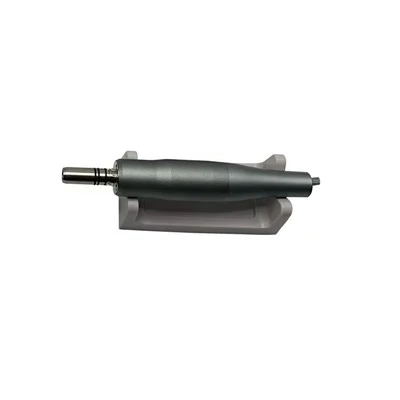
First, let’s start with the part you actually touch and see right at the point of use: the high-speed handpiece. This is the star of the show for most routine drills, like filling cavities or smoothing edges after a root canal. If you’ve ever had a buzzing, whirring tool pressed to your tooth, that’s this. It’s a tiny, handheld device, usually made of stainless steel (super important for autoclaving, since it has to be sterilized between every patient to avoid cross-contamination). The key inside a high-speed handpiece is a miniature turbine, about the size of a pinhead, driven by compressed air. When the air from the main machine unit hits the turbine blades, it spins at up to 400,000 RPM — way faster than a standard electric drill. That high speed is what lets the tiny burr at the end cut through enamel, which is the hardest substance in your body, without chipping it. A lot of new users mix up high-speed handpieces with low-speed ones, by the way. Low-speed handpieces run at 5,000 to 20,000 RPM, used for things like polishing teeth, removing old fillings that are soft, or shaping crowns, so they’re slower and have a different type of drive, usually a motor instead of an air turbine.
Next, the main control unit that sits on your dentist’s counter (or inside their cabinet, if they have a built-in system). This is the brain of the whole dental drilling machine, and it’s way more complex than it looks. For air-driven systems (the most common in small practices), the unit has a compressor that pulls in ambient air, filters it to remove moisture and debris, then regulates the pressure before sending it to the handpiece. For electric systems, which are growing in popularity, the control unit has a brushless motor (more reliable, quieter, and longer-lasting than old brushed motors) that powers the handpiece, plus a microprocessor that lets the dentist adjust speed and torque on the fly. You’ll also find foot controls here — I can’t stress how important these are. Unlike a regular drill you hold in your hand, dental drills use foot pedals so the dentist can keep both hands free to work. There are usually two pedals: one controls speed and direction (forward to spin the burr to cut, reverse to pull it away or clear debris) and the other controls water and air flow for the spray. Some higher-end units have programmable settings, like presets for cavity prep vs. crown shaping, so dentists can adjust it in one tap instead of twisting dials every time.
That brings us to the spray system, which is easy to overlook but actually one of the most critical parts. When a dentist is drilling, they’re creating tiny shavings of enamel and dentin, plus friction heat from the spinning burr. If that heat builds up, it can damage the pulp inside your tooth (the sensitive nerve part) and make your procedure way more painful. The spray system blows a mist of water and air directly onto the drill site to cool the tooth, wash away debris, and keep the field of view clear for the dentist. How does it work? The main control unit has separate lines for water (usually distilled or filtered, to avoid introducing bacteria to the mouth) and compressed air. When the foot pedal triggers the spray, the two mix in a small tube and come out of a tiny nozzle on the handpiece, right at the base of the burr. Some handpieces have internal spray, which means the mist comes out through tiny holes inside the handpiece body, so it’s targeted directly at the cut, instead of spraying all over the dentist’s gloves or the operatory. That’s a big upgrade for usability, trust me.
Now, the burr — that tiny, interchangeable cutting tip that snaps onto the end of the handpiece. This is where precision really matters. Burrs come in all shapes and sizes, each designed for a specific job: round burrs for carving out cavities, flame-shaped burrs for trimming the edges of fillings, diamond-coated burrs for smoothing composite resin, and even finishing burrs with super fine grit for polishing. They’re usually made of stainless steel, tungsten carbide, or diamond powder bonded to a metal core. Stainless steel burrs are cheap and good for general use, but tungsten carbide ones last longer and hold their edge better, so they’re worth the small extra cost. Diamond burrs are used when you need to cut through very hard material, like porcelain for crowns or bridges. The best part is that burrs are disposable (or single-use for some) now, so there’s no risk of cross-contamination if you replace them between patients, which is a huge win for infection control.
Wait, I should also mention the low-speed attachment, because not every dental drilling job needs a high-speed buzz. If a practice has a combination unit (most do, these days), the main control unit has ports for both high-speed and low-speed handpieces, plus a contra-angle attachment. The contra-angle is the little bent piece that connects the low-speed motor to the handpiece, so the dentist can reach into the back of the mouth without straining their wrist. Some contra angles are called “straight attachments” too, for working on flat surfaces, like polishing the front teeth. Low-speed handpieces also use different types of burrs, called finishing burrs or polishing cups, which are softer than cutting burrs, so they don’t scratch enamel or fillings.
A lot of people don’t talk about the hygiene-related parts either, and that’s something I care a lot about as a supplier. Dental drills are reusable, but every part that touches a patient’s mouth needs to be sterilized, right? So the handpiece has a disconnect mechanism — it snaps off from the main unit so you can take it apart, clean every tiny nook, and autoclave it at high temperature and pressure to kill all bacteria and viruses. Even the tubes that carry air and water to the handpiece need to be flushed and disinfected between patients, which is why good quality tubing is non-negotiable. Cheap tubing can get clogged with debris over time, which ruins the spray or air flow, so I always tell my customers to invest in durable, medical-grade tubing.
Let me also clear up a common myth: dental drilling machines aren’t just for cavities. They’re used for so many things: removing old mercury fillings (carefully, with the right type of burr and spray to avoid releasing toxic fumes), preparing teeth for veneers, extracting small baby teeth, even shaping bone for dental implants. The parts I mentioned work for all of those jobs, you just swap out the handpiece or burr depending on what you need.

If you’re a new dentist or a practice owner looking to upgrade your equipment, don’t get overwhelmed by all the parts. A good dental drilling machine doesn’t have to be the most expensive one, but it does need reliable air flow, consistent speed control, a good spray system, and easy-to-sterilize parts. I’ve seen practices waste thousands on units that are complicated to use, with parts that break all the time, just because they didn’t ask the right questions about what makes a drill actually work.
Nail Dust Collector Whether you’re a patient curious about what’s in your dentist’s hand, a new dental professional building your space, or someone just doing research before buying equipment for a small clinic, knowing the parts of a dental drilling machine makes a huge difference. You’ll understand why certain features matter, why maintenance is key, and how those tiny tools work together to make procedures safe and effective. If you have more questions about which parts to look for in a dental drilling machine, or want to chat about options that fit your practice’s needs, feel free to reach out and we can walk through everything together.
References:
- Contemporary Dental Instrumentation. American Dental Association, 2021.
- Dental Handpiece Design and Function. Journal of Clinical Dentistry, Vol. 32, No. 2, 2021, pp. 45-52.
- Infection Control Guidelines for Dental Devices. Centers for Disease Control and Prevention, 2022.
Yongkang Zorin Industry Technology Co., Ltd.
Yongkang Zorin Industry Technology Co., Ltd. is one of the most professional dental drilling machine manufacturers and suppliers in China, also supports customized service. Please feel free to buy bulk premium dental drilling machine in stock here and get quotation from our factory. For price consultation, contact us.
Address: No. 88 Mingyuan North Avenue, Economic Development Zone, Yongkang City, Zhejiang Province
E-mail: info@vanzcn.com
WebSite: https://www.zorindrill.com/
